Showing posts with label urban habitat. Show all posts

05 August 2015

Occurrence of Kingbirds in Urban Omaha

Kingbirds have been especially vocal these days among the urbanscape of eastern-central Omaha. Hearing them at several distinct places it became obvious to convey with details their geographic presence. During the past few days of a languishing summer, records have been kept for places where the call of the kingbird can be heard.

The Western Kingbird can be very obvious to those that listen.

They have been seen in years past notably at Kiwanis Park and Levi Carter Park in northern Omaha. Here are a couple of pictures from those past times.


This summer-time, these expressive flycatchers are present amidst the urban reality of Omaha. Their presence is a soothing sound in comparison to early morning dumpster action or the minions on motorcycles that prefer mechanical noise which is actually a nuisance.

These are some of the places where there are kingbirds, typically the western, unless otherwise noted.

  • Young Park just south of the UNOmaha campus: the first bird heard in the morning on July 25
  • UNOmaha Campus: heard on July 29 and then again on August 2nd as they linger about the area just east of the Criss Library
  • Blackstone District: on July 29 they were heard near 40th and Farnam Streets and also about 36th and Dewey Street; obvious as well on August 4th at the parking lot at the northeast corner of 38th and Farnam Streets
  • at least two on July 29 just east of Walnut Hill school at 45th and Hamilton Street; two days later, an eastern Kingbird was heard then seen in the same locale, among the trees on the south side of the parking lot on the south side of Hamilton Street
  • Izard Industrial Zone, a place of little greenery and devoted to industrial business: three at 44th and Nicholas Street, perched on the wires on July 30th; then two again at 45th and Izard Street on August 2nd. On August 3rd there were two Western Kingbirds and an Eastern Kingbird, westward at the corner of 46th and Nicholas Street. The Eastern Kingbird was atop a snag of the tree, and the Western Kingbird had to move to a lower limb due to the insistence of the domineering Eastern Kingbird.
  • Midtown District: an adult feeding a juvenile at 33rd and Dodge Street, a place which may seem to not be a habitat place conducive to birds breeding, yet there they were being so active as kingbirds tend to be.
  • Aksarben Village: it was a hot Sunday, but worth it to first hear and then see a Red-tailed Hawk family, the fledglings being vocal and appreciated by some local folks near Pacific Street. Further along the sound of the kingbirds were heard. A nice family portrait was taken of them about the parking lot behind the Marriott Residence Inn. Elsewhere, there were two sightings of single birds, one at the south side of the First Data parking lot near Pine Street.

    Three young looking to a parent for probably something to eat!

  • the most recent sighting to consider was on the morning on August 5th at the Walnut Hill Reservoir. While bicycling past, they were heard so an interlude happened to see where the birds were. There were three Western Kingbirds about among the treetops on the west side, along 40th Street. They may have been a family group that moved to this territory from just to the north as noted on July 29th at 40th and Hamilton Streets, as no kingbirds were heard or seen on very recent visits to this specific locality.

These records indicate how the Western Kingbird can be pervasive within urban Omaha. Their places of residence as determined can be harsh and stark, yet they are obviously successful in raising young. Their presence adds to the avian assets of the urban Omaha community.

This partial survey is interesting, and with further consideration and contributions there could be a greater realization of another special feature of urban birds of Omaha. Specifics are important to allow temporal comparisons.


Sam Manning reported on NEBirds of seeing at least 44 Western Kingbirds during a drive on August 5th along the street around the east side of Eppley Airport.


There have been two more recent and surprising sightings of the Eastern Kingbird.

Saddle Creek Environs
One seen early on the afternoon of 12 August in the treeline along the slight bluff behind the Ace Hardware Store and Walmart Neighborhood Market. This sighting was just west of Wakely Street. Another report from NEBirds, also on 12 August, confirms the presence of this species among this urbanity. With the arrival of the WalMart neighborhood market, the landscape was signifianly changed. Enough so that that a pair of kingbirds made it their home for this season.
Blackstone District
Two, including one with a "fuzzy look" to some feathers and possibly a younger juvenile. Noted on the utility line behind the Colonial Hotel and Apartments at 38th and Farnam Streets. It was across 38th Street to the east, where Western Kingbirds were previously noted.

A single Western Kingbird was easily seen on the afternoon of 20 August at 29th and Grant Streets, perched on the wires. Just to the south, heavy equipment was destroying trees, so habitat was vividly being destroyed in the neighborhood.

06 December 2014

Second Annual Thanksgiving Bird Survey of East Omaha Parks

The second annual survey of birds present at east Omaha parks occurred during on two days following the 2014 Thanksgiving holiday. Weather was especially fine, with temperatures on Friday in the mid 50s. On Saturday it was so pleasant that the entire day could have been spent afield, with the relative warmth and insignificant winds, with the temperature peak in the mid 60s.

Surveys on Friday occurred at Carter Lake and Levi Carter Park, Hummel Park and N.P. Dodge Park.

On Saturday, places of interest, as trod upon by boots on the ground, were Mandan Park and the Mandan Flats to the east along the Missouri River, Spring Lake Park and then, subsequently Memorial Park and Elmwood Park places. Ancillary notes were kept for the Carthage neighborhood, north of Dundee Place in midtown.

A fine variety of wild birds were seen during the hours outdoors. Every record of a bird observed was denoted and then subsequently indicated in an appropriate manner as a database record with stringent limitations associated with species, locale, number, source, etc. Everything has to fit together in a relational manner for the database details, in order to conform with strictures.

These are the results of the wonderful birds appreciated during the hours afield:

Common Name Hummel District Dodge Park District Carter Lake District Carthage District Memorial Park District Elmwood Park District Spring Lake Park District Mandan District
Cackling Goose - - - - 15 - - - - - - - - - -
Canada Goose - - - - 2500 - - - - - - - - - -
Gadwall - - - - 35 - - - - - - - - - -
Mallard - - - - 760 - - - - 2 - - - -
Northern Shoveler - - - - 50 - - - - - - - - - -
Redhead - - - - 20 - - - - - - - - - -
Common Goldeneye - - 1 35 - - - - - - - - - -
Hooded Merganser - - - - 8 - - - - - - - - - -
Ruddy Duck - - - - 5 - - - - - - - - - -
Pied-billed Grebe - - - - 3 - - - - - - - - - -
Bald Eagle - - - - 1 - - - - - - - - 1
Cooper's Hawk - - - - - - - - 1 - - - - - -
Red-tailed Hawk - - - - - - - - - - - - - - 1
American Kestrel - - 1 - - - - - - - - - - - -
American Coot - - - - 750 - - - - - - - - - -
Ring-billed Gull - - 1 - - - - - - - - - - - -
Mourning Dove - - - - - - 1 - - - - 7 - -
Red-bellied Woodpecker 1 - - 1 1 - - 4 1 1
Downy Woodpecker 1 2 1 1 1 2 2 2
Hairy Woodpecker 1 - - 1 - - - - - - - - 1
Northern Flicker - - - - - - - - - - - - 1 1
Blue Jay 3 1 1 3 1 - - - - 1
American Crow - - 2 - - - - 1 - - - - - -
Black-capped Chickadee 5 7 2 2 8 2 2 3
Tufted Titmouse 1 - - - - - - - - - - - - 1
White-breasted Nuthatch 3 3 1 1 - - 2 3 3
Brown Creeper - - - - - - - - - - - - - - 1
Carolina Wren - - - - - - - - - - - - - - 2
Winter Wren - - - - - - - - - - - - 1 - -
Golden-crowned Kinglet - - - - - - 4 4 - - - - - -
Eastern Bluebird - - - - - - - - - - - - - - 1
American Robin - - - - 2 - - - - 34 2 1
European Starling - - 15 18 3 - - 9 - - - -
American Tree Sparrow - - 10 - - - - - - - - - - 4
Fox Sparrow - - - - - - 1 - - - - - - - -
White-throated Sparrow - - - - - - 2 - - - - - - 1
Harris's Sparrow - - 8 - - - - - - - - - - - -
White-crowned Sparrow - - 2 - - - - - - - - - - - -
Dark-eyed Junco 1 6 4 6 6 13 1 5
Northern Cardinal 1 1 1 2 - - 1 2 2
House Finch - - - - - - - - 2 - - 2 2
American Goldfinch - - 1 2 - - - - 1 2 2
House Sparrow - - 2 - - 10 - - - - - - - -

Overall, there were many wonderful moments among the wild birds, as they went about their normal activities of November. More particularly, the 43 different species observed at the different places was different from the 2013 survey, when 46 species were seen.

There was a comparatively lesser number of species present at multiple sites. This is an abbreviated tally of comparisons:

  • N.P. Dodge Park: 16 species in 2014 (17 species in 2013); notably missing was the Pileated Woodpecker, with the reason for their absence not known
  • Carthage: 13 species about the neighborhood in 2014; only six species were noted during this same period of time in 2013, so obviously the extent of any birds present during this year, was based upon only a limited perspective
  • Mandan Park: 10 (13) and Mandan Flats: 12 (18); overall the comparative difference was twenty species in 2014 in comparison to 24 in 2013
  • Carter Lake: 11 (12) and its associated Northwest Pond Natural Wildlife Area (8); the twelve species in 2014 compares to 24 in 2014; the weather conditions and extent of open water associated with the lake were a primary factor in the number and species of birds present
  • Spring Lake Park - North F Street Woods: 8 (11); overall at the park in 2014 there were twelve species present; the tally for 2013 was 21; the species present as surveyed in a similar manner indicated a dramatic decline in the wild birds present
  • Elmwood Park Ravine: 7 (8); ten species in 2014 versus sixteen overall in 2013 for the habitats associated with this park space
  • North Hills, Hummel Park: 6 (16); for the district, there were only nine species noted in 2014 versus 19 in 2013
  • Memorial Park: 6 (additional species were noted along the east and west side creeks); eight species in the district in 2014 versus only five in 2013); one primary difference between the 2014 and 2013 surveys was closer attention to bird activity among the conifers on the edges of the rose garden.

Further comparative details can be derived in a some manner for these specific surveys. An analysis could readily compare particular species and numbers at a specific locale. Two years of results allow some comparison, but they aren't enough to establsh any sort of trend. There are also enough details sufficient to consider a monthly evaluation, especially for the Carter Lake vicinity.

This information is available in association with a personal database where details have been denoted in specific detail, one record at a time, for past decades.

In regards to this survey, two years of results allow some comparison, but they aren't enough to establsh any sort of trend, though there is no attempt to establish anything other than a perspective of birds present at some place and at some point in time.

Jobber's Canyon Demolition Omahas Greatest Loss of Swift Chimneys

For decades following their construction in the late 1800s as business places for Omaha and to the west, the big, brick buildings along the Missouri River riverfront had big chimneys. Their purpose was ventilation, yet they also meant something to the bugeaters ... that being Chimney Swifts which certainly used the structures to one extent or another.

There are no details that associate the building chimneys with the roosting of swifts. Though, based upon known habits of these birds that utilize large chimneys as roost sites during the autumn season, the chimney features of the buildings were suitable for swifts. The buildings among Jobbers Canyon, along the Missouri River frontage, each had a significant chimney, and each of them might have been used as a roost for migratory swifts.

A number of historic buildings were present, as indicated by online information.

Specifics are certainly lacking. During the years prior to their destruction, no person was attentive enough to consider the association between the chimneys and the swifts, and made any attempt to determine the number of swifts that occurred.

After an expansive, urban debate, the numerous buildings in eastern Omaha, among the jobbers canyon district, were demolished in 1989, associated with what — at the time — was an urban renewal project. So many places with prominent chimneys were demolished in entirety, including:

The skyscape does not convey details of interest, yet the perspective is indicative of the overall scene. There was a vast variety of chimneys present.

Any particular use by Chimney Swifts is not known, but the habits of this species are indicative and former behavior can be interpreted. So the bug-eaters would have utilized these chimneys to one extent or another. One or another of the places might have been more important during one year or another. There may have been one particular chimney which was especially appreciated by the migratory birds. This was certainly the case, based upon common knowledge, through interpretation, decades later.

Sadly, particular details are unknown, and only a subject of speculation.

Factual indications convey that large chimneys are important places for swifts to roost during the autumn season. As far as habitat and character, buildings amidst Jobbers Canyon were, undeniably, an important area that provided multiple roosts available for migratory swifts.

26 October 2014

Autumn Season of Chimney Swifts of Eastern Omaha - 2014

The autumn 2014 season of Chimney Swifts congregating at suitable spaces of eastern Omaha was notably different in comparison to previous years.

Swifts were gone from the city skies days earlier than previously noted. Though these bird had migrated to the south, there were warm days and bugs notably present. Temperatures were above average through nearly the end of October. European Starlings were seen "hawking" for bugs in the sky, similar to what swifts did in previous weeks of the year.

A new record for the number of swifts using one chimney occurred this autumn, and it was at the Izard Industrial Zone on September 16th. It surpassed the earlier record counts for a church in the Blackstone neighborhood.

These are the peak counts associated with the results of Omaha swift surveys, conducted since 2003 in the eastern extent of the river city:

  • Izard Industrial Zone on 09/16/2014 - 1530; a magnificent evening count at the CenturyLink maintenance facility chimney along Izard Street, near 43rd Street
  • Blackstone District on 09/13/2011 - 1400; done by 7:55 p.m.; same number as two nights ago at First Central Congregational Church
  • Blackstone District on 09/11/2011 - 1400; multi-sided chimney at First Central Congregational Church at 36th and Harney; massing about and then entered in about five minutes; multiple layers, directions and swirls; counted by groups of ten as they entered
  • Blackstone District on 09/17/2014 - 1385; into First Central Congregational Chimney
  • Izard Industrial Zone on 10/09/2012 - 1350; swarming as they have on the previous two nights; ready vocalization; done by ca. 7:15 p.m. at CenturyLink building
  • Izard Industrial Zone on 10/08/2012 - 1325; vocal as typical on a warmer evening, with some sort of hurry for them to get into CenturyLink chimney; done about 7:25 p.m., with dusk heavy on the scene; counted in groups as they entered chimney at CenturyLink building
  • Izard Industrial Zone on 10/07/2012 - 1325; a surprisingly large, vocal group early into the CenturyLink chimney; done by 7:15 p.m. with bunches counted as they swiftly entered the chimney

The last observation of the 2014 season was eleven swifts seen at Benson on October 15th. Ten of the birds flew southeast of the central building district to an unknown roost, and only one was seen using a particular chimney. Swifts utilize several chimneys in this urban setting, as seen and enjoyed by residents and visitors, as experienced on the streets of this district during October.

This occurrence was earlier than expected, as once there was a cool night or two, the weather moderated, with temperatures in the 70s and frost-free night for seven to ten subsequent days. There were European Starlings flying like swifts hawking for bugs seen after the bug-eaters were gone.

After many years of observation and keeping detailed records, there are enough details to determine some approximate sort of pattern associated with the autumnal gatherings of the swifts at Omaha. There may be many dozens of birds present and using a particular chimney on one evening, yet none the next day at the same time. This was obvious this year, especially at the Dundee at Dodge Street locale. There were an approximate 155 seen on October 13, yet none the next evening.

During the 2014 season, the largest congregations of swifts at roosts occurred nearly three weeks prior to dates when a similar number occurred in 2013. Also, the last known presence of these birds occurred a week earlier than last year, based upon surveys done at the same geographic locale.

There are more than twenty records of occurrence for swifts in Omaha, subsequent to the latest date for the 2014 autumn season. This includes five times when more than one hundred swifts were counted at a particular chimney in the evening.

This is a summary of the autumnal days associated with Chimney Swift occurrence among the urban setting of eastern Omaha, for the past few years. The records are based upon multiple surveys, primarily during the evening hours. Julian date 255 is usually October 12th, with October 21st the latest date indicated.

Julian Date 2003 2005 2007 2008 2009 2010 2011 2012 2013 2014
255 425 850 - - - - 374 - - 90 23 - - - -
256 265 160 - - - - 60 - - 1400 - - 18 - -
257 - - 265 - - 65 - - 25 254 325 220 - -
258 66 - - - - - - 66 - - - - 2 185 44
259 157 - - - - - - 58 - - - - 130 81 1530
260 405 - - - - 25 27 - - - - 504 1 1402
261 80 - - - - - - 304 - - - - 75 9 62
262 462 - - - - - - 243 - - 60 56 12 711
263 325 - - - - - - - - 10 70 480 534 - -
264 460 - - - - - - 495 190 - - 145 135 - -
265 - - - - - - 25 269 - - 45 225 93 700
266 - - - - - - - - 136 16 140 335 - - - -
267 - - - - - - - - 98 65 - - 17 19 200
268 - - - - - - 15 266 220 - - - - - - 342
269 - - - - - - - - 137 1 - - - - 97 372
270 - - - - - - - - 170 - - - - 365 7 200
271 - - - - - - 260 155 - - - - 65 505 - -
272 - - - - - - - - 408 2 - - 260 349 285
273 - - - - - - 155 13 2 - - 225 140 - -
274 - - - - - - 225 724 - - - - 121 33 20
275 - - - - 25 330 - - - - - - 68 306 630
276 - - - - - - - - 178 3 - - 10 53 - -
277 - - - - - - 385 511 - - - - 96 62 330
278 - - - - - - 12 42 - - 430 660 160 110
279 - - - - - - 32 228 15 - - 630 135 150
280 - - - - - - 120 65 - - - - 59 155 55
281 - - - - - - 360 107 130 8 1325 201 121
282 - - - - - - 85 227 140 190 1325 154 66
283 - - - - - - 183 90 - - 90 1350 200 180
284 - - - - - - 289 2 140 - - 626 168 243
285 - - - - - - 397 8 265 65 585 157 23
286 - - - - - - 120 - - - - 17 625 31 165
287 - - - - - - 130 - - - - - - 710 9 2
288 - - - - - - 65 1 - - 4 6 2 11
289 - - - - - - 137 16 - - - - 10 4 - -
290 - - - - - - 191 - - - - - - - - 7 - -
291 - - - - - - 136 1 - - - - - - 147 - -
292 - - - - - - 25 54 - - - - - - 132 - -
293 - - - - - - - - - - - - - - - - 1 - -
294 - - - - - - - - 9 - - - - - - - - - -

There is no effort underway in Omaha to designate and conserve chimney structures utilized by thousands of migratory and breeding Chimney Swifts. The trend continues to be a loss of chimney roosting habitat, with particular spaces lost each year, to the detriment of the birds.

20 October 2014

Swift Roost Habitat Lost at Church Chimneys

Two eastern Omaha church chimneys capped during 2014 mean a further decline in roosting habitat available as gathering places for Chimney Swifts. The caps were apparently placed atop the chimneys when a new vent was installed in association with a renovation of the HVAC system.

Both churches are Lutheran congregations.

A major loss of roosting habitat occurred at the Pella Lutheran Church at 303 South 41st Street, in the Blackstone District along Farnam Street. Use by swifts was first determined for this locality in the autumn of 2008, when 155 swifts were counted on the evening of October 3rd as they entered the chimney for the night. On August 18, 2012, additional use was recorded. There have certainly been other dates of occurrence.

The Zion Baptist Church at 23rd and Grant, has a lesser known history of use by swifts. About a dozen swifts were present on September 7, 2005. There may have been more extensive use of this structure, but surveys are not often done in this portion of north-eastern Omaha.

There have been numerous examples in the past few years of churches capping their chimneys, including at the Dundee Presbyterian Church along Underwood Avenue near Happy Hollow Boulevard and the Lifegate Church (formerly Central United Presbyterian Church) at 55th and Leavenworth Street, east of Elmwood Park.

13 October 2014

Screech-owl Prevalence in East-central Omaha

It has been a fine autumn to hear the calls of the Eastern Screech-owl in several neighborhoods of east-central Omaha. They have been especially prevalent as reported in the greater Dundee area.

During September, the call of the owl was heard during nocturnal hours at several neighborhoods in the area.

In the Carthage neighborhood, on the north side of the Dundee place, there were heard five times throughout the month. It was especially vocal in the early morning hours. In the previous five years, they were heard, but less often, only two or three times during the season.

On Washington Hill, in the vicinity of Harrison school at 53rd and Hamilton Street, they were heard during the week prior to September 20.

At Dundee Place, they were prevalent at two localities, and heard multiple times southeast of Dundee School and near 51st and Burt Street, notably on September 26th.

Near Dundee school during latter summer, two fledglings were readily observed by residents. Adult birds were also seen a time or two, according to available reports, although dates were not recorded.

The only October record available to mid-month was one heard predawn on October 2nd at Washington Hill, Harrison Neighborhood. Thus far, they have not been noted vocalizing at Carthage, though records are known for at least once during four of the past five years.

There are previous autumn records for the vicinity, which contribute to indications of its distribution:

  • 04 Oct 2012: Mercer Woods (40th and Cuming Streets)
  • 01 Nov 2012: picture of one taken in the Memorial Park area and printed in the Nebraska Bird Review
  • 11 Oct 2013: Metcalfe Park (picture taken of a small owl at the roundup southeast of the park at 50th and Happy Hollow Boulevard)

For November, there is on average only one record per year for the area. Additional occurrences can be expected, based upon their having previously been reported.

September's Significance

The basis for an apparent increase in vocalizations of the little owls may be related to ensuring territoriality claims. Perhaps, for example considering this year, once the fledglings departed the habitat used by their parents near Dundee school, they would roam elsewhere to find their own place to dwell. As they moved further from their home territory, they arrived within the domain of other screech owls, which made certain to convey their place by issuing calls within the boundaries.

An increase in calls might be due to the increased attention being given by resident owls to firmly establish their claim to a territory for this winter and the next breeding season. Whatever the rationale, the night calls have definitively indicated the presence of multiple owls in this region of the urban-scape of one area of Omaha.

Thanks to Julie, Jo and Marjie for providing details on owl occurrence.

There were two Eastern Screech-Owls heard the morning of October 25th in the Carthage neighborhood (at 1:45 a.m.) and at the Izard Industrial Zone (near 42nd and Nicholas Streets at 7:20 a.m.).

25 August 2014

Red-tailed Hawk Thrills Carthage Men

[Red-tailed Hawk feeding on a rabbit carcass]

Urban Red-tailed Hawk, ripping on a rabbit carcass in the Carthage area, June 2008.

Some of the regulars that linger outside the convenience mart in north Carthage apparently had quite a thrill on Friday, August 22. A Red-tailed Hawk had swooped down on something edible and as the men of the hood sat and watched, this bird of prey ate its meal upon the grass near where the guys sit on the north side of the building. Once the bird finished feeding, according to Walt, the bird man at the scene, it then perched on the adjacent fence, and then flew a short ways to another perch on the fence.

During this summer season, Walt has been giving particular attention to the hawks of this neighborhood. He could tell you where they perch, and times when seen soaring above this urban landscape. Even the distinctive call of this raptor is part of the lore.

One of the men took photographs of the hawk. This event is indicative of how this species now lives and survives amidst an urban setting, and is even able to raise young.

Some years ago, a pair of red-tailed Hawks raised two young just east of the University of Nebraska at Omaha. It was quite spectacular to see the juvenile hawks among the trees of north Elmwood Park.

It is quite nice that hawks thrive in urban Omaha, and can be appreciated by the community.

27 June 2014

Waterfowl at Shadow Lake, Elmwood‏ Park

The following email was sent 27 June to the director of Omaha Public Works, the director of Omaha Parks and Recreation, as well as the office of Omaha's mayor.

During the morning of 26 June, Shadow Lake was visited once again to evaluate how waterfowl are using this unique urban habitat.

There were more than 20 young Wood Ducks present, along with at least three adult females. Upon my arrival, most of them were congregated at the west portion of the pond, along the dam. They eventually dispersed elsewhere upon the waters, and due to my diligence to minimize disturbance, none of the birds flew elsewhere.

There are probably three broods of Wood Ducks. Some of them were larger and would have hatched something like two weeks ago. There were nine very small hatchlings, so itty-bitty that two could be held in the palm of a hand. They scurry about like little bits of feathered furry, and this is because Shadow Lake is a haven, necessary for their immediate survival.

It takes 8-10 weeks for a Wood Duck duckling to mature to the extent that it can fly.

Also present was a female Mallard with five larger ducklings.

Shadow Lake now provides a safe habitat for these waterfowl. Any activity which would degrade the quality of this habitat would be extremely detrimental for these birds. If the water is pumped away to allow repair of the berm, the lives of the young ducks would be threatened since there is no similar, alternative habitat in the vicinity. Or if action was undertaken that drastically reduced the extent of pondweed, it would also not bode well for the fowl that already face a difficult time of survival. Forced to wander through Elmwood Park, they could be subject to predation by feral-acting cats from neighboring houses, or perhaps an attack by a wandering dog not on its leash (which occurs regularly within the park, despite it being an illegal action).

Any action which results in the death of any of these wildbirds would personally be considered as a "taking" action.

Taking of any protected bird species is not allowed by the Migratory Bird Treaty Act. A taking can include the unintentional destruction of birds through a deliberate action. This act is enforced by the U.S. Fish and Wildlife Service, and a state representative of this agency is now aware of this situation.

If there is any action done which threatens the ducks, I will ask that FWS undertake an investigation and potentially an enforcement action, and that fines be assessed.

The lack of action by Public Works in May, when the dam degradation was initially indicated, does not mean that some sort of emergency action now should preempt retaining water at Shadow Lake. Failure to act is not an excuse.

24 May 2014

City of Omaha Mismanages Natural Area at Levi Carter Park

Staff of the City of Omaha have once again allowed a simple request to result in further degradation of the Northwest Pond Natural Wildlife Area at Levi Carter Park.

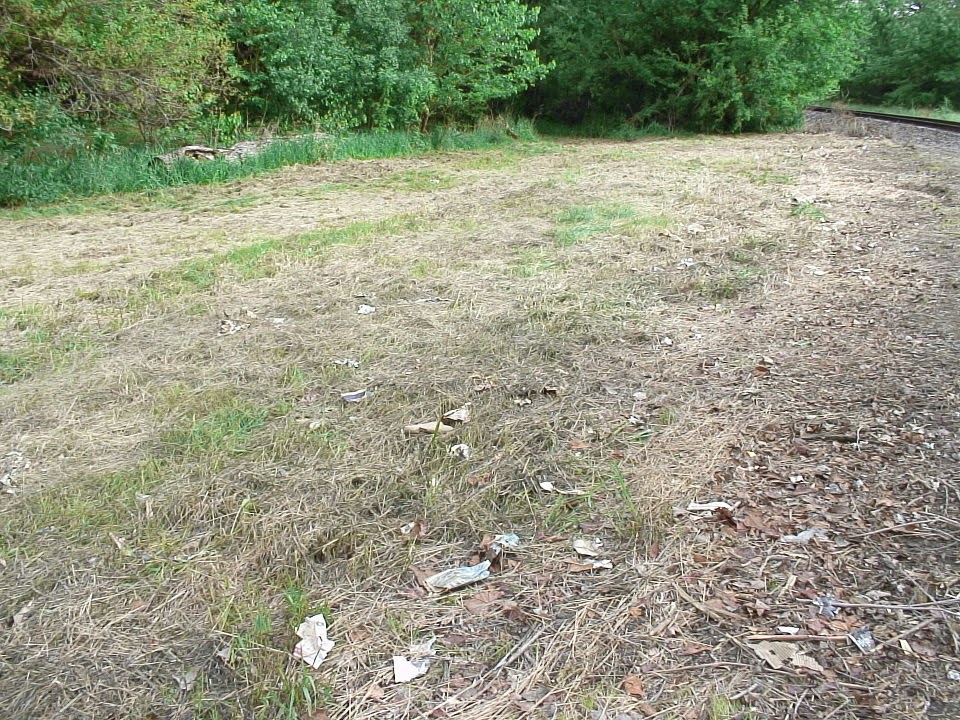
Excessive mowing of the area is the latest occurrence. On a bicycle visit during the morning of May 23rd, most of the area which could be reached with mowing equipment had been cut with intent. Too many places looked like turf grass. For some reason this place got direct and excessive attention, while elsewhere in the park a great number of park maintenance things needed attention. There are many acres which have not been mown and have grass more than 12 inches in length. There are also a dozen or more tires which some perp threw onto the bank of the lake, where water is being pumped continuously into the lake. During my time at the pump station, six of these tires were carried away from the lake so that the they were obvious enough to perhaps result in their removal. Wind-blown branches are strewn about, and the tree guys were removing trees, and whether or not they gave any attention to the possibility of nesting birds is obvious.

According to the park caretaker, the recent storm meant tree removal was actively underway during a brief chat during a Friday morning visit to survey what birds were present. Mr. park-man did not want to engage in any sort of conversation, but said a few words as his truck crept along and along further upon the recreational trail. He knew what had happened elsewhere in the park.

While bicycling about, a bunch of discarded aluminum cans spread hither and yon were picked up to be taken away, during one more bird survey.

The primary situation of concern this day was the Northwest Pond.

It is difficult to deal with the unnecessary mowing and destruction of sapling trees among this bit of green space What happened was obvious, and obvious upon arrival at the south side of the pond.

Despite every effort to conserve the habitat, things have repeatedly gone wrong multiple times due to careless perspectives.

During the first times of my bicycle survey of birds, it later became apparent why the park manager was always trying to move along during what a bit of a chat. It was only later that the reality of the green space destruction was apparent.

A prior email notice from Andy Szatko, an Environmental Inspector with the Public Works Environmental Quality Control Division, indicated that some mowing was required to cut-back brome grass to allow warm-season grasses to thrive. The places primarily seeded with the native species of grass were on the west and south side of the pond. There had been

Obviously there was insufficient communication between the Public Works Department and the Parks Recreation and Public Property.

The latter agency did the mowing, Szatko said.

This occurrence would be less problematic if only grass and other herbaceous vegetation had been impacted. But the mowing also cut down numerous tree saplings. In a couple of places, the wild growth had previously been selectively cleared to allow a primary tree or two to thrive and eventually provide additional woody vegetation. These places are now barren.

Other pertinent points associated with this sordid mistake, include:

1). By mowing the vegetation, any inhibitory plant growth has been removed, so the ground is open for trespass by 4x4 vehicles. The huge tree trunks placed as barriers are now useless since they can be easily bypassed. The problem with illegal 4x4 traffic was one reason signs were placed on the borders of this public property.
2). Trash within the area had not been picked up prior to the mowing, so it was shredded and thrown about, making this condition worse.
3). Birds may have been starting to nest among the vegetation cut to near its roots. There was no nesting survey done prior to the mowing activity. If any nests were destroyed, the City of Omaha violated the Migratory Bird Treaty Act, and should be subject to fines.

Another point of concern, is the lack of attention to detail regarding indicative signs. In particular, the sign at the southeast portion of the area indicating the illegality of 4x4 traffic and indicating the natural wildlife area continues to get skewed. During a visit on May 17, the sign was pushed over and at an approximate 60o angle. It was pushed upward to have a straight alignment, with dirt pushed around the anchor pole to keep it that way. On the 23rd, it was once again tilted. Once again, the pole was anchored with pieces of wood and dirt so it had a straight-up alignment.

Someone has been intentionally shoving the sign around. Levi Carter Park is a place where people throw about trash, discard tires and do other things that degrade the park.

This bit of a natural area continues to get abused for some reason or another. The lack of attention to details is vividly indicated. Previous mismanagement involved the clear-cutting of trees on the west side of the pond, which was done last autumn by a misinformed contractor.

One mistake is just that. But when another destructive mistake occurs, it is symptomatic of a greater problem. If Public Works cannot suitably manage a two-acre area associated with a storm-water retention locale, it is questionably what will occur when so-called "green solutions" are placed in other eastern Omaha parks in association with the CSO! project.

It is not apparent what will be done to make certain that this damaging mistake does not occur again. Based upon known history associated with this locale, any expectation is contrary to the indicated designated use of this abused green space.

There is a some sort of suitable manner to resolve what has happened here, once and again. What that might be is not yet known? If there was an answer, there would be no question!

There needs to be some sort of mitigation for this wanton destruction.

These pictures indicate the extent of destruction caused by the mistaken mowing.