22 September 2009

Carter Lake Once Nimrod Paradise

Old-Timers Bagged Plenty of Fowl There - Too Many Hunters Spoiled the Broth Though.

Now a Bird Reserve

By Howard Wolff.

The old timers can lament over "the good old days of duck hunting" and tell the youngsters about those phantom flocks numbering well into the thousands.

They can tell "us kids" about the memorable shoots of old when gun barrels became so hot from continued firing that often it was necessary to draw the firing piece through the water to cool it off sufficiently to continue the slaughter.

And the general trend is always a lament. And we youngsters, those of us who have known the thrill of the double kill, or have shivered in willow-covered blinds, can lament along with them.

Yet our laments are generally second handed, for we knew not the sport of the days that have passed, never to return. And yet again, we have a bit of crying to do ourselves.

Carter Lake Closed.

And our wail concerns Carter lake, only a few years ago so very fertile a spot for duck shooting enthusiasts; so very popular; often so munificent in its returns.

No longer is the early-morning silence shattered; no longer must the winged voyagers scan with wary eye the suspicious clots that may hold men - and their destruction-belching guns. For all is peaceful, all is tranquil, now. In 1926 Carter lake was made a bird refuge. Guns were silenced for all time, and here the wild fowl may rest undisturbed in their annual migrations for the northlands into southern waters.

Many of us, the younger shooters, received our early raining at Carter lake. It used to be a great spot for the kids. Mornings in season would find boys there in droves, hoping for a random shot, vying with the older men in seeking game.

The general bag ran to mud hens, but an occasional teal or now and then a mallard or widgeon was reward to repay the loss of sleep. And then, "when the flight was on," there were ducks for all. Even the poorest shot among the kids was sure to spot enough on these mornings to send the hot blood coursing through his young body in exhilaration.

Hunters in Danger.

But towards the end it became unsafe. Too many hunters lining the banks, with others out in the lake in boats. too many random shots with ever the possibility of maiming or even killing unfortunate nimrods. Finally, in 1926, it was all stopped. And today, the birds have a safe sanctuary. Yet it has been a great loss to the kids, who now have no place handy to do their shooting, and for that I lament.

Here in the great Mississippi-Missouri basin, finest for duck shooting in the world, there should be sport for all. Those fortunate enough to belong to shooting clubs, or able to take weekly jaunts into the sandhills, can always get their quota.

But the occasional hunters are just out of luck. Lakes within an easy radius of Omaha are now privately supported by gun clubs, while river shooting is generally out of the question for the youngsters.

While Carter lake offered its possibilities, the kids were given an opportunity to serve their apprenticeships. But that is closed to all shooting now. And again I lament. Not that it isn't a fine thing, as it is, but my laments are for the kids.

February 17, 1929. Omaha Sunday World-Herald 64(20): 3-B.

21 September 2009

First-Ever BioBlitz Identifies New Species at Spring Creek Prairie

The first BioBlitz conducted at Spring Creek Prairie found many new and interesting features of nature at the 808-acre tract of native and replanted prairie, woodlands and other habitats for flora and fauna.

About 50 volunteers participated during a 24-hour period on September 19-20, according to Marian Langan, director at Audubon's Spring Creek Prairie, south of Denton, Nebraska. Volunteers came from many local communities, and included scientists from the University of Nebraska-Lincoln, Doane Collage in Crete, Creighton University in Omaha, and the Nebraska Game and Parks Commission. Everyone contributed their expertise to sample the biological diversity.

"Efforts of the volunteers brought together a quilt of many pieces," of nature, Langan said. "The future of tallgrass prairie depends on what people put into its maintenance," and the surveys helped to understand prairie and reasons for its conservation.

Activities such as the BioBlitz - and numerous educational activities at the center for thousands of school kids, especially from Lincoln Public Schools - can "get people excited about the values of tallgrass prairie," Langan said. "Many people have fallen in love with prairie." Knowing more about Spring Creek Prairie can help with conservation of nearby prairie areas by showing the variety of species which occur.

"Prairies are such an amazing landscape!," she said. "Many people are exposed to biodiversity typically from a television program, and don't realize the actual variety of a prairie." Langan has been director at Spring Creek Prairie for ten years, and still "learns something new every time" she ventures out among the grass and woods.

The subtle, and exciting features of Spring Creek Prairie were obvious during the weekend.

Abundant Biodiversity

Birds: noted by observers and/or captured in mist nets for banding.

  • American Crow
  • American Goldfinch; 52 banded*
  • American Robin
  • Barn Swallow; 2 banded
  • Barred Owl; during owl hike
  • Bell's Vireo; 1 banded
  • Blue Jay; 1 banded
  • Brown Thrasher; 2 banded
  • Chimney Swift
  • Clay-colored Sparrow; 2 banded
  • Common Yellowthroat; 5 banded
  • Dickcissel; 3 banded
  • Downy Woodpecker; 1 banded
  • Eastern Bluebird
  • Eastern Kingbird
  • Eastern Meadowlark
  • Eastern Phoebe
  • Eastern Screech-Owl; during owl hike
  • Eastern Towhee; 1 banded
  • Flycatcher
  • Gray Catbird; 18 banded
  • Great Blue Heron
  • Great Horned Owl; during owl hike
  • House Wren; 7 banded
  • Killdeer
  • Least Flycatcher; 1 banded
  • Lincoln's Sparrow; 1 banded
  • Mourning Dove
  • Northern Cardinal; 1 banded
  • Northern Flicker
  • Red-bellied Woodpecker
  • Red-headed Woodpecker
  • Red-winged Blackbird; 4 banded
  • Rose-breasted Grosbeak; 2 banded
  • Sharp-shinned Hawk
  • Turkey Vulture
  • White-breasted Nuthatch
  • Wilson's Warbler; 5 banded

Mammals: small mammal traps, some left out overnight were used to capture sample animals. The highlight of the weekend was a Least Shrew, a new species for the prairie. Other species noted were a meadow jumping mouse, white-footed mouse and harvest mouse. Larger species were not given any particular attention, but coyotes were so obviously notable during the starry, outside night.

Plants: at least five new plant species were added during a six hour search on Saturday by Kay Kottas, assisted by Rob Wikel. This includes a horsetail, euphorbia, goldenrod and clematis. The area plant list was already at 370 species, many of them found during an intensive two-year survey, and other intermittent visits by Kottas.

Butterflies: about fifteen species were denoted during a survey conducted Saturday by Ted Burk, and otherwise during the first day of the blitz. The species seen: Cabbage White, Orange Sulphur, Clouded Sulphur. Eastern Blue-tailed, Monarch Butterfly (with 93 counted), Red Admiral, Little Wood Satyr, Great Spangled Fritillary, Painted Lady, Regal Fritillary, Pearl Crescent, Silver-spotted Skipper, Sachem, Checkered Skipper, Tawny-edged Skipper.

Insects: a "Rainbow Scarab" dung beetle rolling a log-shaped coyote scat at least 10x larger than itself; also, grasshoppers and crickets. On Sunday, burying beetles, flies, arachnids, and a katydid were noted.

Herptiles: a garter snake and a brown snake.

On Saturday, a diversity of butterflies were recorded by Ted Burk, an entomologist at Creighton University, who came for the weekend but whom has also conducted previous surveys for these species at this prairie and others - including Nine-Mile Prairie west of Lincoln and Allwine Prairie Preserve and Bauermeister Prairie near Omaha - for six years.

"All in all it was a good day," he said. Though the peak time for butterflies was a few weeks ago, there were good results though it was late in the season. It seemed to be a peak of migration of the Monarch Butterflies, on their way to southwest Mexico, Burk said.

"Butterflies are a good indicator for invertebrates, and closely associated with plant communities," he said. As dark descended, people lingered near the nature center waiting to see what might be drawn to the blue-light placed near the nature center to see what it might attract.

Volunteer Participation

Some participants came early and left late. Several erected tents, or slept inside the nature center.

On Saturday night - which was calm, clear and autumn cool with the vivacious stars of the Milky Way blazing in the sky-dome - people appreciated a chance to view Jupiter, its color and moons through a telescope.

During the owl hike, led by Mary Bomberger-Brown, imitated calls brought a hearty response from a Barred Owl, perhaps wondering what was imitating its "who-cooks-for-you" call. Subtle yet distinctive was a Great Horned Owl towards the west. Off in the distance was the hardly heard, yet distinctive screech-owl, noted as a number of people gathered around a fine camp-fire.

For this night on the prairie, there was a gathering around the flame and glow of the fire in a pit near the woods. An "engineered" placement of logs achieved the maximum, yet subtle fire. There were stories that can only be told at such a scene of camaraderie, with talk of the wampuscat, that led to tales of its purported prey, the side-hill gouger - the results of its presence so readily obvious on dunes in the sandhills - and the bird which preys on the predator, the gillyloo bird. The discussion wandered into the wonders of the elusive wood snipe, and how to best note its presence using a burlap bag strategically placed upon a trail among the trees. Smores were tastefully enjoyed and discussed, especially how an errant, though mysterious owl might warm chocolate for the marshmallows in the morning sun, to provide the treat of one day.

As any camp-fire is a great place for stories, there was another contributed version of a man's date and biological specimens derived from the time when treatment was given to cats for their medical malady and how the results are still biological specimens.

Only a few saw the shooting stars that marked the night. Some looked through a night-vision device to try to perceive the eyes of some critter about in the dark of the prairie night.

The people that stayed on the scene were up early on Sunday.

Birdly Excitement

The second day was heralded first by the call of the Killdeer, which was soon followed by the entre of cars bringing forth volunteers before there was any sun on the eastern horizon. Breakfast was first, enjoyed by a few as pink touched the few clouds of another autumn Sunday.

"Beautiful! Beautifu!," exclaimed Josef Kren, as he noted two Wilson's Warbler's caught in mist nets among the woods near the nature center on Sunday morning. "It's a good weekend," he proclaimed as the two birds were carefully removed and placed into a container to be analyzed before getting released. Five of these warblers were banded during the weekend, which was another time of the many when Kren has banded thousands of birds at the place during the past seven years. Only recently have there been birds found which he previously banded.

While Kren and his helpers measured, weighed and then placed a band on more than 100 birds during the weekend, Dr. Paul Johnsgard provided interesting tidbits of natural history for the different species, all which were "beautiful neotropical migrants."

"I never turn down a chance to come to Spring Creek Prairie," Johnsgard said. The professor has traveled around the world to study birds - and recently was a major participant in an exhibition celebrating the 200th birthday of Charles Darwin, and had visited the Galapagos Islands - yet the weekend event was "a better reason than most" to contribute his comments. Besides leading a bird hike on Sunday morning, he also helped with the butterfly survey on Saturday, which was an opportunity for him to learn something new about the natural history of species at the prairie, he said.

The number of birds captured, allowed several photographers to get up-close images of the colorful birds, with several people enjoying the chance to hold the bird for viewing before it was released back to the wild.

BioBlitz Success

"It was awesome to have people come together and work for prairie conservation," Langan said. "There was a sense of community over the weekend," with many different volunteers present and able to meet others that have also helped at different times during the year.

The BioBlitz at Spring Creek Prairie was made possible through grant funds from Toyota, provided to the National Audubon Society through the "TogetherGreen" volunteer initiative, and then given to the local Audubon center.

"I was very pleased with the results of the BioBlitz," Langan noted. "We plan to have one again."

A similar event was also held at Rowe Sanctuary, on 18-19 September, Langan said.

BioBlitz Pictured

Capturing a bug while "sugaring for moths" on Saturday night.

Volunteers looking at a specimen from the days' collecting, Saturday night.

Josef Kren extracting a Downy Woodpecker from a mist net on Sunday morning.

Looking at some birds captured in the mist nets on Sunday morning.

Dr. Paul Johnsgard during the Sunday morning bird hike.

Removing a small mammal from a trap so it can be identified before it is released.

Marian Langan holding a captured small mammal.

18 September 2009

Chicago Skyscraper Gets Award for Being Bird-Friendly

A skyscraper being built in Chicago has received an award for incorporating features that will make it bird-friendly.

The Aqua Tower - designed by architect Jeanne Gang and her firm, Studio Gang Architects - includes an undulating exterior and will use fritted glass, which is etched to make it easier for birds to see.

The architectural firm received the Proggy award from the People for the Ethical Treatment of Animals. "The American architect Louis Sullivan coined the phrase 'form follows function,'" said Ingrid E. Newkirk, PETA president. "In the Aqua Tower, form follows compassion."

PETA provided a letter of congratulations to the firm, which will also receive a framed certificate.

Chicago is in the forefront in addressing the impacts of bird strikes. They were the first U.S. city involved in the Lights Out Program, according to the Chicago Audubon Society, with about 25 buildings now taking part in the program. In 2007, the city issued a design guide for new construction and renovation.

In an article recently published in the Financial Times of London, Jeanne Gang, along with others, discussed bird-friendly building design and factors that can reduce bird mortality.

Birds striking glass windows causes the deaths and injuries to millions of birds across the United States each year.

This article was published first at the Blogger News Network.

Expedition Explores Natural History of Mongolia

A summer expedition to Mongolia was a complete success according to the men that traveled from the central plains of North America to the eastern Asia country to investigate the unique and different features of natural history and to evaluate the presence of different diseases and how they may have an influence on public health.

Typical mountains in the region visited by the expedition. Two photographs courtesy of Pete Hosner. Additional photographs shown within the text as thumbnails are courtesy of the expedition members. Click on the image to go to a larger size.

During a recent conversation with Dave Tinnin, Gabor Racz and Terry Haverkost - associated with the University of Nebraska-Lincoln – each conveyed the distinctive events of the expedition. Comments from Pete Hosner, the ornithologist and graduate student at the University of Kansas, were provided by email.

This trip was a year later than planned. The original intent was to start a three-year period of study in 2008, but due to troubles with transportation of expedition materials, the research started this summer instead.

The UNL men left May 25th on a plane flight, east 25 hours to Seoul, in South Korea. Then it was onward to Ulaanbantor, the national capital of Mongolia where the entire party gathered before departure into the distant country.

Much of the essential gear needed for the survey tour was already present in the country, being stored from its prior arrival. Supplies included gallons of peanut-butter important as a bait for traps used to lure small mammals, they noted.

Minimal food was shipped in, according to the group, with many of the essential food staples bought at western-style stores present in the country's capital. A couple of larger provincial capitals also sold needs for the roving crew, which started with 18-20 but settled to from 10 to 16. Bought locally were pasta, rice, onions, potatoes, cabbage and some vegetables, they said. Butchered goats and sheep provided meat.

The party left the capital city early in June to drive and camp about the Gobi Desert region in the south of the country, staying at six sites to explore the local vicinity, continually until July 18-19.

Gobi Desert Days

Four vehicles transported the research crew from the capital to other regional, urban centers and on to the primary camps.

Transportation along primitive roads was provided by a military transport truck, one or two Russian-made mini-buses and a land-cruiser.  It was a difficult environment for vehicles, said Gabor. "The roads were rough, dusty and sandy, and the gasoline was usually of a poor quality, often having been shipped to local centers, and stored in rusty tanks."
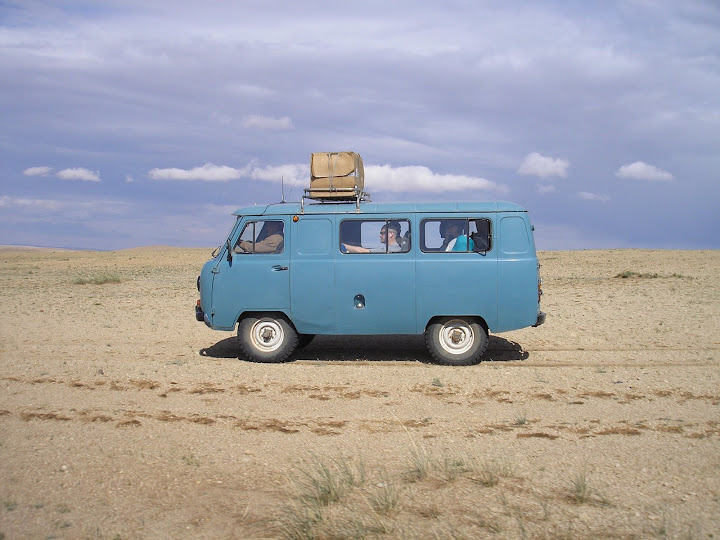
The roadways were often spread wide on the land, as when a particular track became too rutted, the path spread outward, with an area of ruts occasionally being a mile in width because drivers would establish new tracks, "destroying land along the corridor," the researchers noted.

An independent contractor provided the vehicles and a driver that also took care of the vehicles. The transportation was organized with the help of the National University of Mongolia, which was closely involved in the project.

The first portion of the overland journey was about 550 kilometers from the capital to Dalanzagad, and then onward to Gobi Gurvan Sayhan, a national park which was the primary place for the groups' research. The Ikh Bogd region to the north, was also an area investigated.

Local Sustenance

The local food "required some getting used to," Racz said, especially noting that there was no concept of refrigeration. "It took a while to get used to the simple diet."

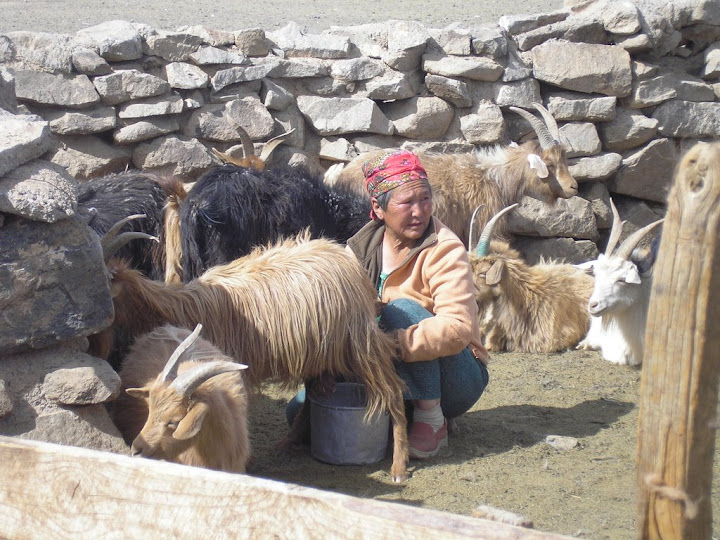
A sheep or goat that was butchered locally by the residents, was usually dried and made into jerky. Milk was usually made into a dry sour cheese.
The hired cook - using two kerosene stoves - usually made a goat stew for every meal, with fried bread often included. The only variety was a stew made from sheep meat.
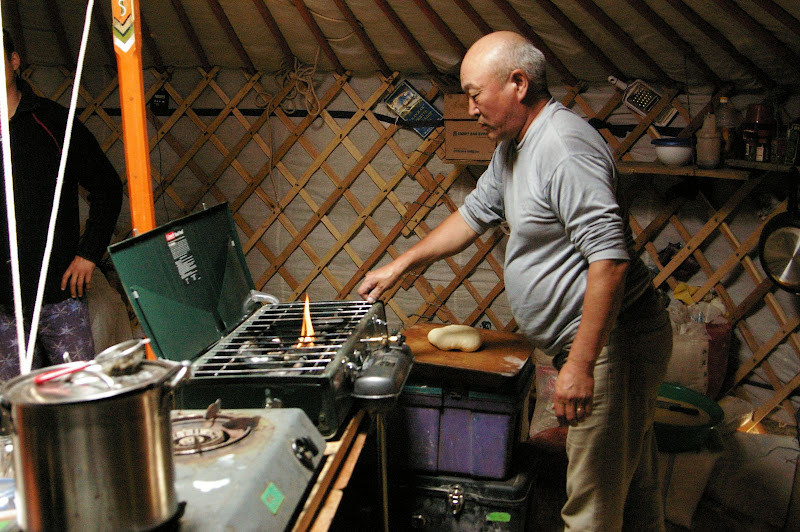
The local means were quite limited. Eggs were available a couple of times to add a bit of variety.

Gobi Gurvan Sayhan Park

Local habitats of this national park - which was the primary research region - included desert grassland, marsh, small areas of forest and some uplands which were alpine grassland. The researchers found that most of the grasslands were well grazed, and in noting the features of the forests, realized they were more brushy due to the dry climate, rather than being large trees with a predominant canopy.

The three UNL researchers all agreed upon the success of this year’s efforts.

About 873 specimens of small mammals were procured, which was twice as many as were expected. These were mostly voles, jerboas, pikas and a few rabbits. Skins were prepared as scientific voucher specimens from the trapped specimens, with tissue samples also taken.

There were 2100 samples of parasites procured, with about a third of the animals being infected and providing a documented source.

Based upon sampling or observations from each area visited, there were about 180 different species of birds noted.

As for herptiles, there were 180 or so records, even though there are few known species in the country.

"Over the course of the trip we recorded about 120 species," of birds, Hosner said. "Birding in Mongolia is all about habitat diversity, as any single habitat has only 10-20 birds species. However, slight differences in habitats (i.e., rock outcroppings vs. no rock outcroppings, bare earth vs. grass vs. shrubs) added up to provide a decent number of birds for such a dry and northerly area. The most similar areas in the United States are the high plains of Wyoming, Montana, and the Great Basin.
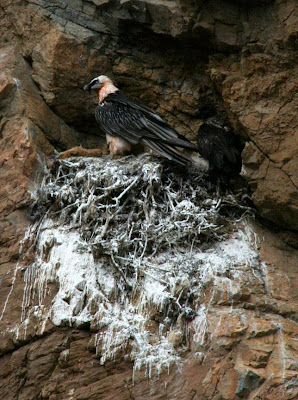
Adult Lammagier and chick at a nest.

"For notable bird records, we had one vagrant, the Black Drongo, which is the second report in the country, and is an overshot migrant from further south. Some of the typical interesting birds of the region included Mongolia's only breeding endemic, the Mongolian Accentor, Mongolian Ground-Jay, Altai Snowcock, Demoselle Crane, Mongolian Lark, and Saxaul Sparrow. Birds of prey are very common, and Mongolia has some of the largest populations of birds like Saker Falcon, Lammagier, Cinereous Vulture, and Griffons. 

"On the down side, we really missed out on the waterbirds of the country. Mongolia has numerous basin salt lakes that contain great diversity and numbers of waterfowl, migrant and breeding shorebirds, and Gulls and Terns. There has been a long drought, and many of these lakes (including every one we were near) have completely dried up, which is a great concern for conservation of some bird species like the Relict Gull" which breeds in colonies on saltwater lakes. This gull is classified as vulnerable on the 2009 IUCN Red List.

Precise Localities for Specimens

GIS coordinates - denoting a precise latitude and longitude - were most useful for indicating the place where a specimen had been collected, as local place names varied. Some historic Russian military maps from 1950 provided geographic particulars, but local residents were often confused by the designated names. The accepted place name may have been revised, and a recognized spelling was often different in comparison language of the current communities.

The local residents did not depend on maps, but their movements were based on an intimate familiarity with the land and the places they traveled.

Personal Highlights

Each of the men shared a particular highlight of their time in the country, when they agreed how easy it was to lose track of time when the only indication of the daily chronology were the regular field notes marking the changing days:

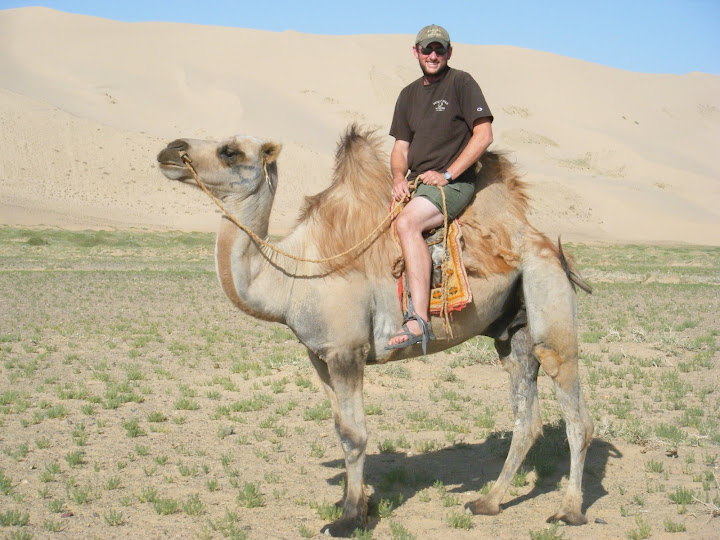
Terry Haverkost: He had been checking small mammal traps in the forest, and had to stop along the way to buy a goat from a local Mongol family. After drinking an offered "airag," or fermented mare's milk drink that tasted like sour milk and was chunky as well, he also took advantage of an opportunity to ride a two-humped camel. The animal was agitated, and despite being led along, decided to move ahead and make its own way. When the saddle slipped off, its user followed. This was his first and only time to have had the distinct experience of falling from a camel, anywhere in the world.
Dave Tinnin: winds of the great Gobi desert seemed to never end. At one camp - while within a somewhat sheltered compound for a few days - the bothersome winds blew at 50-70 kilometers per hour, spreading sand and making for some harsh outdoor conditions.

Gabor Racz agreed that strong winds were a prominent feature of the Asian lands. The tents often flapped in the strong winds, poles were bending under the pressure of the gales, and on occasion stakes were pulled from the ground. "It was often difficult to sleep due to the flapping of the tents," he said.

Windy conditions also were hazardous to the cameras being used to record essential images for the expedition. Solar chargers were part of the expedition gear, and were vital to recharging batteries. Digital cameras were typically used, and at the end of the harsh times, only two cameras still worked. A couple of generators among the gear could provide a means to recharge batteries, or were used to provide light for taking notes or studying specimens when there was insufficient natural illumination.

Pete Hosner’s "favorite site visited was the top of Ikh Bogd Mountain, one of the largest mountains in the country, well over 13,000 ft. At the top of the mountain there was still snow in July, and a lush alpine meadow with many flowers and butterflies typical of the Rockies or Alps, not what one expects in Mongolia. We even had Asian Rosy-Finches up there, which are close relatives of the North American species, and similar in their habits."

Future Research

The grant from the National Science Foundation which supported this expedition, provides for three years of field work in Mongolia.
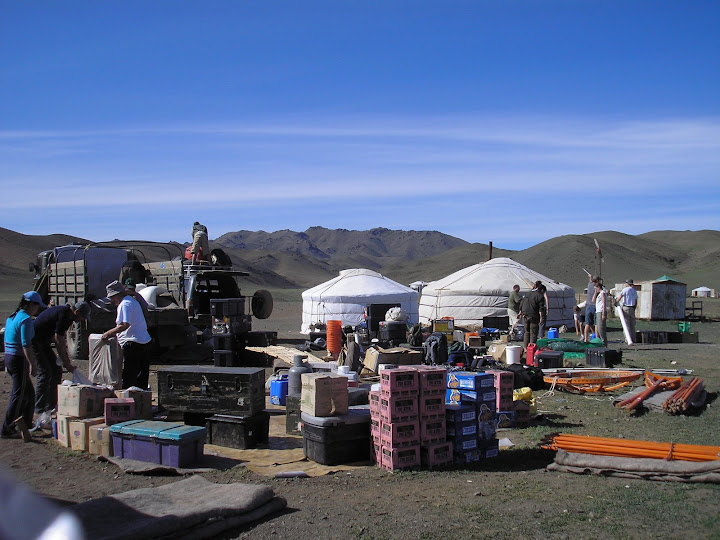
The basic information needed is knowing what is present in the areas surveyed, said Tinnin. Although there had been some limited scientific work in the latter 1990s, there were still some places in the park not previously surveyed.

The three investigators agreed on the importance of letting people know about the natural diversity present, and how the findings of the expedition could help with efforts to conserve the natural features of the region.

Mongolia is twice the size of Texas, and in the southern region visited, the mountainous terrain has numerous plateaus which are very isolated, where it is "poorly understood" what fauna is present, said Racz. Knowing more about these areas is essential in realizing the effects of population isolation, the genetic variety of diversity, and simple basics such as species composition at different places.
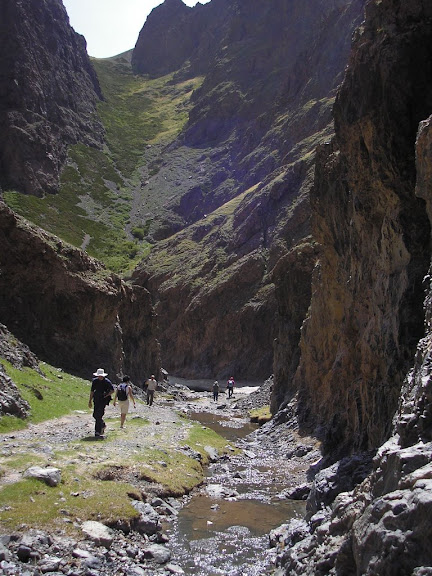
Changing Conditions

Although further analysis of results will be done to clarify the results of the first season of field studies, there are some preliminary indications.

In particular, the men realized that some species that might have been expected based on historic records, they no longer occur. In other instances, species formerly present may occur in lesser numbers.

Habitats are also changing. For example, a large, shallow lake shown on maps from the past, is no longer present, apparently having dried up due to an ongoing drought which has endured for several years, perhaps because of climate change, they said.

Alpine environments, especially meadows, are disappearing, seemingly from drying out in a climate with reduced precipitation.

This initial season of the expedition has started the evaluation of natural history of the Gobi region. Its findings can have a vital role to determine how known Asian ecosystems are changing due to human impacts and a changing environment.

16 September 2009

Instances of Known Bird-Strikes Surpasses 200 at Qwest Center Omaha

When the first two sorry-looking carcasses of Clay-colored Sparrows were found at the Qwest Center Omaha, there was no realization at the time of how dangerous the place was to migratory birds. Two records of death were nothing in the larger scale of ongoing mortality caused by the building. There were more instances of bird strikes during the many months subsequent to 8 May 2008. The place has been visited more than a hundred times to determine how deadly the glass wall of the structure is for migratory birds.

The place is a proverbial "wall of death," causing the demise or injury to a vast array of species, time and time again ... and on and on during this period of investigation into how buildings at Omaha are deadly for migratory birds.

Although there are records only for the past year and a half, without doubt, bird mortality has occurred ever since the building construction was completed and the facility open in September 2003. There are no available records for the five years prior to 2008, but current conditions reflect a situation which has been the same ever since the place was built.

Since day in May in 2008, there has been quite a variety of events associated with the place and it has been an vastly interesting display of how deadly a building can be for migratory birds, and especially how officials responsible responsible for a building's management respond to the bird strike issue.

This is a list of the 201 known instances of bird-strikes, with all but a few having taken place along the west side of the structure, located on the lowlands near the Missouri River, which is a primary breeding zone and migratory corridor for a variety of bird species. Information given in this list is the date when the species was noted as a carcass or disabled bird stunned enough to be occur for a period of time sufficient for observation and notation:

  • 05/08/2008 - Clay-colored Sparrow
  • 05/08/2008 - Clay-colored Sparrow
  • 05/10/2008 - Indigo Bunting
  • 05/10/2008 - Indigo Bunting
  • 05/10/2008 - Nashville Warbler
  • 05/10/2008 - White-throated Sparrow
  • 05/11/2008 - Palm Warbler
  • 05/13/2008 - Clay-colored Sparrow
  • 05/14/2008 - American Redstart
  • 05/18/2008 - Tennessee Warbler
  • 05/19/2008 - Common Yellowthroat
  • 05/20/2008 - Yellow Warbler
  • 05/21/2008 - Baltimore Oriole
  • 05/21/2008 - Indigo Bunting
  • 05/22/2008 - American Robin
  • 05/23/2008 - Indigo Bunting
  • 05/23/2008 - Palm Warbler
  • 05/23/2008 - Willow Flycatcher
  • 05/24/2008 - Common Yellowthroat
  • 05/24/2008 - Eastern Wood-Pewee
  • 05/25/2008 - Common Yellowthroat
  • 05/25/2008 - Tennessee Warbler
  • 05/26/2008 - Common Yellowthroat
  • 05/26/2008 - Common Yellowthroat
  • 05/26/2008 - Lincoln's Sparrow
  • 05/26/2008 - Ovenbird
  • 05/26/2008 - Tennessee Warbler
  • 05/26/2008 - Willow Flycatcher
  • 05/29/2008 - Tennessee Warbler
  • 05/29/2008 - Tennessee Warbler
  • 05/30/2008 - Common Yellowthroat
  • 05/30/2008 - Common Yellowthroat
  • 05/31/2008 - Gray Catbird
  • 06/02/2008 - Indigo Bunting
  • 06/04/2008 - Gray Catbird
  • 06/06/2008 - Indigo Bunting
  • 06/07/2008 - Wilson's Warbler
  • 06/09/2008 - Gray Catbird
  • 06/10/2008 - Chimney Swift
  • 06/10/2008 - Chimney Swift
  • 06/10/2008 - Indigo Bunting
  • 06/24/2008 - Chimney Swift
  • 06/27/2008 - Cedar Waxwing
  • 06/27/2008 - Rose-breasted Grosbeak
  • 07/13/2008 - Common Grackle
  • 08/08/2008 - Chimney Swift
  • 08/08/2008 - House Wren
  • 08/17/2008 - Chimney Swift
  • 08/21/2008 - Mourning Dove
  • 08/31/2008 - Mourning Warbler
  • 08/31/2008 - Northern Waterthrush
  • 08/31/2008 - Ovenbird
  • 09/03/2008 - Wilson's Warbler
  • 09/04/2008 - Nashville Warbler
  • 09/06/2008 - Common Yellowthroat
  • 09/06/2008 - Mourning Dove
  • 09/06/2008 - Nashville Warbler
  • 09/06/2008 - Nashville Warbler
  • 09/06/2008 - Wilson's Warbler
  • 09/13/2008 - Warbler
  • 09/15/2008 - Clay-colored Sparrow
  • 09/15/2008 - Lincoln's Sparrow
  • 09/16/2008 - Lincoln's Sparrow
  • 09/16/2008 - Song Sparrow
  • 09/25/2008 - Blue Grosbeak
  • 09/25/2008 - Brown Thrasher
  • 09/25/2008 - Clay-colored Sparrow
  • 09/25/2008 - Common Yellowthroat
  • 09/25/2008 - Common Yellowthroat
  • 09/25/2008 - Common Yellowthroat
  • 09/25/2008 - Common Yellowthroat
  • 09/25/2008 - Common Yellowthroat
  • 09/25/2008 - Common Yellowthroat
  • 09/25/2008 - Lincoln's Sparrow
  • 09/25/2008 - Lincoln's Sparrow
  • 09/25/2008 - Orange-crowned Warbler
  • 09/26/2008 - Common Yellowthroat
  • 09/26/2008 - Lincoln's Sparrow
  • 09/26/2008 - Mourning Warbler
  • 09/26/2008 - Ovenbird
  • 09/27/2008 - Common Yellowthroat
  • 09/27/2008 - Common Yellowthroat
  • 09/27/2008 - Nashville Warbler
  • 09/27/2008 - Nashville Warbler
  • 09/28/2008 - Clay-colored Sparrow
  • 09/28/2008 - Common Yellowthroat
  • 09/28/2008 - Common Yellowthroat
  • 09/28/2008 - Common Yellowthroat
  • 09/28/2008 - Lincoln's Sparrow
  • 09/28/2008 - Sedge Wren
  • 09/29/2008 - Clay-colored Sparrow
  • 10/01/2008 - House Wren
  • 10/01/2008 - Lincoln's Sparrow
  • 10/01/2008 - Lincoln's Sparrow
  • 10/02/2008 - Lincoln's Sparrow
  • 10/03/2008 - Common Yellowthroat
  • 10/05/2008 - Dark-eyed Junco
  • 10/08/2008 - Warbler
  • 10/08/2008 - Warbler
  • 10/10/2008 - Clay-colored Sparrow
  • 10/10/2008 - Clay-colored Sparrow
  • 10/10/2008 - Lincoln's Sparrow
  • 10/10/2008 - White-crowned Sparrow
  • 10/15/2008 - Orange-crowned Warbler
  • 10/16/2008 - Indigo Bunting
  • 10/18/2008 - Song Sparrow
  • 10/20/2008 - Lincoln's Sparrow
  • 10/20/2008 - Lincoln's Sparrow
  • 10/20/2008 - Lincoln's Sparrow
  • 10/20/2008 - Lincoln's Sparrow
  • 10/20/2008 - Lincoln's Sparrow
  • 10/21/2008 - Lincoln's Sparrow
  • 10/21/2008 - Swamp Sparrow
  • 10/26/2008 - Lincoln's Sparrow
  • 10/28/2008 - Lincoln's Sparrow
  • 10/28/2008 - Lincoln's Sparrow
  • 10/29/2008 - White-throated Sparrow
  • 10/30/2008 - Orange-crowned Warbler
  • 11/01/2008 - Lincoln's Sparrow
  • 11/02/2008 - Dark-eyed Junco
  • 11/02/2008 - White-throated Sparrow
  • 11/16/2008 - American Tree Sparrow
  • 11/20/2008 - Dark-eyed Junco
  • 04/27/2009 - Sparrow
  • 04/30/2009 - Ruby-crowned Kinglet
  • 04/30/2009 - Sparrow
  • 05/04/2009 - Lincoln's Sparrow
  • 05/05/2009 - Clay-colored Sparrow
  • 05/05/2009 - Lincoln's Sparrow
  • 05/07/2009 - Gray Catbird
  • 05/07/2009 - Lincoln's Sparrow
  • 05/08/2009 - Lincoln's Sparrow
  • 05/10/2009 - Mallard
  • 05/12/2009 - Orange-crowned Warbler
  • 05/13/2009 - Grasshopper Sparrow
  • 05/15/2009 - Rose-breasted Grosbeak
  • 05/18/2009 - Baltimore Oriole
  • 05/18/2009 - Baltimore Oriole
  • 05/18/2009 - Swainson's Thrush
  • 05/18/2009 - Swamp Sparrow
  • 05/19/2009 - Baltimore Oriole
  • 05/19/2009 - Chipping Sparrow
  • 05/20/2009 - Clay-colored Sparrow
  • 05/20/2009 - Grasshopper Sparrow
  • 05/20/2009 - Tennessee Warbler
  • 05/22/2009 - Baltimore Oriole
  • 05/22/2009 - Common Grackle
  • 05/22/2009 - Nashville Warbler
  • 05/24/2009 - Rose-breasted Grosbeak
  • 05/25/2009 - Common Yellowthroat
  • 05/25/2009 - Gray Catbird
  • 05/25/2009 - Tennessee Warbler
  • 05/26/2009 - Indigo Bunting
  • 05/28/2009 - Common Grackle
  • 05/31/2009 - Clay-colored Sparrow
  • 06/01/2009 - Common Grackle
  • 06/01/2009 - Common Yellowthroat
  • 06/01/2009 - Indigo Bunting
  • 06/02/2009 - Common Grackle
  • 06/04/2009 - Mourning Warbler
  • 06/06/2009 - Rock Pigeon
  • 06/13/2009 - Indigo Bunting
  • 06/22/2009 - Mourning Dove
  • 07/13/2009 - Indigo Bunting
  • 07/15/2009 - European Starling
  • 07/27/2009 - Mourning Dove
  • 07/27/2009 - Unknown Passerine
  • 08/02/2009 - Orchard Oriole
  • 08/12/2009 - American Redstart
  • 08/12/2009 - Mourning Dove
  • 08/14/2009 - Black-capped Chickadee
  • 08/17/2009 - Mourning Dove
  • 08/17/2009 - Yellow-billed Cuckoo
  • 08/20/2009 - Yellow Warbler
  • 08/24/2009 - Ruby-throated Hummingbird
  • 08/26/2009 - Northern Waterthrush
  • 08/27/2009 - Mourning Warbler
  • 08/28/2009 - American Goldfinch
  • 08/29/2009 - Common Yellowthroat
  • 08/31/2009 - Mourning Dove
  • 09/04/2009 - Wilson's Warbler
  • 09/05/2009 - Wilson's Warbler
  • 09/10/2009 - Chipping Sparrow
  • 09/11/2009 - Wilson's Warbler
  • 09/12/2009 - Northern Waterthrush
  • 09/12/2009 - Northern Waterthrush
  • 09/12/2009 - Northern Waterthrush
  • 09/12/2009 - Wilson's Warbler
  • 09/13/2009 - Common Yellowthroat
  • 09/13/2009 - Northern Waterthrush
  • 09/13/2009 - Wilson's Warbler
  • 09/13/2009 - Wilson's Warbler
  • 09/13/2009 - Wilson's Warbler
  • 09/13/2009 - Yellow-billed Cuckoo
  • 09/14/2009 - Wilson's Warbler
  • 09/14/2009 - Wilson's Warbler
  • 09/15/2009 - Common Yellowthroat
  • 09/15/2009 - Common Yellowthroat
  • 09/15/2009 - Mourning Warbler
  • 09/15/2009 - Northern Waterthrush
  • 09/15/2009 - Wilson's Warbler

There are certainly additional occurrences which have not been documented for reasons including:

1) Removal of the bird prior to any visit, though these have been made very early in the morning; this situation will have an especially notable difference now that Qwest Center officials are removing any birds in the morning when the security man makes his 6 a.m. patrol.
2) Birds which may have struck the glass and fallen upon the roof areas above the entryways; obviously any birds on a roof-top could not be seen from the ground level; on an occasion when inside the building, and taking a look at the roof spots, there were aged carcasses seen. During mid-September 2009, a warbler flew from away from one of these roof-tops sites, as seen from the ground level. This was interpreted as a strike occurrence, though it was not documented.
3) Dates when visits were not made for one reason or another, especially when it was rainy, thus hampering an outing because a bicycle has been used as the primary means of transportation.

Strikes have been noted on 107 different days. Those dates with the greatest number of available records are:

Date — Number Noted
09/25/2008 — 12
05/26/2008 — 6
09/13/2009 — 6
09/28/2008 — 6
09/15/2009 — 5
10/20/2008 — 5
09/06/2008 — 5
09/27/2008 — 4
09/26/2008 — 4
05/10/2008 — 4
09/12/2009 — 4
05/18/2009 — 4
10/10/2008 — 4
And other dates with lesser numbers

This list readily shows how deadly it has been for birds at the Qwest Center Omaha during mid-September 2009, when 15 strikes were recorded on three days.

There have been 46 species documented as having struck the building, with warblers and sparrows among the types of birds noticed most often. This is a list of the species noted, with the number of available records:

Common Yellowthroat - 27 known instances
Lincoln's Sparrow - 25
Wilson's Warbler - 13
Clay-colored Sparrow - 12
Indigo Bunting - 12
Mourning Dove - 7
Nashville Warbler - 7
Northern Waterthrush - 7
Tennessee Warbler - 7
Baltimore Oriole - 5
Chimney Swift - 5
Common Grackle - 5
Gray Catbird - 5
Mourning Warbler - 5
Orange-crowned Warbler - 4
Dark-eyed Junco - 3
Ovenbird - 3
Rose-breasted Grosbeak - 3
White-throated Sparrow - 3
American Redstart - 2
Chipping Sparrow - 2
Grasshopper Sparrow - 2
House Wren - 2
Palm Warbler - 2
Song Sparrow - 2
Swamp Sparrow - 2
Willow Flycatcher - 2
Yellow Warbler - 2
Yellow-billed Cuckoo - 2
American Goldfinch - 1
American Robin - 1
American Tree Sparrow - 1
Black-capped Chickadee - 1
Blue Grosbeak - 1
Brown Thrasher - 1
Cedar Waxwing - 1
Eastern Wood-Pewee - 1
European Starling - 1
Mallard - 1
Orchard Oriole - 1
Rock Pigeon - 1
Ruby-crowned Kinglet - 1
Ruby-throated Hummingbird - 1
Sedge Wren - 1
Swainson's Thrush - 1
White-crowned Sparrow - 1

Each species listed, except the European Starling and Rock Pigeon are protected by the Migratory Bird Treaty Act, though in the case of bird strikes, the significance of this has not yet been determined.

Each day is an unexpected situation, with different numbers and combinations of species that vividly reveal how migration along the Missouri River valley is a deadly affair, with some birds struck dead in their attempt to navigate the deadly gauntlet of human constructs.

Qwest Center Omaha Officials Work to Avoid Responsibility

It seems somewhat ironic for this number of instances to have been determined on a day when a new realization came about on how dedicated Qwest Center Omaha officials are to quickly dispose of birds to convey a sense that no strikes occur. As noted elsewhere, they have required that security personnel remove any birds as a part of their routine of patrolling the building perimeter, something which has apparently been underway for a couple of weeks, according to comments made by a security guard on the 15th.

Deaths and injuries to migratory birds will however, continue unabated here as based on several perceptions. Qwest Center Omaha officials do not appear to have any intention to address the situation in order to reduce or eliminate bird strikes. The executive director will not respond to any inquiries, and the woman chairman of the Metropolitan Entertainment and Convention Authority, the oversight committee of the facility, has not responded to repeated phone messages.

The situation continues to be an educational example on how bird strikes are dealt with by officials. The situation is deplorable because of the people knowingly ignoring ongoing suffering and misery which the building is causing to so many birds.

Early Morning Strike

The following is a picture that illustrates - albeit poorly as it was very dark (about 5:30 a.m.) and there was a chance to only get one picture before the warbler flew away - the latest bird strike at the Qwest Center Omaha. Thankfully, the bird was able to get away before its fate might worsen.

Disabled warbler at the west side of the Qwest Center Omaha. September 17, 2009.

Early morning view of the west side of the Qwest Center Omaha.

A security official was walking around the west side of the building at 5 a.m. Then WOWT showed up for a first news segment, and I visited with the videographer for a short time about the numerous bird strikes which occur, and gave him a way to get some further information. When I took a final look about the west side, another security guy said I should not be riding my bike there as I might run into someone. So I walked.

Building Locale Deadly to Hummingbirds on Similar Date

An interesting tidbit regarding the finding of fatalities of bird strikes in the Omaha area was noted on September 13.

In the morning a dead Ruby-throated Hummingbird was noted in the plaza area of the Central Park Plaza building. The location was noted and a picture was taken. In looking into previous records for this species, it was surprising to find that a Ruby-throated Hummingbird had been found dead at the same exact place a year ago, on September 13, 2008.

Hummingbird noted in 2008.

Hummingbird noted in 2009.

What is was that brought this species to the same place on the same date and with the same result is a mystery of nature that will have to remain unexplained.

15 September 2009

Live Birds Going Into Trash at Qwest Center Omaha?

"Hopefully it’s dead."

These simple words are very telling in regards to the ongoing bird strike situation at the Qwest Center Omaha.

This morning – 15 Sep 2009 – just after having taken a picture of a another warbler carcass at the glass wall on the west side of the Qwest Center Omaha, a security man came up and made the above comment when he picked up the carcass of a warbler so it could be thrown into the trash. The comment was heard but I was so dumbfounded that I asked what twice – because a skycrane was running a short ways away and making a bunch of noise – so he said wait a moment, and once the warbler was in the trash receptacle he came back and repeated the statement. He added: "Sometimes they flop around."

What this indicates to me is that the guard – a person hired by Qwest Center Omaha officials - is doing just as the officials told the company to do each morning, based on my asking the guy a few questions. He said they are supposed to throw away any birds they find and this is being done first thing in the morning and again at 7 a.m.

The disgusting thing this indicates is that all birds are probably being thrown into the trash. This could likely include live birds, which were stunned and disabled upon striking the glass wall along the west side of the Qwest Center Omaha and had not yet recovered to a degree sufficient enough to escape. With sunrise coming later the possibility of stunned birds being present is very likely. And I read yesterday, that rails can be stunned for hours before they may recover so they may seem dead but are actually not.

The despicable thing this also point to is the sorry depths Qwest Center Omaha officials will go to avoid taking any responsibility for the more than 200 bird strikes at this building in 18 months. There were five carcasses today. There were nine carcasses yesterday morning, left over from the weekend.

The Fish and Wildlife Service asked Qwest Center Omaha officials a year ago – at a meeting and in a letter – to address the situation. The request was ignored.

Back in June, when I asked Roger Dixon, the director of the facility to comment on the many bird strikes/deaths occurring, he responded with [this in an email]:

"Last year you were observed by a key staff person of MECA taking a bird carcass from a bag and placing it on the ground, then taking a photograph of this bird claiming it had flown into our facility. It is apparent you have no problem in staging so called "bird takings" due to our facility. You have no credibility, and so I will no longer respond to your inquiries."

This is a blatant lie as it has no truth. I have never staged a bird strike occurrence so this comment is slander!

And the most recent action to having a security firm deal with the bird carcasses lying about means Qwest Center Omaha can place any blame for illegally handling birds or carcasses onto a third party, the security firm.

Based on the time last autumn when FWS officials that grilled me on whether I had a permit to handle or possess migratory birds, it would seem that anyone handling a bird that is alive or dead would need to have a permit.

The security guard was not aware of this as no one had informed him of this until I mentioned it this morning, and suggested he contact the FWS for further information. I’m sure the FWS officials will say that no permit is required to throw away a dead bird.

I sure wonder how the FWS would respond to live birds getting thrown into the trash. Perhaps the birds may recover soon enough to fly out the portal, but perhaps the bag gets taken out, closed up and a bird would get KILLED.

By the way, the only birds I may handle are disabled birds which may be picked up and moved to a safer place so they don’t get run over and smashed or killed when crushed by an ignorant pedestrian. Sure I should have a permit, but I don’t and won’t because in my view, I do not any permit from any agency in order to help an injured bird.

(I consider the FWS hypocrites because they only selectively enforce the taking aspect of the MBTA. This is discriminatory and means that millions and millions of birds die because the agency does nothing about bird strikes. Yet they will fine an energy company hundreds of thousands of dollars for a few eagle deaths (not to demean eagles but to indicate the selective enforcement.) which is a regular practice of the agency. If it was me, I wouldn't pay any fine because you can't charge one entity with a knowing violation, and ignore many others with known violations based on the same law.)

So the birds continue to strike the glass wall at the Qwest Center Omaha and die with great regularity as autumn migration is underway.

Yet nothing is being done.

Qwest Center Omaha officials are apparently doing whatever they can to avoid any responsibility.

The FWS – in this case I call the agency the Federal Whatever Service – has not followed through to get something done at the Qwest Center Omaha. There has been no public sentiment expressed by people interested in birds – other than me – about the essential need to reduce bird strikes in Omaha.

The whole situation at the Qwest Center Omaha is despicable! It is deplorable the misery and pain the injured and dead birds suffer after striking something when the situation could be changed and there could be a great reduction in strikes.

But someone has to do something first ...

And for those who say I should quit whining and do something about it, perhaps you could ask officials at Creighton and the Central Park Plaza about recent contact I've made with them. Or perhaps you can take a look at the OPPD building and see where they have put up screening on some windows and how this has helped to reduce mortality (and I would be remiss in taking any claim for this as one FWS person did inform them of my findings so something was done this spring. I am continuing to keep them informed about recent strikes.) Or ask Union Pacific (with nearly 50 strikes at the UP Center) why they aren't doing anything and yet when they were informed of the situation, they expressed a cavalier attitude when the situation was discussed with them yesterday.

If you are not helping the situation, you have no basis for throwing accusations at me.

Two dead warblers as seen on the morning of 15 Sep 2009. This image was included with the above email sent to federal officials and the NEBirds forum.