Showing posts with label Brown County. Show all posts

13 February 2013

Birdly Details and Pictures From Clear Lake, Lakeland

As a bit of blue among the dunes of Lakeland, Clear Lake has a history of bird use which dates to centuries in the past. The prairie on the hills attracted many species, but the waters were a distinctive attraction.

Geese would gather, and perhaps each year there would be goslings. Ducks would dunk their bills after a tasteful tidbit or dive for a bit of tasty plant. There were swans, grebes and other sorts of aquatic fowl unknown by any known chronicles.

It was not until 1915, nearly a century in the past, that the Franklin's Gull and Forester's Tern were noted in mid-June by a regional survey by U.S. government officials. Then in the mid-1980s, Canada Geese, those obvious and ubiquitous fowl were noted by a state survey of geese.

In July 1996, following years of change that had been wrought upon the lake district of southern Brown county, about a dozen different sorts of summer birds were recorded, representing a typical occurrence of summer-time bird.. None of them were, however, waterfowl upon the lake's waters, and especially surprising was that there were no ducks observed during a quick visit. The known tally conveys the occurrence of about a dozen species mostly present at upland habitats.

An ongoing interest in birds prevails at Clear Lake, most recently by wonderfully evocative photographs. These are some indicative pictures of seasonal residents in recent years, and as taken by attentive observers at the lakeside.


Pictures courtesy of Bruce Beebout. Taken at Clear Lake and the local area.


Adult Bald Eagle.


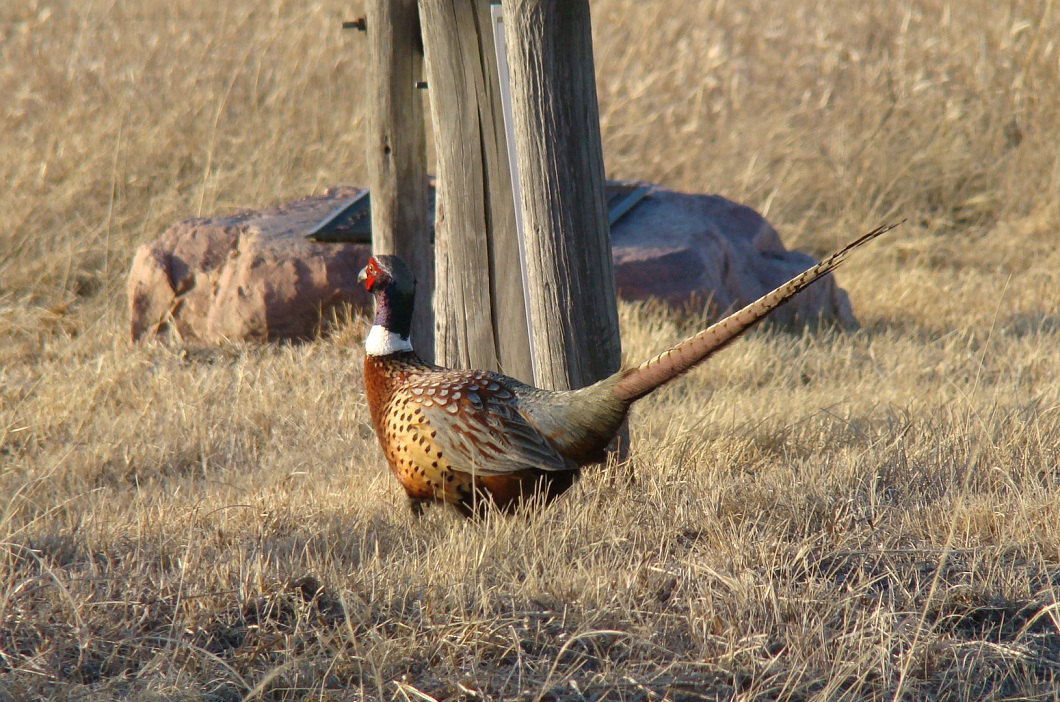
Ring-necked Pheasant at AGA Marsh WMA.


Great Blue Herons.


Barn Swallows.


Trumpeter Swans.


Wild Turkeys.


Upland Sandpiper.


Pictures courtesy of Pat Connor, taken at Clear Lake.


Blue-winged Teal.


Mallard eggs.


A gathering of American White Pelican.

There are also written records of bird observations, which though current not known, might perhaps be further considered, and convey another unique indication of the avian legacy for this lake.

Especially significant now, is how various birds will respond to the improved situation at Clear Lake, following the removal of an unwanted, invasive fish species. There will be dramatic differences, based upon known responses associated with another "rough-fish" removal effort in Nebraska. If aquatic vegetation thrives, it will be a food source attractive to different sorts of many sorts of fowl, and there might be surprise occurrences.

At least 173 different species of birds are known to occur among the Lakeland District of southwest Brown county, predominantly west and northward from Clear Lake.

The pictures included in this post are Copyright protected material of the respective photographer.

11 February 2013

Lake Renovation at Lakeland Sandhills

After years of cooperative effort to achieve a common goal, the condition of Clear Lake was dramatically changed December 4, 2012. Unwanted fish had degraded the quality of the lake, located in the Lakeland district of southern Brown county, so a chemical treatment was applied to get rid of them.

There were nine biologists from the Nebraska Game and Parks Commission involved, along with their equipment which included four boats, an airboat to "work the shallows," and an ATV to treat the drainage, said Dave Tunink, a fisheries biologist with the state agency.

Airboat checking Clear Lake, December 4th.

Photograph by Kyle Graham, U.S. Fish and Wildlife Service. All photographs courtesy of Bruce Beebout.

Club members and others were also actively involved during the day-long tasks.

"Fish species observed during the renovation were dominated by common carp and small black crappie with very few northern pike and largemouth bass," said Tunink. "It was a fish population that needed to be removed and reestablished."

"It was a perfect day of it," said Merlin "Turk" Beebout, a member of the Clear Lake Club since 1974, explaining the weather conditions the day of treatment.

"Loading up" the boats at Clear Lake.

"The application of the chemical went exactly as planned," according to the January 2013 club newsletter. "Some ground crews took care of some of the smaller ponds to the north. The air boat was able to attack areas the larger boats could not access."

Overall, the cost of the project was over $100,000, which includes actual costs and in-kind services. The Sandhills Task Force and U.S. Fish and Wildlife Service each contributed $20,000.

Members of the New Clear Lake Club contributed $16,000 to the project, Bruce Beebout, a member said. They also "did necessary dirt work, pumped some ponds down, assisted in the application of the chemical on those ponds, prepared access to the lake for boats at the lake, and fed the crew on the day of the lake treatment."

Crew enjoying lunch.

Birds such as the great blue heron, ducks and geese, swans and eagles, Bruce Beebout said, are expected to benefit from an improvement in the quality of habitat of the lake. The place now, does not have any hydrological connection to any other lakes or streams, that might provide a means of access for unwanted fish such as the common carp to get reestablished.

"A beautiful sight." Dead carp along the lake shore. Photograph by Kyle Graham.

Species of fish expected to be restocked in the lake this spring are yellow perch, largemouth bass, and black crappie, said Tunink. They would quickly grow to harvestable size in two to three years, according to a note in the club newsletter.

Game Commission biologists will also sample the lake in a couple of years to "evaluate the fishery," Tunink indicated.

Partners involved in the project were club members, the Nebraska Game and Parks Commission, the Sandhills Task Force, the North Central RC&D, and the U.S. Fish and Wildlife Service.

The Clear Lake Club was started in mid-1917, and currently has 28 members.

Aerial view of Clear Lake, looking from east to west. Photograph by Jim Van Winkle.

10 May 2012

Brown County Flora Diversity Revealed

A recently issued scientific paper indicates a great diversity of vascular flora occur in Brown County, Nebraska.

There are 726 plant species, subspecies and varieties known to occur, according to research by Megan K. Killion and Steven J. Rothenberger, associated with the University of Nebraska at Kearney. There are 105 plant families represented.

The diversity is due to the variety of native vegetation types occurring in the 1,221 square miles of the county, from the Niobrara River valley south to the Sand Hills. Specific types identified include sand hills mixed grass prairie, gravelly mixed-grass prairie, ponderosa pine forests/savannas, sand hills borders/mixed-grass prairie, upland deciduous prairie and wetlands.

Another explanation for the floral diversity indicated by the authors, is that "post-glacial forests in the valley serve as a transition zone that supports species with both western and eastern affinities."

"Parts of the Niobrara valley represent a unique transition zone where species with northern, southern eastern and western affinities meet," said Rothenberger. "There are plant species that are more representative of the Black Hills or of montane forest environments than the Great Plains."

The significance of the river valley and its flora "runs far beyond the state's border," he noted in an article prepared for the National Park Service. "Management of the scenic river valley is essential to its biological integrity," he said

Some of the rare or unusual species within the Niobrara Valley include paper birch, hybrid aspen (known as "ancestors of the Pleistocene Epoch" of thousands of years ago), harebell, large-flowered tick-clover, wild columbine, prairie alumroot and different types of sedges.

"It is noteworthy that Megan completed this study as a part of her senior undergraduate research project at UNK," Rothenberger said. "All of our undergraduates are required to complete a research project under the guidance of a mentor (a full-time faculty member of the biology department). She was originally from Brown County and was pleased to discover some new county records that were added to the state's known flora."

There were 14 "new county records" collected, according to the article. The "blue scorpion grass" specimen was only the second for the state, being previously known only from Cass County.

The list of species is based upon specimens collected at 21 sites visited during the 2008 growing season, including Long Pine State Park, the Niobrara Valley Preserve, privately owned pastures and hay meadows and Keller State Park. Their work also involved a review of pertinent publications or material in museum collections to determine additional records.

A comparison was included which indicates the difference in the number of species known for four other Nebraska counties:
Banner - 435
Dixon - 439
Keith - 645
Seward - 613

The recently issued article was in the Transactions of Nebraska Academy of Sciences, 2011 edition. It includes a complete list of those plants recorded thus far in the county. Voucher specimens are now in the herbarium at UNK. Records from this effort have also been added to the Flora of Nebraska (second edition, issued in 2011), by Robert Kaul, David Sutherland, and Steven Rolfsmeier.