13 February 2013

Birdly Details and Pictures From Clear Lake, Lakeland

As a bit of blue among the dunes of Lakeland, Clear Lake has a history of bird use which dates to centuries in the past. The prairie on the hills attracted many species, but the waters were a distinctive attraction.

Geese would gather, and perhaps each year there would be goslings. Ducks would dunk their bills after a tasteful tidbit or dive for a bit of tasty plant. There were swans, grebes and other sorts of aquatic fowl unknown by any known chronicles.

It was not until 1915, nearly a century in the past, that the Franklin's Gull and Forester's Tern were noted in mid-June by a regional survey by U.S. government officials. Then in the mid-1980s, Canada Geese, those obvious and ubiquitous fowl were noted by a state survey of geese.

In July 1996, following years of change that had been wrought upon the lake district of southern Brown county, about a dozen different sorts of summer birds were recorded, representing a typical occurrence of summer-time bird.. None of them were, however, waterfowl upon the lake's waters, and especially surprising was that there were no ducks observed during a quick visit. The known tally conveys the occurrence of about a dozen species mostly present at upland habitats.

An ongoing interest in birds prevails at Clear Lake, most recently by wonderfully evocative photographs. These are some indicative pictures of seasonal residents in recent years, and as taken by attentive observers at the lakeside.


Pictures courtesy of Bruce Beebout. Taken at Clear Lake and the local area.


Adult Bald Eagle.


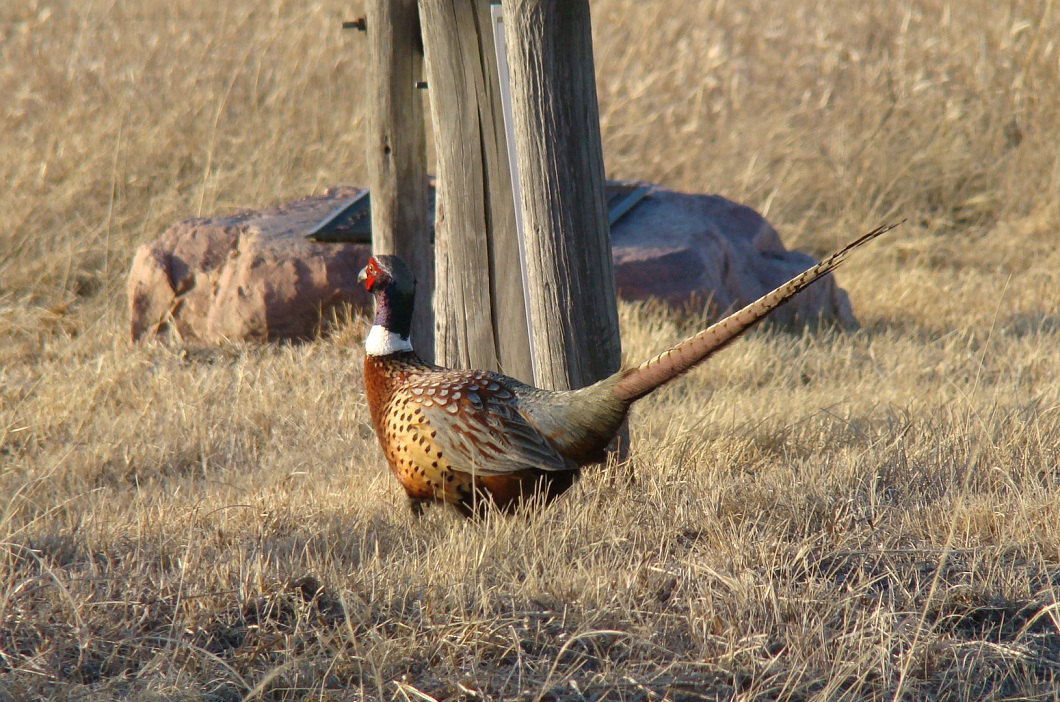
Ring-necked Pheasant at AGA Marsh WMA.


Great Blue Herons.


Barn Swallows.


Trumpeter Swans.


Wild Turkeys.


Upland Sandpiper.


Pictures courtesy of Pat Connor, taken at Clear Lake.


Blue-winged Teal.


Mallard eggs.


A gathering of American White Pelican.

There are also written records of bird observations, which though current not known, might perhaps be further considered, and convey another unique indication of the avian legacy for this lake.

Especially significant now, is how various birds will respond to the improved situation at Clear Lake, following the removal of an unwanted, invasive fish species. There will be dramatic differences, based upon known responses associated with another "rough-fish" removal effort in Nebraska. If aquatic vegetation thrives, it will be a food source attractive to different sorts of many sorts of fowl, and there might be surprise occurrences.

At least 173 different species of birds are known to occur among the Lakeland District of southwest Brown county, predominantly west and northward from Clear Lake.

The pictures included in this post are Copyright protected material of the respective photographer.

Company Withdraws Cherry County MET Tower Proposal

A proposal from Bluestem Sandhills L.L.C. to erect four meteorological towers was withdrawn by the company before it could be considered by the Cherry County board of commissioners at their meeting on the afternoon of February 12th.

Technical engineers withdrew their application at 9:55 a.m., according to the county zoning administrator. The meeting was to start at 2 p.m.

Each tower would have provided details essential to evaluating the potential for generating wind energy with turbines. Each tower would have had a height of 197 feet above ground level, and include something like four sets of guy-wire. Because of their height, an indicator light would not be required at the top of the structure, as they are federally mandated only for structures more than 199 feet tall.

Locations for the proposed towers, as provided by the Cherry county zoning administrator, were:

* southwest 1/4 of section 34, T26N R33W

* northwest 1/4 of section 30, T27N R35W

Both of these sites are on property owned by the Lone Creek Cattle Company, an agribusiness company based from Lincoln, Nebraska.

* southeast 1/4 of section 20, T25N R28W

This parcel is owned by Bureau of Educational Lands and Funds, the Nebraska agency responsible for school section tracts throughout the state. There has not yet been an agreement reached upon the lease amount, nor the period of time that a tower might be placed upon the property, according to a spokesman. "It is clear that we support wind turbines," he said, based upon decisions made by the board. Also, the BELF is a member of the Cherry County Wind Energy Association, and has enrolled 28,000 acres, to fulfill association requirements.

* southeast 1/4 of section 18, T34N R31W

The site is located along Highway 20, southwest of Kilgore, on property owned by the Rothleutner partnership.

These permanent structures required approval by county officials.

There has also been a mobile MET tower along a county road south of Cody, an official in the courthouse at Valentine indicated. No further details were available as to its owner or purpose.

A fifth tower had originally been proposed, but was not included in the postponed request.

12 February 2013

Avian Antics Spring Forth at Elmwood Park


Woodpecker tree along Wood Creek, Elmwood Park. February 12, 2013.

Some birdlife at Elmwood Park in Omaha, is fully involved with what is still a pending spring according to the human calendar.

The excitement of the season was especially obvious at Shadow Lake. While looking for waterfowl, a strident call was heard, and determined to be a Red-bellied Woodpecker. A moment's time later, another of this species arrived, to land nearby. It was a verbal duel, that led to an active tussle, for a bit of time during which both birds tumbled together, downward from the sky. Then they broke apart and once again landed on a nearby tree, to once again express their claim.

The antics will make a difference in who spends the breeding season in the territory. Not too far west, a cavity of a tree is an apparent home place, which hopefully will not be overtaken by starlings.

Along Wood Creek, a Hairy Woodpecker was taking advantage of a large snag tree to convey his intention. The sound resounded. Even a smaller sized Downy Woodpecker came to visit.

On the southern extent of the golf course, a couple of red-tails were courting a third Red-tailed Hawk. A pair landed on a prominent perch, while the "outsider" screamed and soared away towards the north.

There were a bunch of cardinals singing away their morning, being predominant along Wood Creek and Happy Hollow Creek, to the north, along the boulevard. Mourning Doves were newly arrived. A lot of Black-capped Chickadees were obvious in the creeks-side woods. And finally, of some indication, there were more robins around than there have been during recent weeks, especially near the flower-plots on the south side of Memorial Park.

Sadly, not a single Winter Wren, or even a Carolina Wren was heard or noticed. Juncos linger.

UNL Ignores Proper Authors in Digital Commons

The Digital Commons program of the University of Nebraska-Lincoln is showing an obvious disregard to authors of material presented on their website.

For every article presented for the 1983 Nebraska Bird Review, they have not indicated the author, but the current editor of the Nebraska Bird Review publication issued by the Nebraska Ornithologists' Union.

This is more than ridiculous, it is completely wrong. It shows a lack of scholarly consideration to the time and energy spent by the author to research and write the article, prepare graphics, etc.

Articles of particular, personal concern, include:

  • * A 1903 BIRDING EXPEDITION IN CHERRY COUNTY, NEBRASKA
  • * SELECT BIRDING AREAS OF THE NIOBRARA RIVER REGION
  • * SOME BIRDS OF ANDERSON BRIDGE WILDLIFE MANAGEMENT AREA IN CHERRY COUNTY, NEBRASKA

It would make a huge difference on use of articles if the people responsible for this site would ask for permission to use first, rather than post first and not even inform the authors — who they may know how to contact — of their actions.

Digital Commons, UNL screenshot; 9:30 a.m. on February 12, 2013.

It is for this reason, that effective immediately UNL now longer has permission to post any articles written by James E. Ducey, that are protected by the U.S. Copyright Law, and for which permission has not been given.

My preference is to post those of particular interest here, as indicated in the several articles added last month, so the information can be readily available, and its presentation done to suit my standards.

Public Land Designated for Turbine Potential

More than 28,000 acres have been specifically identified by the Bureau of Educational Lands and Funds, a Nebraska agency, for potential wind turbine activities within Cherry County.

The following details are from a list provided by the agency.

The largest tract is ten parcels, comprising just over 6872 acres in the southeast part of the county. The contiguous area is all or portions of sections 8, 9, 16 to 21, 28-30 in T25N R28W, and section 26 to the west in T25N R29W.

T25N R28W, southeast Cherry county.

A meteorological tower would be built in section 20, in the center of the tract, and three miles west of Highway 83. This structure would be readily visible from this major north-south travelway.

There are no details yet available regarding the lease amount for a private company to erect a tower on public property, nor its duration, according to BELF staff.

Four other parcels are also in this general vicinity: 16-26-28, 16-27-28, 16-26-29, and 36-26-29.

Another multi-parcel tract is in T30N R36W, and includes all or part of sections 16, 26, 27, 28, 32, 34 and 36. In the next township south are 16-29-36 near Gordon Creek and 36-29-36. All of these parcels are primarily surrounded by the Abbott-Metzger Ranch, with 16-29-36 less than one-eighth of a mile from the ranch headquarters, with its residences.

Two to three miles south of the western Snake River in the Doughboy vicinity is 16-30-34, and section 36 in the same township. To the north is 36-31-34, which is adjacent to the Snake River.

Further west about four miles, and is 36-31-35, which includes the channel of the Snake River.

Six parcels are within five miles of a proposed MET tower on the southeast extent of the Pullman Ranch owned by Lone Creek Cattle Company. They include 16-27-35 and 36-27-35, along with 16-27-36, 34-27-36 and 36-27-36; also 16-26-36 which is along the north Whitman Road.

West-central Cherry county.

Three contiguous parcels are sections 4 and 5 in T27N R37W and 33-28-37. This is south of the eastern extent of the Davis OLO Ranch. Nearby, a couple of miles south is 16-27-37, and then 36-27-37, by the Henderson Ranch.

A mile east of Highway 61 north of Whitman is 36-27-38, which is a mile south of the turnoff to the Hoyt and Henderson ranch. In the same vicinity is 16-26-37.

The parcel 36-29-37 is 640 acres about two miles south of Gordon Creek, and five miles east of Highway 61. The predominent feature is Goose Lake, situated in the middle of the area.

Goose Lake, in 36-29-37, as indicated by the bluish box. The lake is about 109 acres of the 652.46 acres section. To the southwest is Round Lake.

Section 16-25-33 is about three miles northward from the MET tower proposed for the Quarter Circle Bar Ranch, owned by the Lone Tree Cattle Company.

Along western Calf Creek, is 16-26-34, with section 36 of the same township and range included. About three mile northeast of section 16, is 36-27-34.

The North Loup River flows through 16-28-32, west of Highway 97. Three miles to the southwest is 36-28-33.

Along western Gordon Creek, surrounded by the Kime Ranch, is 16-29-35 with 23-29-35 nearby.

How these land parcels, comprising 28,009.40 acres, were selected is not known. Details on how the agency is promoting use of educational land sections is given on their website.

Chicken Hawks Cackling Above Carthage

Spring is subtly coming to the Carthage neighborhood of eastern Omaha, especially expressive today as the chicken hawks cackled among the trees.

There was an unexpected, notably loud cackling among the treetops heard outside, then again, but it was so unexpected that its source was uncertain. Heard again, being especially obvious to the east, and looking yonder, the hawk was seen in a flight that continued to southward of Cuming Street. It was the expected departure of this vivacious predator.

But then, suddenly, there was another similar cackle nearby, up above the street level. After moseying about a bit as if in a daze while gazing into the gray sky, there was another expressive cackle. After looking around, the source was a hawk perched up in the tree over there, down the hill to the east, along Izard Street.

This is the first instance for seeing two Cooper's Hawks in the neighborhood, potentially considering it as a place for the coming breeding season. There have been many other single birds present, usually seen with a momentary glimpse.

What is most surprising is the many-year-record indicating this species presence at the same time during years now gone. One of this sort of raptor was first seen here on 12 Feb 2004, then the 10th of the month in 2011 and 2012. And then on the 11th this year, on a Monday afternoon, to see two within the same three-day historic period.

This expresses a calendar preferable to any that might focus on holidays or other events not associated with the natural realm. A calendar indicating when the local Cooper's Hawks cackle could be heard would certainly be on the top of some birder's list of interest.

These are chicken hawks, as a residence to the north does have chickens, and from the flock of six, one was taken by a hawk. This bit of bird news was learned when one of the flocks was walking around the front yard.

If a pair decides to linger, it will certainly cause tension among the small birds. The flocks of many House Sparrows, now gathered, would face a new threat, but which would be lessened by their dispersal once it is time to nest.

A preferable option would be that the cackling hawks would set up residence, and prey only upon the starlings that steal places in trees created by the appreciated woodpeckers.

The chicken hawks are welcomed, especially if a suitable pair would decide to reside here for the summer season. A duo of Cooper's Hawks would be more exciting than a residency by American Crows. The big black birds could certainly be appreciated if they were nearby but not within Carthage. The local flocks have not yet dispersed and are still regularly seen flying past, and perhaps a few land to linger. About 75 flew past cawing along on a brisk morning. Songs of the local cardinals are adding to the a.m. melody.

11 February 2013

Lake Renovation at Lakeland Sandhills

After years of cooperative effort to achieve a common goal, the condition of Clear Lake was dramatically changed December 4, 2012. Unwanted fish had degraded the quality of the lake, located in the Lakeland district of southern Brown county, so a chemical treatment was applied to get rid of them.

There were nine biologists from the Nebraska Game and Parks Commission involved, along with their equipment which included four boats, an airboat to "work the shallows," and an ATV to treat the drainage, said Dave Tunink, a fisheries biologist with the state agency.

Airboat checking Clear Lake, December 4th.

Photograph by Kyle Graham, U.S. Fish and Wildlife Service. All photographs courtesy of Bruce Beebout.

Club members and others were also actively involved during the day-long tasks.

"Fish species observed during the renovation were dominated by common carp and small black crappie with very few northern pike and largemouth bass," said Tunink. "It was a fish population that needed to be removed and reestablished."

"It was a perfect day of it," said Merlin "Turk" Beebout, a member of the Clear Lake Club since 1974, explaining the weather conditions the day of treatment.

"Loading up" the boats at Clear Lake.

"The application of the chemical went exactly as planned," according to the January 2013 club newsletter. "Some ground crews took care of some of the smaller ponds to the north. The air boat was able to attack areas the larger boats could not access."

Overall, the cost of the project was over $100,000, which includes actual costs and in-kind services. The Sandhills Task Force and U.S. Fish and Wildlife Service each contributed $20,000.

Members of the New Clear Lake Club contributed $16,000 to the project, Bruce Beebout, a member said. They also "did necessary dirt work, pumped some ponds down, assisted in the application of the chemical on those ponds, prepared access to the lake for boats at the lake, and fed the crew on the day of the lake treatment."

Crew enjoying lunch.

Birds such as the great blue heron, ducks and geese, swans and eagles, Bruce Beebout said, are expected to benefit from an improvement in the quality of habitat of the lake. The place now, does not have any hydrological connection to any other lakes or streams, that might provide a means of access for unwanted fish such as the common carp to get reestablished.

"A beautiful sight." Dead carp along the lake shore. Photograph by Kyle Graham.

Species of fish expected to be restocked in the lake this spring are yellow perch, largemouth bass, and black crappie, said Tunink. They would quickly grow to harvestable size in two to three years, according to a note in the club newsletter.

Game Commission biologists will also sample the lake in a couple of years to "evaluate the fishery," Tunink indicated.

Partners involved in the project were club members, the Nebraska Game and Parks Commission, the Sandhills Task Force, the North Central RC&D, and the U.S. Fish and Wildlife Service.

The Clear Lake Club was started in mid-1917, and currently has 28 members.

Aerial view of Clear Lake, looking from east to west. Photograph by Jim Van Winkle.