18 April 2013

Transfer of Manager Pending at Levi Carter Park

The current park manager at Levi Carter Park is to soon be transferred to another park facility managed by Parks Recreation and Public Property division of the City of Omaha.

This would be a mistake as Randy Garlipp is an obvious asset to this park along Carter Lake. He arrived from N.P. Dodge Park and it was immediately apparent that he had the drive, ethic and interest in improving the park settings.

During my more than 130 visits to the lake and park, Randy has always been cordial, and each time we've taken a minute or two to visit, it made the day more enjoyable.

Levi Carter Park is not an easy park to maintain. Consider:

  • illegal taking of grills by perpetrators focused upon stealing metal and selling it as scrap;
  • graffiti on park facilities which indicate an association with "EO" which might be something like an East Omaha gang;
  • vehicles driving wherever they want, across areas where they is not supposed by be any vehicular traffic, as well as some people that seem to think they can park wherever they want; and
  • litter, trash and other debris are a constant nuisance.

There is an obvious need for more park care, rather than less.

Randy Garlipp was on the scene during the park cleanup on Saturday, April 13th. While taking care of regular chores, he also helped with removal of trash gathered by volunteers. He personally expressed his appreciation for the effort, and he comment was worthy of a further quote. And then he stopped again, northward along the street, to give the same appreciation to some of the last people still working to pick up litter late in the morning.

There are other reasons that there should be no change at Levi Carter Park. Obviously, the primary point here is that: "Don't mess with success." Mr. Garlipp has been successful in maintaining the essential values of Levi Carter Park. Why is it that because a park manager does a great job, they get transferred elsewhere?

Additional reasons against this change are also obvious. Randy Garlipp has been attentive to birds about the lake. In the past two springs, he did not have to be told to clean out the houses for the Purple Martins, but had it done before the birds arrived. This year, there were two houses, and though it seemed necessary to personally do the work, my perspective was mistaken because Randy had already taken care of providing a welcoming place for the martins.

Because of moments of discussion, Randy has realized the various sorts of birds about the lake, and it is something he has said that he appreciates. Many birds appreciated the food he provided during the past winter season at feeders on the south side of his residence.

Levi Carter Park is in dire need of more attention, not less. There have been millions of dollars spent upon the lake improvement project in the past couple of years. And portions of the park are still closed because of this.

Most importantly, the multi-million dollar investment, as funded by multiple sources, needs to continue, and deal with some other issues obvious about the lake. They include:

  • removal of invasive species such as phragmites along the shores of Levi Carter Park, as well as unwanted cedar trees on upland portions of the park, especially at its west side;
  • establishing ample turf upon ground that was disturbed by the so-called lake improvement project;
  • preventing vehicle encroachment upon lake-side spots where people seemingly cannot walk to the lake to fish, but instead drive wherever they want, and which seems to be a law enforcement action by OPD;
  • determining specifics that determine any operation of the water pump on the north side of the lake, and which is within the City of Omaha park;
  • replacing defective concrete at the piers on the east side of the lake; and
  • continuing the community involvement and work well done by the current park manager.

However the decision was done associated with selecting the best manager for this park, there is no transparency, as it seems to be some administrative choice. There seems to have been no opportunity for the people of Omaha to comment on this expectant change!

This decision seems to be another something done by Parks officials that have been regularly oblivious to comments by citizens of the city they seem to tepidily represent at times.

It does not make sense to transfer someone such as Randy Garlipp, who is well aware of the park and its particulars, to someplace else, and bring in a part-timer. What a mistake it would be to create less when the current situation creates more of the place!

Once Mr. Garlipp is transferred, there will only be a "part-time" employee at Levi Carter Park. It is not known if this would be someone working part-time every week, or a set number of hours during the year to be classified as a part-time employee?

Levi Carter Park deserves and requires a fulltime "caretaker" but City of Omaha officials are doing just the opposite! There are many issues in the park environs, and with someone at the scene for fewer hours, things will not be suitably taken of, which will continue an ongoing reduction in what is needed to actually improve the park, which was originally donated by the Levi Carter family, decades in the past.

More needs to be done at this park -- larger than 500 acres -- that is heavily used when entirely open. A fulltime manager is essential for success and Randy Garlipp is the proper person for the job!

14 April 2013

Phantasmagoria of Birds and Trash on a Carter Lake Morning

It was a stupendous time to be birding among the Carter Lake environs on the morning of April 13th. There was a great variety of species and distinctive numbers present at the various locales at this place.

The usual bicycle route started once again at Kiwanis Park, and continued northward and westward and then northward again, as necessary to get a comprehensive perspective.

Two highlights at the first place were two each of the Hooded Merganser and Red-breasted Merganser. Three more of the latter were also seen near Bird Isle, amidst the southern waters of Carter Lake.

This same island was a haven for many Double-crested Cormorants. Some were perched on treetop snags, while others stood in a bunch on the dirt beach on the north point.

It was not even 7 a.m. when the outing started, and was a chilly time to be focused upon the phantasmagoria of birdly actions. At the scene as seen and appreciated in some sort of detail, were many types of ducks and geese, too many coots, gulls and grebes, and mergansers and robins looking for worms amidst the turf. The sun was shining which added a bit of an ameliorating effect to temperatures in the low 30s.

There was a certain bit of despair upon seeing the feathered congregation, because, how could a count be done with so many birds and ongoing flights and movements and others diving beneath the top of the water? Any boundaries for a census effort seemed vague. Cormorants were going hither and yon, or back and forth if that might be preferable language. Add into the mix a juvenile Bald Eagle... that decided to sit atop a tree snag very near the roosting cormorants, much to the chagrin of the smaller fish-eaters that flew away and around until deciding that their point of origin was really okay.

So many fowl were westward from a perspective on the eastern side of the lake. Additional sorts were further north. Even more were settled further away upon the lake waters.

The result was a minute by minute perspective. Look once and then look again. Do a count and then do another, and with so many birds present, this was a repetitive process of review and denote.

An especially significant observation at this time were eleven Great Egrets along the shore on the southern extent of the Iowa West Ranch. Wow! This is only the fifth known record of occurrence here for this species, and the day's tally was nearly three times the greatest number previously seen, which was four in October 2012. There were all within an extent of shoreline less than a football field in length.

The two primary places for the birds was the eastern and western extent of this oxbow lake. At the northern extent, the rowers from Creighton University disturbed the waters so the fowl were forced to linger elsewhere.

There were about 70 Pied-billed Grebes noted overall, whereas there had been fewer than ten on other visits this month. Nearly 5000 American Coots were about, a dramatic increase in numbers, and representative of counts a year ago. At the north "beach" area, two white Snow Goose continued to be present. The seemingly injured blue phase of this species further southward, was not seen., but had been present on the most recent visits.


Cormorants gathered at Bird Isle.


The well-filled Horseshoe Pool at Levi Carter Park.

As the route of the morning continued, the day's purpose underwent a transition. It was apparently the time for a community effort to cleanup trash around the lake. The participants were first seen gathered near the pavilion at the western portion of the lake, from which they moved forth, in a large group. Other people scattered about, with the same intent.

My route went southward, along the west side of the lake. The area on the western side of the street was a obvious mess, and by indicating the debris, as thrown across the street, that was trash to remove. While focused on larger extents of trashy material, my ride languished along the street.

One of the participants asked if my bicycle — prone upon the street edge — should be taken away, in a facetious manner. My reply: "only if you'd be giving me a ride home."

Particular attention was given to a removal of the most prevalent trash marring this portion of the park. It was done to obviously indicate that attention be given to an extensive extent of nearby trash. This seemed to work, because the trash on the west side was part of the focus for the Saturday volunteers.

Later in the morning, most of the volunteers had left, but three people were focused upon the purpose of the morning, and continued to remove trash along the road. As they slowly moved along, a comment was made that this portion of the parked had never been a part of previous trash removal efforts. Perhaps on the 14th, someone might appreciate a trash-free perspective?

Included among my trashy efforts, three tires were removed, including one from the lake shore, which was heaved to the upland along with some sort of former furniture. The debris was hauled over the concrete rubble along the bank.

A broken up toilet along the same street received the same treatment. The bunch of cardboard near the southwest meadow, as had been dealt with on at leas two previous visits, was moved to the east side of the street, and then was finally taken away on Saturday morning.

It was nice to notice that some other trash removed from the meadow area on the 12th, had already been taken away.

By late in the morning, there were only three people removing litter, and there were no more empty trash bags available.

Two of these bags had been taken earlier for use later. One was stuffed to nearly overflowing after picking up trash at the northwest pond, where no one else ventured. It was only a 2/3rds cleanup of this area, but certainly an improvement.

Going southward, my last bag was filled along the western area of Levi Carter Park, and discarded into the bed of the pickup driven by the park caretaker. He certainly appreciated the results of the days' efforts, as indicated during our personal discourse along the street.

This day went from birds to trash. Both endeavors went well, though the bird focus languished later in the morning. Perhaps on the 14th if someone visits the park, they might notice the clean grounds that could contribute to their enjoyment of the day.

As to the tally of bags of trash personally removed, that would be something more than six, because the effort was not done to get a count, but to make a difference. Big things were initially moved to where they would be taken away. Boards and three tires were included. A vexing extent of cardboard, dealt with yesterday in something sort of a preparation, was particularly gotten rid of. It would have been senseless to count the many glass beer bottles.

Everyone there focused upon this effort contributed, so any effort by an individual was just the part of many intent upon a task. A particular, new focus of the effort, was to remove the trash from both side of the southern road on the west side of the lake. Upon my departure it was certainly looking better. More time might have been taken to remove the remaining trash, but there was nothing available to place it in, though an effort was made to see if there might have been some appropriate bags available.

During this event, there was no one from the Iowa Department of Natural Resources seen at the scene. Nor was there anyone present from the Nebraska Game and Parks Commission. No mayoral candidates from the City of Omaha cared enough to show up to assist in this community event. The City of Carter Lake employee involved with the lake project was also not seen anywhere near the western portion of the lake, during my ventures back-and-forth to count birds and get rid of trash. Apparently some city officials, as well as staff of the Iowa and Nebraska natural resource agencies were indifferent to this community effort for improvement!

The only person present from the Omaha Parks Recreation and Public Property Department was the very attentive park caretaker. No one else from this agency cared enough to help, including the acting director, Brook Bench, nor any of the park planners.


Trash removed from the southwest meadow.


Trash taken from the ground surrounding the northwest pond.

The bird tally for the visit was 57 species, with more distinct records derived than upon any other day during the more than 130 surveys done in mostly-the-same manner -- upon a bicycle -- since late-March 2011. One reason for the increase is the addition of distinctive places among the parklands, especially the Horseshoe Pool and Northwest Pond.

From sunrise to nearly noon time, my morning was spent being involved in documenting bird use associated with the Carter Lake area, and contributing to its cleansing.

It was mostly all good this Saturday, on the fourth visit of the current month.

This table indicates the different bird species which have been noted in mid-April in the area of Carter Lake during the past three years.

Common Name 2011 2012 2013
Snow Goose - - - - 2
Canada Goose 9 24 33
Wood Duck 18 18 46
Gadwall - - 14 22
American Wigeon - - 2 1
Mallard 34 44 44
Blue-winged Teal 39 27 34
Northern Shoveler 6 25 209
Green-winged Teal 1 - - 21
Canvasback - - 1 14
Redhead - - 12 2
Ring-necked Duck - - 3 25
Lesser Scaup 12 80 333
Bufflehead 3 - - 21
Hooded Merganser - - - - 2
Red-breasted Merganser - - - - 5
Ruddy Duck 37 70 130
Pied-billed Grebe 1 47 70
Double-crested Cormorant - - - - 185
Great Blue Heron - - - - 1
Great Egret - - - - 11
Black-crowned Night-Heron - - - - 1
Bald Eagle - - - - 1
Red-tailed Hawk - - - - 1
American Kestrel - - - - 1
American Coot 12 975 4860
Killdeer 1 4 14
Greater Yellowlegs - - - - 1
Lesser Yellowlegs - - 7 - -
Franklin's Gull 365 - - - -
Bonaparte's Gull - - - - 23
Ring-billed Gull - - - - 185
Eurasian Collared-Dove - - - - 1
Mourning Dove 3 7 9
Belted Kingfisher - - 1 2
Red-bellied Woodpecker - - - - 2
Downy Woodpecker 1 - - 1
Hairy Woodpecker - - - - 1
Northern Flicker 1 2 4
Eastern Phoebe - - - - 3
Blue Jay - - - - 1
Purple Martin 4 4 6
Tree Swallow - - 15 - -
Northern Rough-winged Swallow - - - - 5
Barn Swallow - - 6 12
Black-capped Chickadee 2 - - 2
White-breasted Nuthatch - - - - 1
Carolina Wren - - - - 1
Ruby-crowned Kinglet - - - - 7
American Robin 74 58 76
European Starling 58 27 38
Chipping Sparrow 2 2 2
Fox Sparrow - - - - 1
Song Sparrow - - - - 7
Harris's Sparrow 1 - - - -
Dark-eyed Junco - - - - 25
Northern Cardinal - - 1 4
Red-winged Blackbird 12 9 15
Common Grackle 79 42 74
House Finch - - - - 2
American Goldfinch 2 2 - -
House Sparrow - - 3 8

There are certainly more sorts of pending bird excitement to be found about Carter Lake. But, if you don't go, you won't know!

12 April 2013

Evaulation of Dundee Business District Trees

Article and photographs copyright 2013 J.E. Ducey. All rights reserved.

An evaluation of trees to be destroyed in the Dundee business district found that many of the tress are in fine condition.

The review was done the morning of April 12th, with the assistance of Dr. David M. Sutherland, emeritus professor of botany at the University of Nebraska at Omaha. Each tree was closely looked at to determine its condition.

Even before looking at the trees to be removed, Dr. Sutherland noted the few ash trees west of Pitch, and commented that they might be prone to injury by the emerald ash borer.

Across the street, the last tree on the west end of the area of interest, looked healthy, but not attractive due to extensive pruning. The next tree east, another locust was "not terribly healthy looking," Dr. Sutherland commented.

The next few locusts have been confined within a small growth area, surrounded by bricks and cement ... obviously a limiting situation.

A larger area of soil would be helpful for the survival of trees in this sort of urban setting.

At the intersection of 50th Street and Underwood Avenue, the trees looked fine, as we observed. One tree northward along 50th Street has had a lot of branches trimmed away, and one broken off, probably by a large vehicle.

This tree was "sad looking with its lower branches removed," Dr. Sutherland commented.

A linden on the south side of ABs, looked healthy, and was thriving at its spot where there was more dirt.

The tree outside the doors to Beer and Loathing, should not have been so confined by bricks. It is a prime example of constricting a tree's potential.

Continuing eastward in the morning, there was a local television station interviewing a proponent of the so-called improvement project.

Prominent onward near 49th Street were four large maple trees.

"Maple trees are not a good tree for neighborhoods," Sutherland said. There were four such trees here which were old and damaged. They "do not look good."

Older maple tree are prone to losing limbs, which might fall upon people or property during the weatherly storms typical of this area.

On the south side of Underwood Avenue, three or four trees, including a couple of ginkos, were in a nice condition, growing among an ample amount of dirt, associated with the lawn of a house. There was nothing to indicate that they were not healthy, were too old, or damaged in any manner.

North along 49th Street, the younger linden trees, looked "just fine."

By the end of our tree walk, the buzz saws were working along 49th Street, northward of Underwood Avenue.

Since all of these trees will soon be gone, the next questions might be:

  1. What sort of trees will be planted to replace the trees removed; and
  2. How many trees will be planted to replace the trees removed?
  3. Will the spots where replacement trees will be placed have the same sort of constricting brick and concrete features?

As the tree removal company finishes their work, why do they use blowers to move their debris onto adjacent property? It should be hauled away, not left behind for someone else to clean up!

Also, why did a company truck have to obstruct pedestrians trying to walk along the sidewalk? This is not only inconsiderate, but also illegal.


The only trees destroyed on Friday morning were those along North 49th Street.

Commentary continues after the Thursday evening gathering at 50th Street and Underwood Avenue.

Television station interview pending on Friday morning.

This is where the truck of the tree contractor was blocking the sidewalk along 49th Street, later in the morning on the 12th.


Possible Nest Destruction by Omaha Project Being Evaluated by Feds

A potential illegal taking of an owl nest by a City of Omaha project is now being considered by the law enforcement section of the U.S. Fish and Wildlife Service.

The taking might have occurred in association with the removal of all of the trees and associated vegetation for the CSO! project underway along the unnamed creek on the east side of the Westlawn Cemetery in central Omaha.

In late-March, according to protocols necessary to conform with state and federal regulations, a nest survey was done to determine if any bird nests might be present amidst the woods along the creek, prior to the clearing of all of the vegetation. No nests were apparently documented, according to a hired surveyor with indicative credentials. A couple of days later, all of the vegetation in this particular area was obliterated, resulting in an expanse of barren ground devoid of anything green, with certainly nothing left with any growing potential.

Subsequently, a young Great Horned Owl was found upon the ground in an area of woods adjacent to the cleared area, according to an official with the City of Omaha public works department and an official with the Fish and Wildlife Service.

There was also a pair of adult birds observed in the vicinity at this time, which indicated their residency, and seemingly that the young owl was their progeny. Some pictures of the little, fledgling owl were also taken by public works staff, for documentary purposes.

The fledgling owl was captured and taken to the Nebraska Humane Society facilities, then subsequently transferred to Raptor Rehabilitation Nebraska for further care.

Any "taking" of a nest of a species protected by the Migratory Bird Treaty Act is a violation of this act, and fines may be imposed. The state of Nebraska has a similar statute.

The ecological services office of the Fish and Wildlife Service has received a letter indicating the particulars associated with the activities associated with this owl. This office also reviewed a draft version of this correspondence.

The final version has been submitted to the federal agency. It was then forwarded to law enforcement personnel of this federal agency, according to a FWS biologist.

On April 10th, a request was made to receive a copy of the letter submitted to the F.W.S. An email was received on the 11th indicating that a copy of the letter would not provided, as indicated by an official of the City of Omaha public works department. The FWS would also not provide a copy.

Those pictures of the owl at the site of its capture are also not available for public consideration.


The City of Omaha received a notice on June 24th that no enforcement action would be taken by the U.S. Fish and Wildlife Service.

11 April 2013

Trash Reaccumulates in Happy Hollow Creek

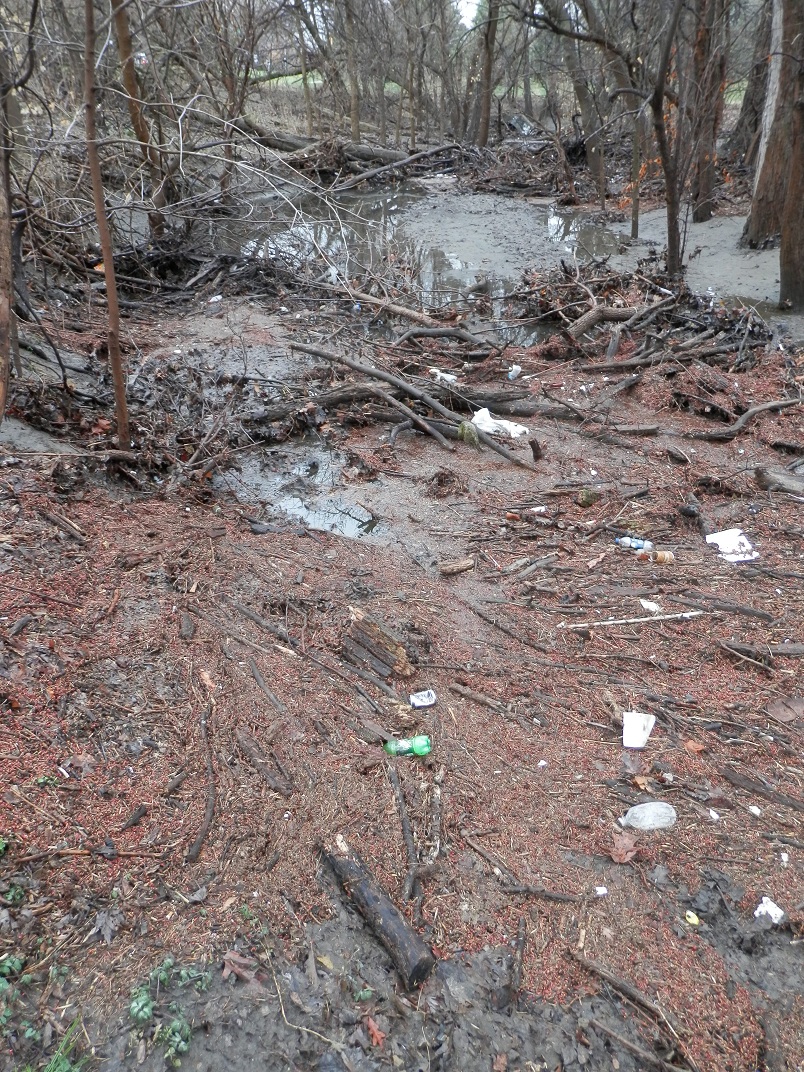
Following the recent rains in the Omaha, a significant amount of trash was washed down Happy Hollow Creek, ending up at the deadfall barriers.

The following pictures taken on April 10th, indicate the trash that has reoccurred. The situation is once again similar to what it was when this issue was first reported.

There was no trash at either of these two locations following the cleanup last Friday and Sunday.

The last picture also shows how the "damming" effect of the debris in the creek results in a temporary inundation of an area of the creek bank. This is hazardous to the trees, and with the excessive water, may result in their mortality, and further degradation of the greenspace environs and its natural qualities.

10 April 2013

Carter Lake Planning Board Indifferent to Greenspace Proposal

Comments asking that the City of Carter Lake protect greenspace adjacent to Carter Lake were met with indifference at the meeting of the planning board on April 8th.


City of Carter Lake planning board before the April 8th meeting.

It was a Monday evening and time was taken to attend the planning board meeting, which started at 7:10 p.m., as members arrived based upon their clock.

The primary topic of the meeting was in regards to effluent from washing cars, and how it might affect the lake adjacent to the city.

Eventually, after 7:30 p.m. my comments were conveyed within agenda item number 6. The pertinent points expressed for the indicative proposal were 1) it was an opportunity for the city; 2) it could enhance the greenspace associated with Carter Lake, and 3) would continue efforts already started by the city.

My request was to:

  • 1) Indicate pertinent parcels owned by the City of Carter Lake as greenspace;
  • 2) Vacate streets within the area;
  • 3) Indicate an intention to create a larger greenspace in association with the parcels already owned by the City of Carter Lake.

The response was completely tepid. One response was in regards to limiting development because it would provide taxable benefits. The members of the board were cognizant of the area being considered. The members of the board did not want to establish a governmental restriction upon someone wanting to construct some thing upon their property, irregardless of any means of access. Any new buildings would pay taxes, one planning board member indicated.

The only significant indication of opportunity indicated was to present the information to the city council. A person on the planning board said that they only make recommendations.

Any opportunity to comment further was squashed by the five minute limit, associated with agenda item 6.
The meeting adjourned at 8 p.m., immediately following my commentary.

This proposal has already been discussed with the mayor of the city, but he has been nearly impossible to contact, so that initiative has also not had any reaction.

08 April 2013

Ineffective Decal Replacement Occurring at CenturyLink

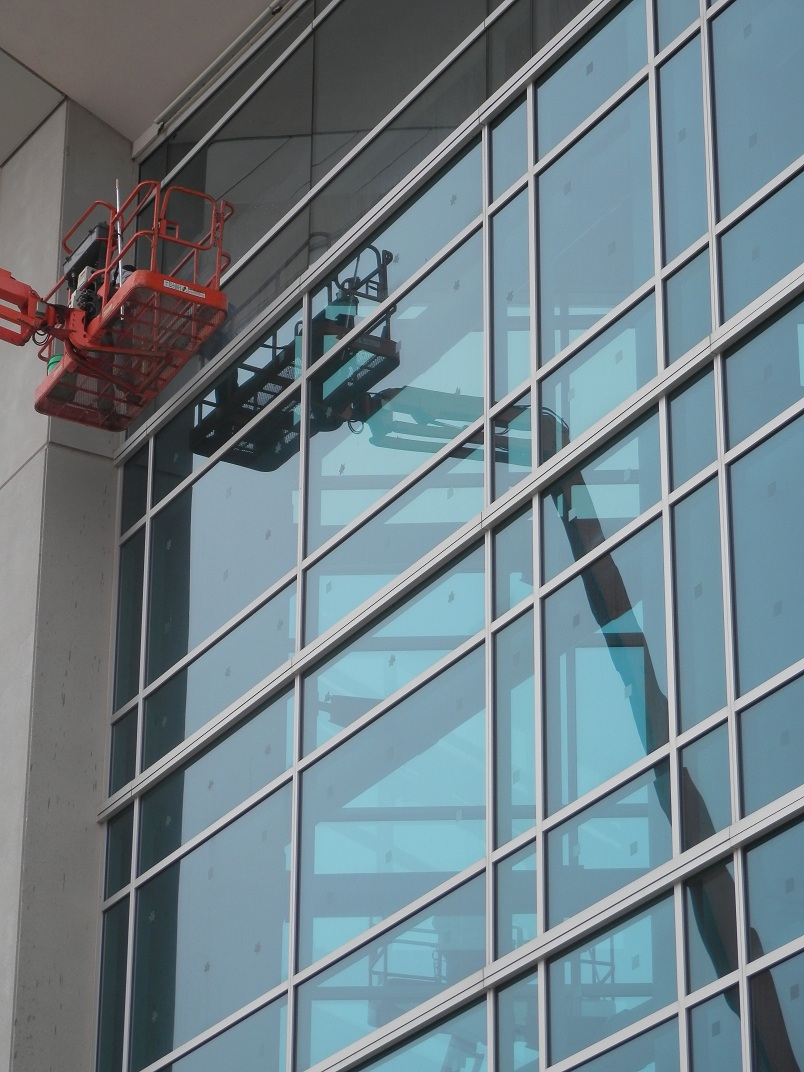
Windows are being cleaned and decals are currently being replaced at the CenturyLink Center. The process involves removal of the decals put in place last year, cleaning the glass, and placement of new decals.

The additional cost for the decal portion of this work is not known, though it must be significant as it's a time-consuming process.


Notice the decals do not occur until the seventh "tier" of glass above the ground. Many of the bird strikes which occur at this locale are associated with ground habitat.


The decals are obvious in this picture taken April 8th.

Despite the decals on the upper three-fourths of the window area, the bottom portion does not have any decals placed upon the glass. This dramatically reduces the efficacy of their being used.

Last season, there were more bird-strike occurrences at CenturyLink that any of the past five years during which records have been kept.

This is the decal product being placed upon the glass.

An alternative option needs to be pursued by the Metropolitan Entertainment and Convention Authority, because money is being spent annually, yet significant numbers of migratory birds continue to be killed or dramatically injured at the west wall of the building.

Last year the decals were replaced in early May.