Showing posts with label natural history. Show all posts

10 February 2013

Shoemaker Legacy Indicated by Nebraska History Article

A scholarly article recognizing naturalist Frank H. Shoemaker has recently been issued and indicates his distinctive contributions to the natural history of Nebraska, from near 1900, into the 1930s.

Wonderfully illustrated by photographs, and including especially evocative comments from his journals, it conveys an undeniable legacy of indicated interest, opportunities to learn, photographic expression and skillful writing.

Especially appreciated at the start of the article, was an indication that my initial efforts to recognize Shoemaker and his collective works were appreciated. Especially prominent back then was a series of three articles prepared for Nebraskaland magazine in the mid-1980s.

Missing in the article was any indication as to how it was recognized as a historic treasure. Individual efforts and a primary contribution from a local conservation group were instrumental in the recognition of Shoemaker's legacy, and providing a focus towards ensuring its long-term conservation by the University.

The presentation for the article is quite nice. A visual perspective is denoted upon the cover, and the initial imagery for the text, denoting the Pine Ridge, Banner County, where there were white-throated swifts, is quite dramatic.

On the contents page of this Spring 2013 issue of the magazine, there is also an thumbnail photograph for which no details are given. It is not known if it applies to Mr. Shoemaker, but an association is certainly conveyed on the page.

Despite any quibbles, the imagery of this well-done article are quite evocative, and serve to convey the verbiage.

Authors of the article titled "Frank H. Shoemaker, Self-made Naturalist and Photograph," were Mary Ellen Ducey, Elaine Nowick and Rebecca Bernthal, associated with the University of Nebraska-Lincoln. It was issued in Nebraska History Magazine, volume 94(1): 2-19.

Shoemaker's words and photographs certainly deserve the further attention given by this article, and a newly-created website that has have several manuscripts written by Shoemaker, presented in their original context. Some photographs are included, with more to be shown, according to information given there.

You'll enjoy the article if you have any interest in birds, historic photographs, history of Nebraska, and especially the distinct perspective of the man who created such a legacy, but died with just a few measly dollars, basically as a pauper, the article indicates.

There is also the distinctive opportunity for people to visit the Frank Shoemaker Marsh, a publicly-owned saline wetland tract north of Lincoln on 27th Street. Birds can be appreciated, or perhaps some rare tiger beetles or a vivid bloom of a prairie plant.

Any recognition of Frank H. Shoemaker contributes further to the profound realization of his supreme legacy, which will only become more important as natural places and landscapes continue to change within Nebraska. It is already obvious that some special places captured in his photos, have already been destroyed by development.

23 April 2010

American Agriculturist Featured Illustrated Accounts of Birds

As agriculture spread across an expanding country and into new states, a monthly magazine issued from New York thought birds were a subject important enough to include occasional accounts of various species among its pages.

The American Agriculturist - established in 1842 - contained an array of topics for the "farm, garden, and household" as "Agriculture is the Most Healthful, Most Useful, and Most Noble Employment of Man," according to the masthead at the top of each issue's cover page. There were tips, techniques and shared methods. Recipes were provided. Land management considerations and a myriad of pertinent articles dealt with the broad subject of agriculture for an area from the eastern coastal states, and westward across the expanding land, as homesteaders were moving to settle new government and railroad lands of the expanding western frontier.

In 1853, Orange Judd became the editor, starting the job a few years after receiving a college degree from Wesleyan University. He purchased the whole shebang just three brief years later, and was thus also was its proprietor. He made the endeavour a great success, increasing subscriptions from 1000 during 1056 to about 100,000 in 1864, according to historic details.

Undoubtedly, some of the readers enjoyed articles which told of birds, their natural history and relative importance in agricultural production, with indications of their interest to shootists. The years of effort are a grand, illustrated history.

A first account of a bird - based on the online versions of the magazine - was in May 1850, and discussed the great horned owl, which included a "cut" of the species perched grandly on a branch.

This topic became much more pervasive on the pages starting in the issues of 1860, based upon a review of online digital versions available for leisurely perusal.

The first engraving featured three species: the blackbird, song thrush and mockingbird, with a bit of a notation about each. There was no author given, but the next month, "S.L.B.," of Brookdale Farm, Maine, was given the credit for a fine, brief story about the house wren. Notes about this birds' song were taken from the Atlantic Monthly. The snow bird was next to have its biography sent out for the readers to enjoy. The author was L.E. Chittenden, whom also wrote a bunch of words about the Barn Owl - the farmer's friend - for the next month's issue.

Something unique to the brief accounts, and especially worthy of appreciation, are the original illustrations. Usually a particular species was shown in a portrait manner, perched on a branch, or among some foliage. Some were shown in a setting representative of their natural habitat, including bits of flora or other essential aspects. In some instances, different species with a common theme were depicted in a group.

Most of the engravings did not indicate the artist, but occasionally they were credited.

"The Covey" presented in an 1863 issue, by J. Wolf, showed a covey of grouse huddled beneath a sheltering branch, with some other small birds perched on nearby branches.

In the spring of 1864, an article indicated the value of providing homes for birds, illustrating a barn design for martins, a house-like construct for bluebirds and a simple box for the wren.

"... the Agriculturist protests against the destruction of birds," but when the sap-sucker was featured in 1864, it was presented as an enemy of the farmer. There seems to have been some confusion, as the birds was known in different parts of the country as the sapsucker, "and is also known as the yellow-bellied and the red-headed woodpecker" based on its markings.

This obviously refers to two types of woodpeckers, but none-the-less they were harangued for damaging orchard trees, as well as trees in the forest. The article referenced P.B. Hoy, whom studied and reported on birds in Wisconsin, and his recommendation for "small shot and a sharp lookout" in order to protect the trees.

In the autumn of 1864, a grand repose showed the wood duck when it was given its bit of press in Judd's monthly.

Other species featured through the mid-1860s were the:

  • Snowy Owl, or harfang
  • Stricken Mallard, a depiction from a painting by George Lance, showing a contorted duck after it had been struck from the shot of a shootist's gun: "the sight of a fine bird shot, and perhaps dropping almost into his hands, is a very satisfactory one to the gunner."
  • Bald Eagle, shown in a dramatic pose of an adult at the nest with two youngsters awaiting a bit of fresh flesh from a recently taken duck.
  • Feathered Friends, which shows a composite view of seven distinct species, with a short account indicating the usefulness of birds.
  • Flushed Partridge, which shows the ruffed grouse, again for this publication, in a frenzied flight away from an unseen shootist: "Whirr-r-r-r - Bang.-Bang.-Not a feather touched!" were the first words given on the front page of an autumn issue.
  • Cat-bird shown in a sublime rendition of an adult birds amongst its haven, with four nestlings subtly included. This was another illustration presented on the cover of a monthly issue.

An October 1868 article is so interesting in the sketches and details of waterfowl hunting on the Chesapeake Bay, that nothing more can be said here, and the details given need to be presented in their own unique presentation!

In the spring of 1870, the American Dipper, or water ouzel, was the focus, and it was discussed on the same page as the gray rabbit, with both animals illustrated.

As an editor, Mr. Judd knew what was interesting to the subscribers which were the support for his ag monthly. Brief mentions of the natural history of birdlife, were a part of his focus to provide a publication of interest enough for readers to send in enough dollars so they could continue to read all about agriculture and enjoy an occasional presentation of some sort of bird.

In the autumn, grebes and loons were illustrated, with the article considering divers and grebes.

The whole birdly theme continued in the pages issued by Editor Judd ...

In a celebratory manner, the "golden-winged woodpecker" had a spread which covered nearly an entire page in January, 1872, except for an illustration of two Plymouth Rock fowls. Including the paragraphs on the next page, they had an entire page given to their lifestyle and habits. Some particular attention was given to the various names by which this woodpecker was known, including the flicker, yellow-hammer, pint, clape, and high-hole to mention what was given in the monthly magazine. In this month's issue, the snow-bird was once again presented.

A dramatic battle of two birds was shown in the February 1872 issue. Profound in its presentation, it shows two eagles fighting over the feathers of a formerly captive teal which is making its escape. The illustration was drawn and engraved exclusively for the American Agriculturist.

Occasionally the sketches are distinctly different from a rendition of a species in its natural habitat, and depicted in a stolid manner. A mid-summer image, was titled "Out For a Bath" and based upon a painting by F.S. Church. After seeing the original painting, an engraving was made of three young "snipe" as they made "their first acquaintance with water." The image is expressive and unique. One of the snipe is shown daintily dipping its foot into the waters, with the two other fledglings closely watching. Even the features of the flora are finely shown.

In mid-summer, the old field lark got its bit of press, under the title of "meadow-lark or meadow-starling." The engraving was done by Mr. Herrick, and shows a group huddled together among the grass. "The flesh of the young bird when fat is highly esteemed, but the old birds are said to be tough and of a disagreeable flavor. In the fall they are generally to be found in the city markets."

The Belted Kingfisher was also featured in 1872.

Usually the accounts provided little original information, but there an occasional tidbit of interest that was included can convey dramatic details of historic ornithology.

With the first species denoted in May 1873 - the Mocking-Bird - the big, single paragraph included: "In the vicinity of New Orleans and Charleston, the negroes trap young Mocking-Birds and expose them for sale in the market at fifty cents each. These are bought by dealers in birds and shipped in large numbers to our Northern cities, where they are kept until full grown and able to sign, when they are sold at prices ranging from $10 to $40 apiece."

The species for June was the cedar-bird, with the primary focus on whether it was a beneficial insect eater. The "Bittern or Stake-driver" and "Red-wing Blackbird" were featured in July. Features presented included a sense of its general range, coloration, what the eggs looked like and other related details which might have been of interest to an agriculturist. Even the "yellow-breasted rail" was considered.

Occasionally the topic took a turn towards the shooting sports, as in March 1875, when the cover had a multi-image engraving depicting snipe, the shooting scene, and the hunters shooting their guns, with two hounds on the point. Snipe were apparently one of the first game birds that could be shot with the onset of spring.

The snipe shooter, with his pride has an "indifference to rain, mud, and cold, and the fatigue of jumping ditches, crawling out of bog holes, and involuntary baths in spring ditches, finds his game with the aid of his dog; gives it a fair chance, cuts it down clean and suddenly, and does not leave a dozen wounded birds to flutter away and perish."

The Gambel's Quail was featured in the next issue. In July, the stilt and Anhinga were depicted in a fine engraving covering much of a page of the magazine.

insert image

With its handsome colors - though depicted in basic black-and-white - the American Redstart was the next bird mentioned, with another depiction by "Herrick" showcasing a long paragraph of notes about this warbler's natural history.

Hunting grouse or partridge was the illustration on the October issue for the year. It was a splendid composition prominently showing several birds fleeing into the trees, a hound in pursuit and the shootist after game, shown with a background illustrating the features of the landscape.

The image was signed by "Hinkle," or C.H. Hinkle, the engraver with the skills necessary to exquisitely accomplish a depiction of an expansive scene which included various poses for several subjects.

The caption gave credit to Edwin Forbes for the sketch.

As an artist, Forbes was best known for painting action scenes on the western frontier. His career began in 1861, as a staff artist for Leslie's Illustrated Newspaper, with his work vividly depicting many scenes of the Civil War, especially showing camp life. John Edwin Forbes did illustrations for many other publications, including the Atlantic Almanac, and would later issue a summary of his military-related work.

His artistic skills were obviously suited for presenting images of birds in their natural setting, as shown in the agricultural magazine.

To accompany this sketch of grouse hunting, there were within the pages, several inches of text giving attention to the Ruffed Grouse.

The theme continued. Among the notable articles to appreciate there are:

  • Some Wild Duck, with engravings of four different species including the long-necked duck, butter-ball, canvas-back and long-tailed duck. The article includes a reference to "methods of shooting" ducks as presented in the October 1868 issue of the American Agriculturist, though that issue could not be reviewed due to it apparently not being among any online archive.
  • American Woodcock and American Snipe: presented together, with both finely illustrated.
  • A songbird, the Scarlet Tanager, was presented as a bird "red as fire."

Completely distinctive was the illustration for the cover of the July 1876, notably in celebration of the independence of the United States of America, a century previously. Various representations were given, showing different manners in which the Bald Eagle was depicted as the nation's national symbol.

The magazine, issued from New York City, cost $1.50 per annum, in advance at this time in the mid-1870s. A single issue cost 15 cents.

Two very untypical species were featured in the same issue: the Varied Thrush (or myrtle robin of Oregon), and the Snow Bunting, which was causing some excitement for its appearance in the New York markets a few months previously. The carcasses - with black wings and tail feathers still present, though otherwise plucked - were bought and "served up at the tables of one of the restaurants as a delicacy," as noted in Turf, Field and Farm. It was readily recognized as being this particular species.

In April, the following year, requests by readers to see a portrait of the "Carolina Parrot" meant the species was prominent on the cover. It was included in a montage on the issue's cover of some birds of the southern United States. Also shown were the white-headed dove and the rowdy mocking bird. An article within the issue, mentioned a sighting in June 1790 near Albany, N.Y., and finished with these words portending the birds' future: "Those who are familiar with their rapid destruction, think that they will, before long, become exterminated."

Other species noted during the year's volumes were the:

  • Steller's Jay, written by Dr. F.S. Matteson, of Coquille City, Oregon, a contributor of the account.
  • Long-legged birds showing the young and old of the Whooping Crane in a dramatic half-page illustration, with the remainder of the page mentioning facets of the distinctive species.
  • Native water-fowl - "two of our most beautiful water-fowl" - were featured in the autumn issue as the two species of teal shown were obviously of great interest to shootists as the time the magazine was mailed to its readers.

To end the year, the Bobolink was noted - with an illustration of its summer and autumn plumage - along with the chickadee, or black-capped titmouse, showing two plump birds on a branch.

The occasional accounts continued.

  • A golden eagle conveyed as eating some sort of migratory fowl was a cover illustration.
  • Two species discussed as "common birds" were the Yellow-headed Blackbird and Pileated or capped woodpecker.
  • The common crow was also presented.

In the final issue reviewed in the early 1880s, another montage showed five species of common winter birds, including the Purple Finch, pine linnet, red-poll linnet, shore lark and Pine Grosbeak.

The popular accounts of birds occasionally presented in the American Agriculturist were bits of information appreciated by the readers, and popular enough for the publishers to have original engravings done to accompany the text. Mixed among the myriad of other subjects important to agriculture, the depictions and details were valuable in educating readers about various species of birds and features unique to different species, with enough information given for people to become familiar with birdlife which they may have known as occurring amidst their local agricultural setting.

The American Argriculturist, though it actually presented little or nothing about birds at a particular place and time, has an distinctive and important role in presenting information to a relatively vast audience. This magazine had an important role in spreading the word - and the educatory value - about the natural history for different kinds of birds, and for its exquisite illustrations. These two features of the a distinctive publication are an important feature of historic ornithology for the U.S.

There is nothing known which is comparable to the ongoing effort by George Judd to convey the wonders of birds during his tenure as an agriculturist and as issued in his monthly publication.

Many of the issues of the American Agriculturist are available online to read and enjoy its accurate and interesting stories of the times. However, not all of the bird stories published could be reviewed due to missing pages in some of the efiles. In several instances, blocks of pages are simply not included for a particular volume. The page numbering is continuous, then there is a sudden multi-page gap. It does not seem that those pages are missing from the originals, though that is a possibility. The other option is that the pages were missed during the scanning process. The value of having the volumes scanned is somewhat diminished because of what is missing.

14 April 2010

Nebraska's Salt Basin ... Going, Going, Nearly Gone

July 1985. Nebraska's Salt Basin. Going, going, nearly gone. Nebraskaland, pages 20-24. This was one of the first modern articles about the saline wetlands of Lancaster County.

IN THE DARK, away from the flickering fires of the Indian encampment, yellowlegs, plovers and sandpipers spread across the mudflats, each bird probing its own bit of soil for food. Newly-arrived shorebirds spiraled down to the shallow waters, racing in knots along the shoreline. Each spring, tremendous flocks of ducks, geese descended on the salt basins to rest on their journey to breeding grounds. Herds of buffalo, pronghorn, elk and deer came to the salt licks along well-worn trails.

Native wildlife and Indian people had been drawn to the naturally occurring salt-water basins around present-day Lincoln for thousands of years before whiteman probed the Great Plains. Neither group knew why this particular place had shallow-water basins saturated with salt; salt concentrations that during dry periods caked the ground with a white crust. To the Indians who came to gather their years supply of salt, and to the waterbirds that paused during migration or lingered to nest, it mattered little how the basins came to be, only that they existed. The flowing springs and groundwater seeps that carried alkaline water to the surface along Salt Creek, the extensive mud flats, and clumps of saline-tolerant marsh plants would all be explained in time.

During the final decades of the 19th century, settlers gathered at the basins to harvest the salt and the city of Lincoln grew, yet the shorebirds and waterbirds continued to gather on the marshes and mudflats during migration. Bare ground or marsh surrounded the openwater basins. Although in places only inches deep, the largest basin reportedly covered nearly two square miles during a wet spring.

During the 1890's, the salt basins drew birders to see "the great numbers of gulls, terns, ducks, geese, wading birds, and waterbirds of all kinds." The local bird club compiled a list of more than 80 species on one occasion. Rare sightings included the trumpeter swan, mergansers, caspian terns and "oddly colored plovers."

The Lincoln Gun Club owned hunting rights to the largest basin, northwest of Lincoln called "Salt Lake." According to ornithologists of the period, their management of the area reduced the disturbance to the flocks of birds gathered there.

"Otherwise, there would have been a continuous fusilade," wrote Erwin Barbour, a University of Nebraska geologist and paleontologist. "The few lakes and marshy area enticed large numbers of waterbirds that could be subjected to indiscriminate shooting." Even so, in the fall of 1899, two men killed "157 ducks of various kinds during six afternoons."

At the turn of the century, development began to have an impact on the salt basins. A dam and connection to Oak Creek were built to enlarge Salt Lake (then better know as Burlington Beach) and stabilize its water level. The area was then developed as a pleasure resort that offered boat rides, a salt-water bathing pool, and carnival rides. And yet, the area continued to attract waterbirds.

An entomologist during the first decade of this century noted that: "Innumerable insects and their larvae by the trillions, have made the salt basin a favored stop-over-point" for migrating birds to feed and rest. In 1904, members of the recently organized Nebraska Ornithologists' Union made a visit to Salt Lake during a spring field trip. Their checklist for the day included 75 different species of birds and noted that the basin's water was: "rich in the minute life which served as food [for] innumerable shorebirds." The "number of species to be observed during a favorable spring or autumn day [was] remarkable for so limited an area."

During the summer, the vegetation of the saline marshes was home for a number of breeding birds. Frank Shoemaker, an amateur naturalist who often visited the salt basins, wrote that songbirds nested in abundance in 25 acres of willows, wild plums, and other trees and shrubs on the east end of the lake nearest town. He described the orchard oriole nests as:

"beautiful structures woven of living grasses, and having the fragrance of new-mown hay."

The anomalous salt basins also were of interest to other naturalists. During the 1920's, Claude Shirk, a university doctoral student, conducted an extensive study of a several-mile-square saline area south of Salt Lake. He found that the concentration of salt in the soil had a direct effect on the survival and growth of the vegetation. Subtle variations in land topography, drainage patterns, or the amount of salt in the soil influenced the plant composition of a particular site. The plant communities responded to the changing degree of salinity in the soil due to moisture from the saline springs and groundwater and fresh water from precipitation.

The research of Dr. Shirk also determined that the saline wetlands he studied were a result of groundwater seeping to the surface from a geologic outcrop below the soil surface. The Dakota Formation was formed millions of years ago when a vast inland sea covered the interior plains of the North American continent. At the bottom of this sea, river and stream sediments trapped saline water as these deposits became sandstone. Near Lincoln, saline soil conditions occur where the water trapped within this outcrop reaches the surface.

Interest in the salt marshes continued through the decades since the beginning of the century. Occasional, but regular, notes and articles on the birdlife have described sightings of rare plovers, sandpipers, and ibis at Capitol Beach (as the Salt Lake, later Burlington Beach, came to be known) and the wetlands north of the city of Lincoln. In August, 1927 the Bruner Bird Club of Lincoln counted over 2,500 individual birds of 14 different species on Capitol Beach. The concentrations of waterbirds also continued to attract hunters. Bird club notes mention that one man shot seven yellowlegs, seven stilt sandpipers, seven pectoral sandpipers, and two long-billed dowitchers in one day. Three days later, eared grebes and three golden plover were taken.

Today, the shallow water, marsh and mud flats that have not been drained or filled, or surrounded by developments of a growing city are only a small remnant of what was once present. But there is still a variety of waterfowl and waterbirds that continue use the limited habitat that is available although not in the numbers common in historic times. During migration, ducks and grebes forage in the open water; small peeps, yellowlegs, and plovers probe the mudflats and shorelines while emergent cattails and sedge still provide cover for rails and blackbirds. During the last 90 years, more than 230 species of birds have been reported from the saline wetlands near Lincoln, more than half of the species reported for the entire state. Rare migrants like the whooping crane and trumpeter swan are no longer seen but an impressive variety of unusual species including the black rail, black-necked stilt, and black-legged kittiwake have been sighted. Recently common moorhens and least bitterns have nested.

Not only birds have been of interest to visitors to the salt marshes. The vegetation that exists has been described by botanists that have identified nine distinct plant communities. As the water level and degree of salinity fluctuates there is a nearly continual movement in these plant communities as they seek the conditions suitable for growth. A number of salt-tolerant plants have been identified in the Lancaster County basins that do not occur elsewhere in the region- sea blite, saltwort and seaside heliotrope.

Today the salt basin wetlands are only a shadow of what they once were, and those that have not been drained or filled are encircled by developments. Yet the variety of waterbirds continue to use the remaining habitat, though not in the numbers common at the turn of the century or earlier. During migration, ducks and grebes forage in the open water; sandpipers, yellowlegs, and plovers probe the mudflats and shorelines; aquatic vegetation still provides cover for rails and blackbirds. During the last 90 years, more than 230 species of birds have been reported from the saline wetlands near Lincoln, more than half the total number reported for the entire state. Rare migrants like the whooping crane and trumpeter swan are no longer seen, but unusual species such as the black rail, black-necked stilt, and black-legged kittiwake have been sighted, and recently, common moorhens (common gallinules) and least bitterns have nested in the remnant salt marshes.

In recent years, botanists have identified nine distinct plant communities. As the water level and degree of salinity fluctuate, there is an ebb and flow of these plant communities as they seek conditions suitable for growth. A number of salt-tolerant species have been identified in the Lancaster County basins that do not occur elsewhere in the region - seablite, saltwort and seaside heliotrope. These plant names alone are an indication of the uniqueness of the salt basin environment.

Only a few relict alkaline plant communities remain around Lincoln. Railroad yards and industry have replaced much of the saline flats studied by botanists and ornithologists only a half century ago. The large "Salt Lake," has a housing development on three sides but the woods and marsh on the east shore is still a haven used by migratory and breeding birds. Oak Park and Lagoon Park, owned by the City of Lincoln, also shelter some native vegetation. Small saline marshes and mud flats along Little Salt Creek by landowners and waterfowl hunters have maintained othr marshy basins.

The large flocks of waterbirds that once gathered on the extensive open water and miles of saline wetlands are now represented by small flocks of waterfowl and smaller gatherings of shorebirds. As native bluestem prairie and meadows that once surrounded the basins have been converted to agricultural, industrial, or residential land, prairie birds have declined in number and variety.

The small tracts of saline wetlands continue to attract naturalists. From the native Indian tribes to modern man, the marshes have been a resource that provides the many needs of both man and wildlife. The salt basins that remain today are only enough to remind us of unique wetland habitat, the wildlife it once supported, and our own early history. Enough remains, though, to encourage us to preserve the remnants.

17 November 2009

Maximilian Journals of 1832-1834 a Treasure of Early American History

When a German prince visited North America to experience a country undergoing many changes, he did not realize that his writings - probably thought to be a tedious chore when done on the frontier - for a time 175 years ago would eventually provide a profound treasure for future scholars.

Pehriska-Ruhpa of the Dog Band of the Hidatsa tribe of Native Americans. Illustration by Karl Bodmer. Courtesy of Wikipedia.org.

Prince Maximilian of Wied traveled to experience the land of the United States and its territories, and to interact with its people. His journals written in his native language, contain vivid details of numerous places from Boston, where he arrived, and across the western frontier which was the home for native Americans.

The journey of the prince and his party, including artisan Karl Bodmer and hunter David Dreidoppel, took place during three years - from 1832-1834 - but the authoritative rendition of the journals is now being realized in an effort which has spread across decades of modern time.

When Marsha V. Gallagher started her career at the Joslyn Art Museum in 1981, one of her first duties was to annotate the images prepared by Bodmer. She relied on a "transliteration" of the expedition journals to realize what was shown, and was - as a specialist in ethnology - "pretty impressed" with the Maximilian collection, which had been acquired by the museum in 1964, based on the purchase by the Internorth Corporation, based in Omaha. At the time, "no one really knew what the journals contained," she said in a recent interview, amongst the exquisite collection of original journals and derivative information needed to prepare authoritative works based on historic renditions.

"The current translation of the journals is a balance between art and science" prepared in a that conveys the flavor and intent of the original author, Gallagher said. "It required the help of many, many people" to prepare the interpretations which are easily readable in volume I and soon in two subsequent volumes.

Stephen S. Witte, a primary editor, first learned of the Maximilian material following his efforts to help complete the publication of the Lewis and Clark journals of 1804-1807, including an index to the expansive writings, prepared under the leadership of Gary Moulton.

Moulton happened to be one of the senior advisers for the Maximilian journals project and was tasked with creating an advisory committee.

Witte began his full-time effort in January 2005, basically knowing about the Clark-Maximilian maps, preparing editorial procedures for properly issuing journals written long ago in a manner suitable for modern scholarly efforts. He also had some experience with the German language, which was an obvious help in understanding what was written in the original journals.

Ornithological History

Birds are a predominant subject in the journal. According to the expedition material, this was the result of planning. The scientific journal prepared by the Prince has a list of articles or books relevant to the cultural and natural history in America. His references included Wilson's ornithology, the series of articles by Charles L. Bonaparte about birds of the region.

According to the finely presented details included in the first issue of the journals, time spent at New Harmony, during the winter of 1833, was spent discussing innumerable topics with Thomas Say, and no doubt appreciating the notable library of history.

Both Gallagher and Witte agreed that it "was hard to say" if these reference works were available to Maximilian while traveling along the Missouri River. Steamboat travel did have its limitations for cargo.

Maximilian seemed to be "more actively involved in getting specimens to identify later," Gallagher said, mentioning that he did know bird songs. His familiarity with birds based on experience was also obviously helpful in noting what was present at different times and places.

Numerous zoological specimens were acquired, but the travails of traveling on the frontier had an obvious impact on the material that could be shipped to a safe place for later consideration.

Most of the zoological specimens available for later study were from the Boston to St. Louis portion of the journey of exploration, Gallagher said. There were some cargo manifests with details of specimens being shipped.

When the American Museum of Natural History bought the Maximilian collection two years after his death, there were 12,000 bird specimens, though many of them were from Brazil, she said.

A Team Effort

Maximilian, Bodmer, Dreidoppel and the many others involved with this expedition "were a team," Gallagher said, noting her personal enjoyment of the Bodmer artwork, a subject to which she has contributed her special perspective in numerous previously published books.

The journals convey a "fascinating historical moment" when "massive change" was taking place in the country, Witte notes. When the Prince was traveling through the eastern states in 1832, he observed railroads under construction, and two years later, they were a means of transportation.

"The Industrial Revolution was really taking hold," Witte said.

West of St. Louis, impacts of the country's expansion and the fur trade were apparent.

Maximilian observed the "consequences of the removal of Native people from the east," as they were being displaced further west. The journals are "one of the last major accounts of the Mandan" in northern Dakota - "before they were struck" by a small pox epidemic in 1837.

The journals are "tremendously fascinating" for someone interested in the history of the country in the early 1830s. The prince was "a keen observer of everything but politics," Witte said.

"Prince Maximilian intended for the information to be seen together," Gallagher said. "It is so important to see the journals in print. Dozens and dozens of people have made" the volumes what they are, and as "good as I think they will be."

"We are gratified to make this information available to far more people than before the journals were published," she said. "They are now available to anyone."

"Our task was to make the information available," through our documentary editing, Witte added. It will be up to "scholars at large to make use of what they can. It is not up to us to give the last word."

Looking Ahead

Funding to complete the publication of three volumes of Maximilian's journal is already available. Important contributors include the Hawks Foundation and the National Endowment for the Humanities. Further assistance has been provided by the Fort Union Association, Friend of Fort Union, Joslyn Art Museum, the National Historical Publications and Records Commission, and the National Park Service.

The University of Oklahoma Press has been "an absolute pleasure to work with," Gallagher emphasized.

Volume 2 of the translated "tagebuch" will be available in the summer of 2010. The final volume is expected to be issued in the spring of 2012, and will include details from late-autumn 1833 to the end of the visit by the German prince and his worthy accomplices.

There is currently no funding available to issue the natural history journal written by Prince Maximilian, so there are no plans for its publication.

A number of additional illustrations by Bodmer are available online, in a black-and-white rendition.

18 September 2009

Expedition Explores Natural History of Mongolia

A summer expedition to Mongolia was a complete success according to the men that traveled from the central plains of North America to the eastern Asia country to investigate the unique and different features of natural history and to evaluate the presence of different diseases and how they may have an influence on public health.

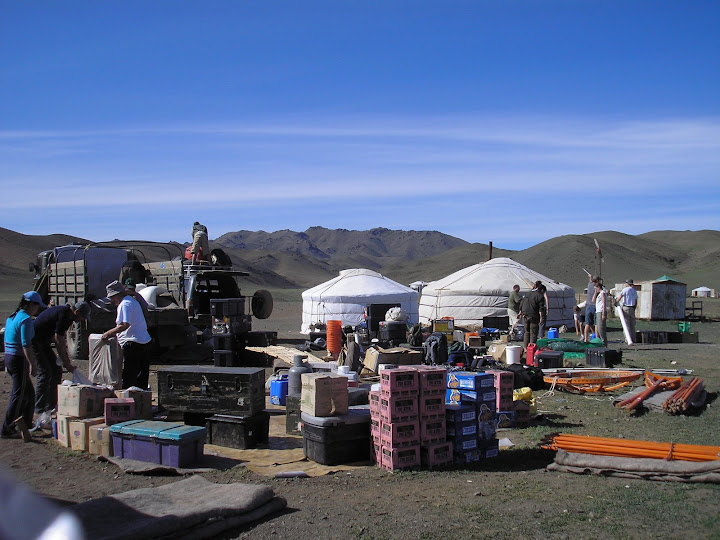
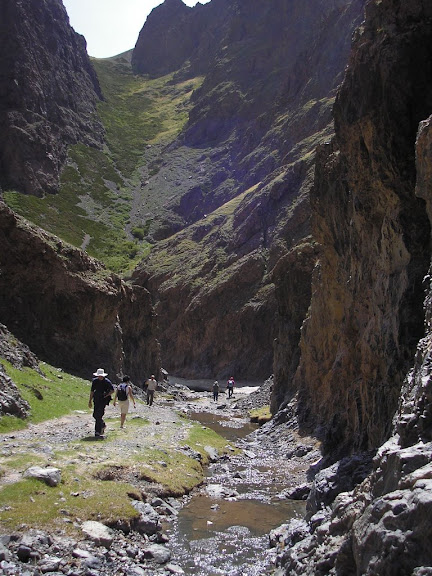
Typical mountains in the region visited by the expedition. Two photographs courtesy of Pete Hosner. Additional photographs shown within the text as thumbnails are courtesy of the expedition members. Click on the image to go to a larger size.

During a recent conversation with Dave Tinnin, Gabor Racz and Terry Haverkost - associated with the University of Nebraska-Lincoln – each conveyed the distinctive events of the expedition. Comments from Pete Hosner, the ornithologist and graduate student at the University of Kansas, were provided by email.

This trip was a year later than planned. The original intent was to start a three-year period of study in 2008, but due to troubles with transportation of expedition materials, the research started this summer instead.

The UNL men left May 25th on a plane flight, east 25 hours to Seoul, in South Korea. Then it was onward to Ulaanbantor, the national capital of Mongolia where the entire party gathered before departure into the distant country.

Much of the essential gear needed for the survey tour was already present in the country, being stored from its prior arrival. Supplies included gallons of peanut-butter important as a bait for traps used to lure small mammals, they noted.

Minimal food was shipped in, according to the group, with many of the essential food staples bought at western-style stores present in the country's capital. A couple of larger provincial capitals also sold needs for the roving crew, which started with 18-20 but settled to from 10 to 16. Bought locally were pasta, rice, onions, potatoes, cabbage and some vegetables, they said. Butchered goats and sheep provided meat.

The party left the capital city early in June to drive and camp about the Gobi Desert region in the south of the country, staying at six sites to explore the local vicinity, continually until July 18-19.

Gobi Desert Days

Four vehicles transported the research crew from the capital to other regional, urban centers and on to the primary camps.

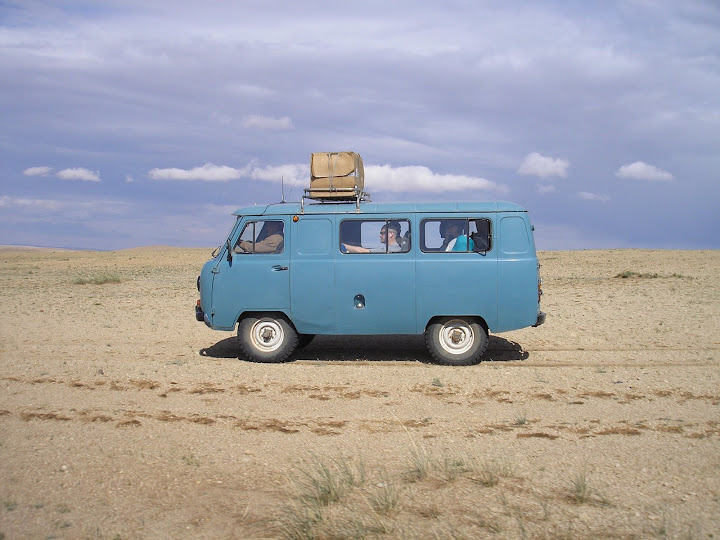
Transportation along primitive roads was provided by a military transport truck, one or two Russian-made mini-buses and a land-cruiser.  It was a difficult environment for vehicles, said Gabor. "The roads were rough, dusty and sandy, and the gasoline was usually of a poor quality, often having been shipped to local centers, and stored in rusty tanks."

The roadways were often spread wide on the land, as when a particular track became too rutted, the path spread outward, with an area of ruts occasionally being a mile in width because drivers would establish new tracks, "destroying land along the corridor," the researchers noted.

An independent contractor provided the vehicles and a driver that also took care of the vehicles. The transportation was organized with the help of the National University of Mongolia, which was closely involved in the project.

The first portion of the overland journey was about 550 kilometers from the capital to Dalanzagad, and then onward to Gobi Gurvan Sayhan, a national park which was the primary place for the groups' research. The Ikh Bogd region to the north, was also an area investigated.

Local Sustenance

The local food "required some getting used to," Racz said, especially noting that there was no concept of refrigeration. "It took a while to get used to the simple diet."

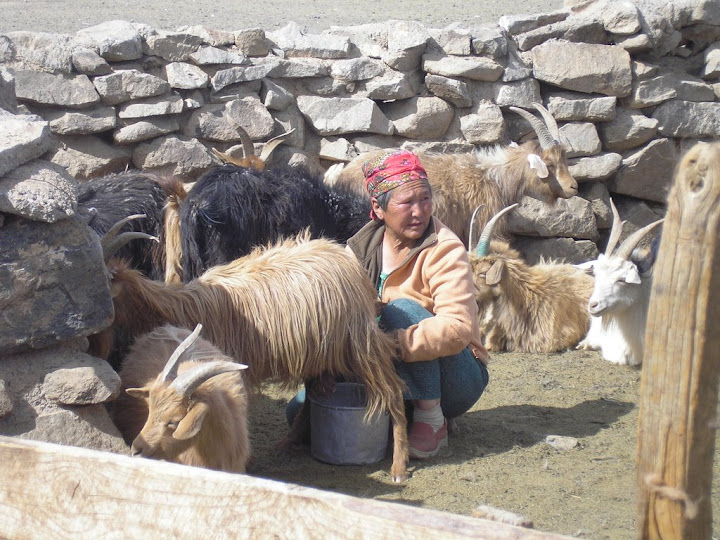
A sheep or goat that was butchered locally by the residents, was usually dried and made into jerky. Milk was usually made into a dry sour cheese.

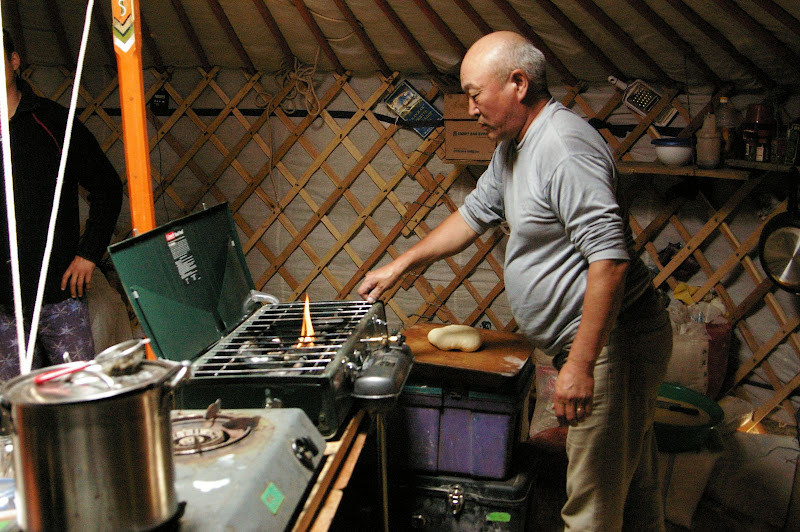
The hired cook - using two kerosene stoves - usually made a goat stew for every meal, with fried bread often included. The only variety was a stew made from sheep meat.

The local means were quite limited. Eggs were available a couple of times to add a bit of variety.

Gobi Gurvan Sayhan Park

Local habitats of this national park - which was the primary research region - included desert grassland, marsh, small areas of forest and some uplands which were alpine grassland. The researchers found that most of the grasslands were well grazed, and in noting the features of the forests, realized they were more brushy due to the dry climate, rather than being large trees with a predominant canopy.

The three UNL researchers all agreed upon the success of this year’s efforts.

About 873 specimens of small mammals were procured, which was twice as many as were expected. These were mostly voles, jerboas, pikas and a few rabbits. Skins were prepared as scientific voucher specimens from the trapped specimens, with tissue samples also taken.

There were 2100 samples of parasites procured, with about a third of the animals being infected and providing a documented source.

Based upon sampling or observations from each area visited, there were about 180 different species of birds noted.

As for herptiles, there were 180 or so records, even though there are few known species in the country.

"Over the course of the trip we recorded about 120 species," of birds, Hosner said. "Birding in Mongolia is all about habitat diversity, as any single habitat has only 10-20 birds species. However, slight differences in habitats (i.e., rock outcroppings vs. no rock outcroppings, bare earth vs. grass vs. shrubs) added up to provide a decent number of birds for such a dry and northerly area. The most similar areas in the United States are the high plains of Wyoming, Montana, and the Great Basin.

Adult Lammagier and chick at a nest.

"For notable bird records, we had one vagrant, the Black Drongo, which is the second report in the country, and is an overshot migrant from further south. Some of the typical interesting birds of the region included Mongolia's only breeding endemic, the Mongolian Accentor, Mongolian Ground-Jay, Altai Snowcock, Demoselle Crane, Mongolian Lark, and Saxaul Sparrow. Birds of prey are very common, and Mongolia has some of the largest populations of birds like Saker Falcon, Lammagier, Cinereous Vulture, and Griffons. 

"On the down side, we really missed out on the waterbirds of the country. Mongolia has numerous basin salt lakes that contain great diversity and numbers of waterfowl, migrant and breeding shorebirds, and Gulls and Terns. There has been a long drought, and many of these lakes (including every one we were near) have completely dried up, which is a great concern for conservation of some bird species like the Relict Gull" which breeds in colonies on saltwater lakes. This gull is classified as vulnerable on the 2009 IUCN Red List.

Precise Localities for Specimens

GIS coordinates - denoting a precise latitude and longitude - were most useful for indicating the place where a specimen had been collected, as local place names varied. Some historic Russian military maps from 1950 provided geographic particulars, but local residents were often confused by the designated names. The accepted place name may have been revised, and a recognized spelling was often different in comparison language of the current communities.

The local residents did not depend on maps, but their movements were based on an intimate familiarity with the land and the places they traveled.

Personal Highlights

Each of the men shared a particular highlight of their time in the country, when they agreed how easy it was to lose track of time when the only indication of the daily chronology were the regular field notes marking the changing days:

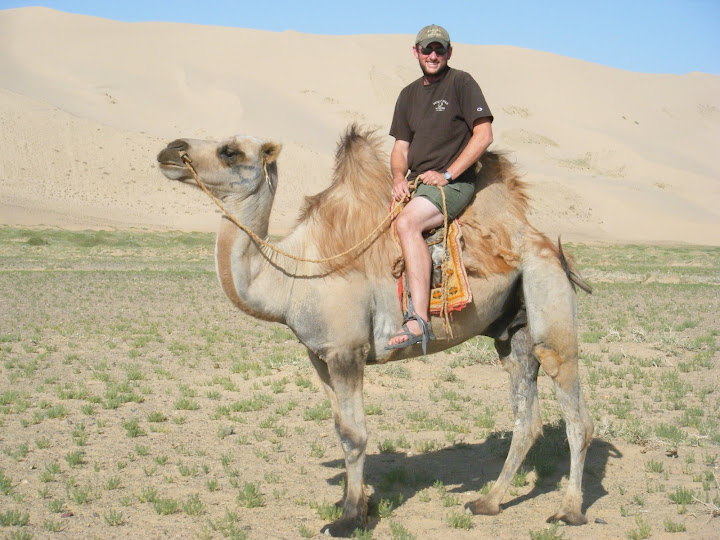
Terry Haverkost: He had been checking small mammal traps in the forest, and had to stop along the way to buy a goat from a local Mongol family. After drinking an offered "airag," or fermented mare's milk drink that tasted like sour milk and was chunky as well, he also took advantage of an opportunity to ride a two-humped camel. The animal was agitated, and despite being led along, decided to move ahead and make its own way. When the saddle slipped off, its user followed. This was his first and only time to have had the distinct experience of falling from a camel, anywhere in the world.

Dave Tinnin: winds of the great Gobi desert seemed to never end. At one camp - while within a somewhat sheltered compound for a few days - the bothersome winds blew at 50-70 kilometers per hour, spreading sand and making for some harsh outdoor conditions.

Gabor Racz agreed that strong winds were a prominent feature of the Asian lands. The tents often flapped in the strong winds, poles were bending under the pressure of the gales, and on occasion stakes were pulled from the ground. "It was often difficult to sleep due to the flapping of the tents," he said.

Windy conditions also were hazardous to the cameras being used to record essential images for the expedition. Solar chargers were part of the expedition gear, and were vital to recharging batteries. Digital cameras were typically used, and at the end of the harsh times, only two cameras still worked. A couple of generators among the gear could provide a means to recharge batteries, or were used to provide light for taking notes or studying specimens when there was insufficient natural illumination.

Pete Hosner’s "favorite site visited was the top of Ikh Bogd Mountain, one of the largest mountains in the country, well over 13,000 ft. At the top of the mountain there was still snow in July, and a lush alpine meadow with many flowers and butterflies typical of the Rockies or Alps, not what one expects in Mongolia. We even had Asian Rosy-Finches up there, which are close relatives of the North American species, and similar in their habits."

Future Research

The grant from the National Science Foundation which supported this expedition, provides for three years of field work in Mongolia.

The basic information needed is knowing what is present in the areas surveyed, said Tinnin. Although there had been some limited scientific work in the latter 1990s, there were still some places in the park not previously surveyed.

The three investigators agreed on the importance of letting people know about the natural diversity present, and how the findings of the expedition could help with efforts to conserve the natural features of the region.

Mongolia is twice the size of Texas, and in the southern region visited, the mountainous terrain has numerous plateaus which are very isolated, where it is "poorly understood" what fauna is present, said Racz. Knowing more about these areas is essential in realizing the effects of population isolation, the genetic variety of diversity, and simple basics such as species composition at different places.

Changing Conditions

Although further analysis of results will be done to clarify the results of the first season of field studies, there are some preliminary indications.

In particular, the men realized that some species that might have been expected based on historic records, they no longer occur. In other instances, species formerly present may occur in lesser numbers.

Habitats are also changing. For example, a large, shallow lake shown on maps from the past, is no longer present, apparently having dried up due to an ongoing drought which has endured for several years, perhaps because of climate change, they said.

Alpine environments, especially meadows, are disappearing, seemingly from drying out in a climate with reduced precipitation.

This initial season of the expedition has started the evaluation of natural history of the Gobi region. Its findings can have a vital role to determine how known Asian ecosystems are changing due to human impacts and a changing environment.

13 March 2008

Radio Expedition Sensitive to Environment at Ducie Island

The recent VP6DX radio expedition to remote Ducie Island accomplished more than a record number or contacts world-wide. The nineteen visitors also worked to minimize any impacts and to remove any trash present on the atoll where they stayed for about two weeks during mid-February.

Looking west along the beach on Acadia Island, the main islet covering the NW, N, and E shores, Ducie Atoll. Photograph by Angela K. Kepler, courtesy of Pacific Biodiversity Information Forum.

There were several environmental goals during their visit, said Eric Scace, a member of the expedition team from the northeast United States. These included:

"1) to leave the island cleaner than it was when we arrived, by collecting trash left by previous visitors and some flotsam.

"Trash and recyclables were removed from the island daily. This included our own trash and stuff picked up each day off the island. (We tried to do a little bit every day, along with a complete sweep of the areas around our campsites on our last days.) That all went into the hold of the ship, and I wasn't there to make a total count. Some items were big: a couple of old fishnet radio beacons were the biggest. We partially disassembled them to make them easier to transport back to the ship and stow for disposal back home.

2) "to avoid damage/change to the basic structure of the island: reefs, shoals, rocks, soil, wooded areas, etc.

3) "to remove all of our own materials and trash, especially all plastics and non-organic materials. Ashes were scattered to avoid concentrations, and human waste was buried at a site not used by plants.

4) "to avoid disturbing plants and animals (with the exceptions of fish caught for food and firewood burned), and to tolerate as much as possible those critters which choose to visit our sites. In practice, this meant avoiding a lot of hermit crabs when walking around at night!

5) "to segregate and recycle used materials from the island and from on-board ship activities back in New Zealand. All plastics/non-organic trash from the island and generated on-board ship was also captured for disposal in New Zealand. Used engine oil from the generators was captured during oil changes for recycling in New Zealand."

Expedition members also undertook efforts to reduce any hazards associated with the several antenna arrays erected to provide radio communications.

"We took care to keep all antennas (with one exception) in open areas (hard limestone or loose large old coral), and there were no ground nests (or remnants of ground nests) in the areas of our camps or antennas at the time of construction," Scace said. “We saw no interactions between birds of any kind and the antennas, other than one or two adult fairy terns perched on horizontal cross-arms."

The two bird species noted to have fledglings during the mid-February visit were Fairy Terns and Brown Noddies, Scace said. "The team photographer took photos of most birds seen at the island, so those might be helpful to others interested in make a more positive identification."

"At one camp, about ten days into the operation, a curious fledgling noddy walked into the camp area. We marked off an area around him so that he would remain undisturbed (we were mostly concerned that the resident hermit crabs not bother him at night)... and found him more curious about us than we were about him. He spent a couple of evenings in his marked off patch of coral, and a few days later was not seen again. I saw two other fledglings testing their not-yet-functional wings near the lagoon's edge in open areas of limestone. One of these I saw several times over the course of two days. Initially I wondered whether these individuals were in trouble, as they were not near any obvious nest and not clearly supervised... but it seemed like this was a normal part of their life cycle... they were not lethargic or displaying obvious signs of distress or weakness, did not appear to be bothered by hermit crabs, and disappeared on their own schedule without a trace (e.g., no carcass on the site)."

Scace said he “was actually very surprised at overall very low number of birds at Ducie during the visit. Besides these two species, there was a handful of frigate birds (only one or two on the ground, none making displays of their red sacs) and a few transient boobies (maybe a dozen individuals over the course of 3 weeks). In one area I could hear at night a group of chattering birds whose calls sounded very duck-like, but never saw an individual that I could associate with the sound; I think these were gathered in heavy underbrush. I saw one hawk-like silhouette on a branch, which definitely surprised me... but I had no field guide to use to make an identification. There was very little bird chatter in general, far less than on other equatorial/tropical uninhabited Pacific Islands on which I have worked (Jarvis, Mellish Reef, Clipperton) or south Indian Ocean islands (St. Brandon in September, for instance, where one hears fairy terns and noddies talking all the time, day and night). I can't comment, based on a single visit in February, whether this was just due to the time of year, due to location, or due to the nature of food sources in that region."

The expedition noted further details for the natural history of the atoll.

"There are no rats/mice on Ducie Island or any other kind of mammal (other than us radio operators and ship's crew)," Scace said. “No sign of turtles or turtle nesting in the areas I visited ... no roaches ... no biting insects. The largest insect we saw was a spider. Other animals included hermit crabs (three shades of red), two varieties of land crab, a very small ghost-like land crab (about 2 cm across), a very small gecko-like lizard (about 4 cm long), and a wide variety (but not annoying population) of small flying insects (about gnat-sized in general)."

Scace couldn't say the expedition did not have any impact on the environment.

"Of course the ship burned diesel fuel during its trip, and we burned gasoline in our generators to make electricity. We ate some fish caught in the waters around the island and on the sea voyage. We burned dead twigs and branches in a camp fire in order to cook our food. We dug latrines in loose coral and buried our feces. Probably, if one ran the numbers, the 19 of us (13 radio operators and 6 ship's crew) used less fossil fuels than we would have used back in our home countries during the same period. So maybe the net planetary impact for these people was less.

"All of us who visited Ducie Island loved its beauty. As a radio expedition, by all external measures the trip was a big success. But for the 19 of us privileged to live on the island for a time, we took away memories and friendships to be treasured for the remainder of our lifetimes. It's hard to describe the sense of wonder in seeing the full moon rise offshore while in an eclipse, to smile at the antics of the fearless and inquisitive fairy terns, to suddenly notice a row of coral trout watching you, or the simple visual delight of looking across the lagoon at dawn or sunset. We felt we were the luckiest people on the planet, to be able to undertake a project for the benefit of a hobby that we love, to do so with people we enjoyed, and to live for a time in such a beautiful corner of the planet. And, as a co-leader of this project, I hope the team's behavior was such that we would be welcome to undertake a similar radio expedition in other intriguing corners of the world."

27 February 2008

Vivid History of Birds Provided by Arctic Voyages in the 1850s

During the Arctic winter of 160 years ago these days, a daily saga was underway among the icy lands of the great north. An expedition led by Sir John Franklin - those remaining anyway - were striving to survive the endless cold. Though their leader and others had already been left behind, the remaining men were searching for refuge and survival.

Constant was the cold and ice during survival for about 130 British Navy crews on an expedition to search for the fabled northwest passage.

There was a constant history of excursions, starting with Davis in 1585, then Hudson around 1610. The United Kingdom relied on overseas explorations and territorial claims. In 1825-1827 was Sir John Franklin's second arctic land expedition, with also the journal of Lieutenant George Peard. This was quickly followed by an 1829-1833 narrative by Sir John Ross during a residence ensconced at Felix Harbour. The ice-bound narrative by literary Captain George Back, on H.M.S. Terror, turning among the ice off Cape Comfort in 1836.

John Rae of the Hudson Bay Company went overland along north Hudson Bay in 1847, up to Committee Bay, on an exploration.

Sir Franklin knew the perils and constantly strove to contend with known problems of long-term survival in hostile conditions. The Royal Navy knew the supplies needed for an Arctic voyage where ice decided fate for visitors. The ships went up Lancaster Sound.

There was no further direct communication. At the home ports in northern Europe, nothing was heard from H.M.S. Erebus with H.M.S. Terror since both ships reached west Greenland in 1845.

Without any further communication with the Royal Navy, the concern turned to action to send out ships and men to search for the lost expedition.

Plans were set to conduct a search. The first among many got sail in 1848. Their orders were to search for remains of the two other H.M. ships.

The party went overland - led by Sir John Richardson - along the Arctic coast. Reports include the narrative of Captain Kellett. Scientific discovery was integral to the travelers. They talked about the people of the villages, even considering their language and providing a dictionary that comments on terms used for local birds.

Further effort was endeavoured by Lady Franklin - his wife Jane - as in April 1849, making a personal letter appeal to President Clayton, for United States government involved. She also made personal appeals to Sir John Ross of earlier Arctic voyages.

Lady Franklin's effort was foremost and urgent, and instrumental in continuing the search that brought a myriad of ships to the north polar seas.

The Board of Admirality was "induced to offer a reward of 20,00 l. sterling to any ship or ships, of any country, or to any exploring party whatever, which shall render efficient assistance to the missing ships, or their crews, or to any portion of them."

The variety of nautical craft sailed the way - several to beget being beset in a shifting panorama of bergs and floes of packed ice - continued with several government expeditions, as well as private excursions. A manner of efforts sallied forth from both sides of the north Atlantic.

  • 1845-1851 narrative by Berthold Seemann of the voyage of H.M.S. Herald to Panama, lower California and the western Arctic
  • 1850 narrative of William Parker Snow on the Arctic Branch Expedition
  • 1850-1851 account by Captain Robert Maclure of the discovery of the north-west passage; includes narrative of H.M.S. Resolute, Capt. Kellett; mentions ducks, geese and swan as waterfowl present
  • 1850-1851 journal by Elisha Kent Kane on the first Henry Grinnell Esq. funded expedition to the Arctic islands
  • 1850-1851 journal by Lieutenant Sherard Osborn on H.M. steam-vessel Pioneer to Assistance Bay, under Captain Horatio T. Austin
  • 1850-1851 journal of Peter C. Sutherland on a voyage with H.M. ships Lady Franklin and Sophia, in Baffin's Bay and Barrow Straits, under command of William Penny; includes reports by Alexander Stewart and Robert A. Goodsir
  • 1850-1853 memoirs of Lieutenant Joseph Rene Bellot with H.M.S. Prince Albert about Batty Bay
  • 1850-1854 diary of Johann Miertsching, Esquimaux interpreter, on H.M.S. Investigator, and other subsequent ships during an ordeal
  • 1850-1854 narrative of Alexander Armstrong, surgeon and naturalist on H.M.S. Investigator to Baring's Island, Prince Albert Land and Victoria Strait
  • 1851-1853 journal by Captain Richard Collinson with H.M.S. Enterprise at Beaufort Sea and Melville Sound
  • 1852 summer by Commander E.A. Inglefield on the schooner Isabel to the eastern Polar basin; single mention of loon and sea-birds
  • 1852-1854 journal of Rochfort Maguire at Point Plover on H.M.S. Plover; with T.E.L. Moore expedition to Point Barrow, 1850; Maguire boat expedition to Point Barrow in 1852; Charles Vernon toward Peard Bay, 1853; Dr. John Simpson Eskimo essay
  • 1852-1854 narrative by Captain Sir Edward Belcher to the Arctic islands
  • 1852-1854 with ship's master George F. McDougall on H.M.S. Resolute to Melville Island
  • 1853-1854 overland of Dr. John Rae from Repulse Bay to Boothia; a source document for this expedition has not been located for review
  • 1853-1855 journal by Elisha Kent Kane on the second Henry Grinnell funded voyage to the Arctic; beset at northwest Greenland
  • 1854-1855 via boat with Isaac I. Hayes, M.D., party to Rensselaer Harbour and Booth Bay, northwest Greenland
  • 1857-1859 narrative by Captain F.L. M'Clintock, on the yacht Fox, in Baffin Bay and Gulf of Boothia finding relics of the Franklin expedition

Lengthy narratives detail events for many days. Oftimes the scribe made an entry for each day. Sometimes the sheer survival meant several months were presented in a paragraph. An unknown number of working men that left Europe remained in the Arctic, their compass stilled, their bones sometimes gnawed by the gnarly wolves. Other relicts - including marker cairns with a message in the bottle - remained, and considered to a great extent by subsequent visitors.

Ordeal was the consistent theme. Frozen toes or fingers - noisy ice lolling about - Esquimaux escapades - burials - tempting seals - daily chills - etc. are among the common reminiscences by the men who scribed narratives under many conditions - balmy to horrific. There was especially a meteorological journal, to compare coldest temperatures, when it was 40o- or on a dubious day of distinction when 50o- and the thermometer mercury had already stopped.

Whether during a whirling compass for a few weeks - or months - sometimes during an overland travel of exploration to document efforts for the prime cause, local activity was denoted in the ship log, sometimes a personal diary to recollect daily events. The words are a treasure of bird-lore.

Arctic Birds

Birds were noted at a many newly designated place's shown, most carefully shown on the maps included with the expedition report. Geography was given on a deftly drawn and detail map useful for nautical purposes. Some maps might include a line to show the determined position on a particular date.

Because of the many voyages in search of the lost expedition, there is an especial history for Arctic birds during this period. Birds were commonly noted because of their value for a fresh pie on a cold wooden ship surrounded by dynamic ice. Overland forays during times of sterile navigation denoted other bird life. A great many little details about Arctic birds are within nearly each of these chronicles. Notations present the birds denoted during a dozen years among the northern lands.

The variety of species given among the narratives depends on the living status of the writer, and details vary from place to place. More than a hundred other locales are represented by the geography of locales in Nanavut and Northwest Territories provinces of Canada, as well as the western coast of Greenland, north from Cape Farewell.

Common Name

1848

1849

1850

1851

1852

1853

1854

1855

1857

1858

1859

Snow Goose

2

2

1

5

4

-

-

-

-

-

-

Brant

3

1

5

9

3

3

3

-

-

1

3

Goose

2

2

1

6

8

4

7

-

-

-

-

Trumpeter Swan

1

-

-

-

-

-

-

-

-

-

-

Swan

-

1

1

-

-

-

-

-

-

-

-

Tundra Swan

1

-

1

-

-

-

-

-

-

-

-

American Wigeon

-

1

-

-

-

-

-

-

-

-

-

Duck

2

1

10

10

6

13

17

-

1

-

3

Teal

-

1

-

-

-

-

-

-

-

-

-

Northern Shoveler

-

1

-

-

-

-

-

-

-

-

-

Northern Pintail

-

1

1

1

2

-

-

-

-

-

-

Scaup

-

1

-

-

-

-

-

-

-

-

-

Unidentified waterfowl

1

2

4

7

3

5

2

-

-

-

-

King Eider

1

1

1

5

2

5

3

-

-

-

1

Common Eider

1

2

10

9

6

-

4

-

1

1

-

Eider

1

-

6

5

2

3

6

2

-

1

-

Harlequin Duck

1

-

-

-

-

-

-

-

-

-

-

Surf Scoter

-

-

-

-

1

-

-

-

-

-

-

Long-tailed Duck

2

1

4

3

2

4

4

-

-

-

1

Willow Ptarmigan

-

-

1

3

6

-

1

-

-

1

4

Rock Ptarmigan

-

-

1

4

3

-

1

-

-

3

4

Ptarmigan

-

-

7

31

18

13

12

3

1

5

-

Red-throated Loon

1

-

1

-

1

-

-

-

-

-

1

Arctic Loon

-

-

-

-

2

-

-

-

-

-

-

Loon

-

2

9

4

2

-

1

-

-

-

-

Common Loon

1

1

1

1

3

-

1

-

-

-

1

Northern Fulmar

-

-

6

-

4

1

3

-

-

-

-

Fulmar

-

-

2

1

-

-

-

-

-

2

1

Shearwater

-

-

1

-

-

-

-

-

-

-

-

Wilson’s Storm-Petrel

-

-

-

2

-

-

-

-

-

-

-

American White Pelican

2

-

-

-

-

-

-

-

-

-

-

Osprey

1

1

-

-

-

-

-

-

-

-

-

Bald Eagle

2

1

-

-

-

-

-

-

-

-

-

Gyrfalcon

-

1

-

2

-

-

1

-

-

-

-

Peregrine Falcon

1

-

-

-

-

-

-

-

-

1

-

Falcon

-

-

-

-

-

-

-

-

-

3

-

Sandhill Crane

1

2

1

-

3

-

-

-

-

-

-

American Golden-Plover

-

-

-

1

1

-

-

-

-

-

-

Plover

-

-

-

1

1

2

-

-

-

-

-

Ruddy Turnstone

-

-

1

-

-

-

-

-

-

-

-

Sanderling

-

-

3

1

1

-

1

-

-

-

-

Sandpiper

-

1

2

2

-

-

-

-

-

-

-

Purple Sandpiper

-

-

2

-

1

-

-

-

-

-

-

Shorebird

-

-

-

-

1

1

2

-

-

-

-

Phalarope

-

1

-

1

2

-

-

-

-

-

-

Red Phalarope

-

-

-

-

1

-

-

-

-

-

-

Gull

-

2

2

9

5

2

7

-

-

2

2

Bonaparte's Gull

1

-

-

-

-

-

-

-

-

-

-

Mew Gull

-

-

1

-

-

-

-

-

-

-

-

Herring Gull

1

-

1

1

1

-

-

-

-

-

1

Glaucous Gull

-

-

7

7

3

3

7

-

-

1

-

Sabine's Gull

1

-

-

4

-

-

-

-

-

-

-

Black-legged Kittiwake

-

-

3

3

3

2

1

1

-

-

-

Ivory Gull

1

-

4

4

-

-

4

-

-

1

-

Caspian Tern

2

-

-

-

-

-

-

-

-

-

-

Black Tern

1

-

-

-

-

-

-

-

-

-

-

Tern

1

-

-

1

1

-

-

-

-

1

-

Arctic Tern

1

1

2

2

-

-

4

-

-

-

-

Jaeger

-

1

-

-

-

-

-

-

-

-

-

Parasitic Jaeger

-

-

1

-

1

-

-

-

-

1

-

Dovekie

-

-

13

5

4

-

1

2

-

2

-

Murre

-

-

5

3

4

-

-

1

-

3

-

Thick-billed Murre

-

-

-

-

1

-

-

-

-

1

-

Black Guillemot

-

-

4

7

4

1

7

-

1

4

1

Guillemot

-

-

-

1

-

-

-

-

-

-

-

Crested Auklet

-

1

-

-

-

-

-

-

-

-

-

Atlantic Puffin

-

-

1

-

-

-

-

-

-

-

-

Owl

-

-

1

-

-

-

-

-

-

-

-

Snowy Owl

1

-

-

5

3

1

1

1

-

1

2

Belted Kingfisher

1

-

-

-

-

-

-

-

-

-

-

Northern Flicker

1

-

-

-

-

-

-

-

-

-

-

American Crow

1

-

-

-

-

-

-

-

-

-

-

Common Raven

-

1

5

9

4

2

5

1

2

2

-

Horned Lark

1

-

1

-

-

-

-

-

-

-

-

Northern Rough-winged Swallow

1

-

-

-

-

-

-

-

-

-

-

Bank Swallow

1

-

-

-

-

-

-

-

-

-

-

Cliff Swallow

1

-

-

-

-

-

-

-

-

-

-

White-crowned Sparrow

1

-

-

-

-

-

-

-

-

-

-

Dark-eyed Junco

-

-

-

1

-

-

-

-

-

-

-

Lapland Longspur

1

-

-

-

-

-

-

-

-

-

-

Snow Bunting

-

-

9

4

6

1

1

-

-

1

-

Rusty Blackbird

1

-

-

-

-

-

-

-

-

-

-

Common Redpoll

-

-

1

-

2

-

-

-

-

-

-

Unidentified birds

-

-

2

-

1

3

5

-

-

-

1

Bird effigy

-

-

1

-

-

2

1

-

-

-

-

Bird-motif garment

-

-

-

-

-

-

7

-

-

-

-

More than sixty recognized species are represented in this list that compiles the distinct voyages in a cooperative manner to show how the bunch are such a distinctive era of bird history for North America.

Bird Bolas

Plover Point was the place where a ship of a similar name spent plenty of time. H.M.S. Plover arrived in September 1852, near Noo-Wook, at what foreign visitors called Point Barrow. The ship was beset at the point, while to the east where the Plover Islands. During a residence during two winters - well described by Captain Rochfort Maguire - there was even a child named in recognition of the boat men. The entry is for December 14, 1852: "... There was only one other man on board - whose wife has been lately confined. We had jested with him some time ago about calling the infant Plover, or as he called it Labba, and on enquiry today he declared that to be the babes name ..."

Spring migration brought an interesting description of bolas being used to down birds for easy capture.

Friday May 20th ... The Natives watch the direction the birds take and run to the nearest point they expect them to pass over, and crouch in the snow until they are passing over, when they dexterously throw their trap to entangle them - and seldom fail to bring one down - The instrument used is common all along the coast and both sides of Bherings straits, and consists of eight or ten pieces of ivory, slung by as many cords nearly a yard long, all of which are united in the hand, so that when thrown the balls spread out and turn over one or more birds in the flock, bringing them to the ground -"

During an afternoon trip to the village, Dr. Hull: "saw some boys practising with the balls used to bring down birds on the wing at two pieces of whale bone tied together in the form of a cross which then thrown forwards came back towards the thrower something in the way of the Australians Boomerang - "

As migration advanced, many of the adult natives were using a bola on May 28th, described in the narrative by Maguire:

"... the ducks were found to be coming past in such numbers, the natives would not leave, and our gentlemen amused themselves shooting, & produced something like 11 from each gun.
"Doctor S gives the following account of this day - I killed ten at the expense of some twenty four charges no great sportsmanlike proceeding, but as my station was behind the natives not to interfere with them many of the shots were more distant than rigid economy of Ammunition would justify. It was a novel sight to see 200 (counted 183) people all ranged in line with balls attached to string, throwing them up at the flocks of birds as they came on - and at each 3-4 to 15 might be seen dropping. Each flight as they received the unexpected assault would rise higher waver & fly along the line entire & there reform in line to proceed on their journey. The flocks became less numerous towards 5 P.M. and many of the Natives left their station on the beach to the West of the Village. I think that not less than 600 that is twelve to each hut were taken by the Natives. Placed as they were twenty guns from the Ship ought to have brought home an equal number in the course of the day which would make one gun to five men with the Native means."

Bird-motif Garments

Maguire also recognized the local fashionable men used pieces or parts of birds as adornment, obviously utilizing feathered portions of a carcass, with the first portion probably eaten as part of a stew, or heaved in a food cache for winter.

In June 1854, Captain Maguire noted this attribute for the locals at Nuvuk, a tribal community village at Point Barrow ...

  • one or two had on white duck trowsers;
  • woman's coat; for common use and among the poorer people, the inner one is made of bird skins;
  • usual belt made of the smaller wing feathers of ducks, after the plumes are taken off; partly sewed and partly woven with plaited cords of sinew; some have checkered appearance produced by alternate rows of black and white feathers; and
  • dressed bird skins are used in making coats.

As Isaac I. Hayes figured how to survive above the polar circle during his post-autumn ordeal in 1854, he wrote enough to mention bird-motif garments worn by leaders for the local clans of the residents at Greenland. The doctor's small bunch of guys was struggling along on the eastern shore of Baffin's Bay in September, then at Wanderer's House, Booth Bay for a time of tribulations and perceived threats.

"We were surprised about noon by the appearance of an Esquimau. He came up the beach, and was as much astonished as ourselves. We recognized him as one of those who were at the ship last winter. His name was Amalatok. After exchanging salutations, he seated himself upon a rock with a cool dignity quite characteristic of his people, and began to talk in a rapid and animated manner. He was dressed in a coat made of bird-skins, feathers turned inward; bear-skin pantaloons, hair outward; tanned seal-skin boots, and dog-skin stockings. He told us he lived on the eastern side of the island;"

During mid-October, there were unexpected arrivals at the shelter.

"They were a most un-human looking pair. Everything on and about them told of the battle they had had with the elements. From head to foot they were invested in a coat of ice and snow. Shapeless lumps of whiteness that they were, they reminded me of the snow-kings I used to make when a boy, which, but for their lack of motion, would have been to all appearance quite as human as our visitors. Their long, heavy, fox-skin coats, reaching nearly to the knees, and surmounted by a hood, covering, like a round lump, all of the head but the face, the bear-skin pantaloons and boots and mittens, were saturated with snow. Their long, black hair, which fell from beneath their hoods over their eyes and cheeks; their eyelashes; the few hairs which grew upon their chins; the rim of fur around their faces, were sparkling with white frost, - the frozen moisture of their breath. Each carried in his right hand a whip, and in his left a lump of frozen meat and blubber. The meat was thrown upon the floor; and, without waiting for an invitation, they stuck their whipstocks under the rafters' and pulling off their mittens and outer garments, hung them thereon. Underneath these frosty coats they wore a shirt of bird-skins.

Also notable for this narrative is the mention of frozen birds being used as food during the winter, months after being cached during the breeding season. Hayes especially mentioned little auks taken at Northumberland Island, seen when displayed as a frozen, foot square cube extracted to provide food during winter harshness.

Arctic Bird History

Many Arctic voyages that searched for the Franklin expedition have more than 800 bird-related records. Some places well known with this comprehensive natural history based on narrative history, include:

Point Plover - 57 records; Bay of God's Mercy - 45; Rensselaer Harbor - 37; Batty Bay - 36; Princess Royal Islands - 31; Fort Confidence - 20; Cape Hotham - 18; Assistance Harbour - 16; Berry Island - 16; Cape York - 16; Melville Bay - 16; Griffith's Island - 16; Bear Island Point - 15; and, Port Kennedy - 15.

Birds most commonly noted were the Ptarmigan, generic duck, eider and brent goose, croaking ravens, the Black Guillemot which was designated as a dovekie, burgomasters and other interesting gull such as the Ivory Gull, little auks better known as Dovekies, notable waterfowl of special value winging along, the regular snow bunting as a harbinger of seasonal change, and types of long-tailed duck. They did not forget to record a number of times, observations of the mollemauk, spelled in several manners depending on the author's linguist view.

Conclusion

Some notes found in a cairn indiciated the Franklin ships spent their first winter, 1845-1846 at Beechey Island, where three graves were located. The ships were abandoned in April 1848 - 24 men were already dead - the remainder moved southward through Peel Strait, then Franklin Strait, even down to the Back River, hoping to find survival at a fur trade post. All perished. Many relics were bought by a traveling party from the Fox, which also discovered two skeletons in a boat on King William Island. Sir John Franklin was credited - by official proclamation - with discovering the Northwest Passage. The fate of the expedition was sealed with the message given by the relicts located in 1859.